Gingerbread Math: Measure, Double and Halve a Gingerbread Cookie Recipe
November 3, 2026 · 4 min read
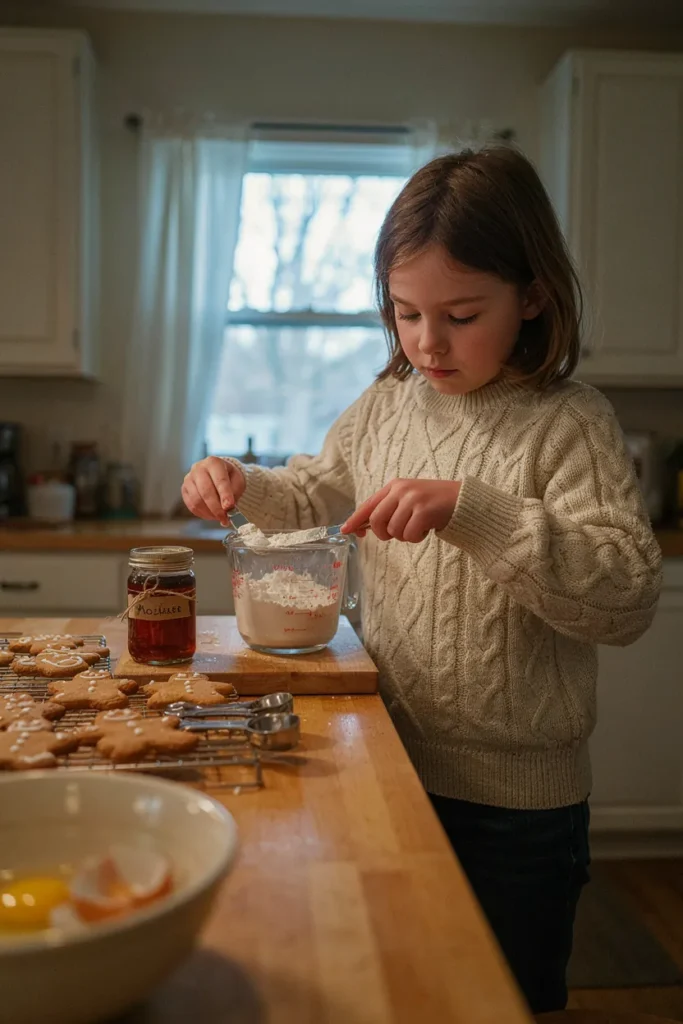
Fractions on a worksheet are dull. Fractions in a gingerbread recipe come out of the oven smelling like Christmas. In this activity kids take a real recipe, halve it or double it, and measure every ingredient themselves. They practice the math that trips up most kids in school, and the answer is a tray of soft gingerbread cookies.
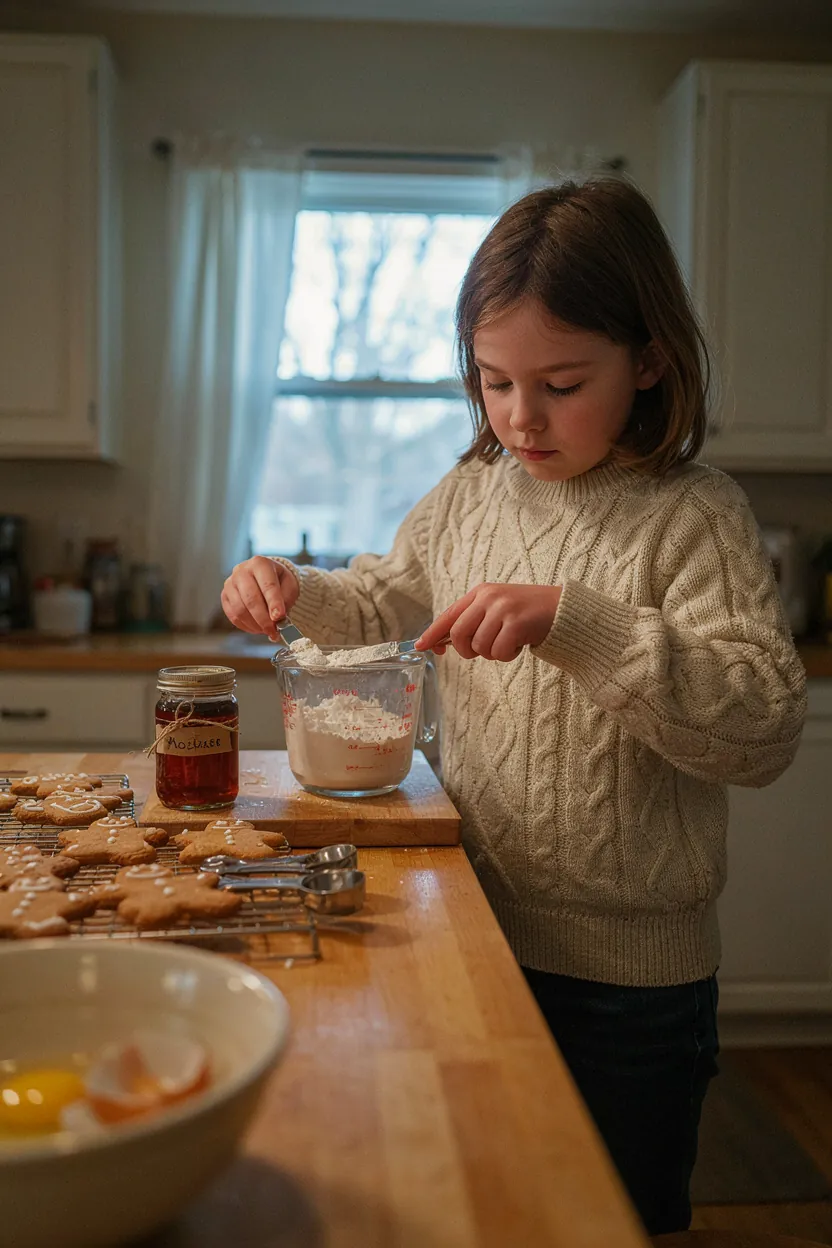
Soft Gingerbread Cookies
Ingredients
Equipment
Method
- Whisk the flours, spices, baking soda and salt together.
- Beat the butter and brown sugar until creamy, then beat in the molasses and egg.
- Stir in the dry ingredients to make a soft dough. Wrap and chill for 45 minutes.
- Heat the oven to 350°F (175°C). Roll the dough 1/4 inch (6 mm) thick and cut out shapes.
- Bake 8 to 10 minutes until just set. Cool on a rack before decorating.
Notes
What Kids Will Discover
Kids learn that fractions are just parts of a whole, that two half-cups make a cup, and that doubling a recipe means doubling every ingredient, even the tiny 1/4 teaspoons.
Ages, Time and Mess Level
- Best for: ages 6 to 12 (younger kids can count and pour)
- Time: about an hour including chilling
- Mess level: medium (flour!)
- Grown-up job: the oven
Warm-Up: The Measuring Cup Puzzle
- Lay out the measuring cups from biggest to smallest.
- Ask: how many 1/4 cups fill one whole cup? Test it with water or rice.
- Try: how many 1/3 cups fill a cup? How many 1/2 cups?
- Do the same with teaspoons and tablespoons (3 teaspoons fill 1 tablespoon).
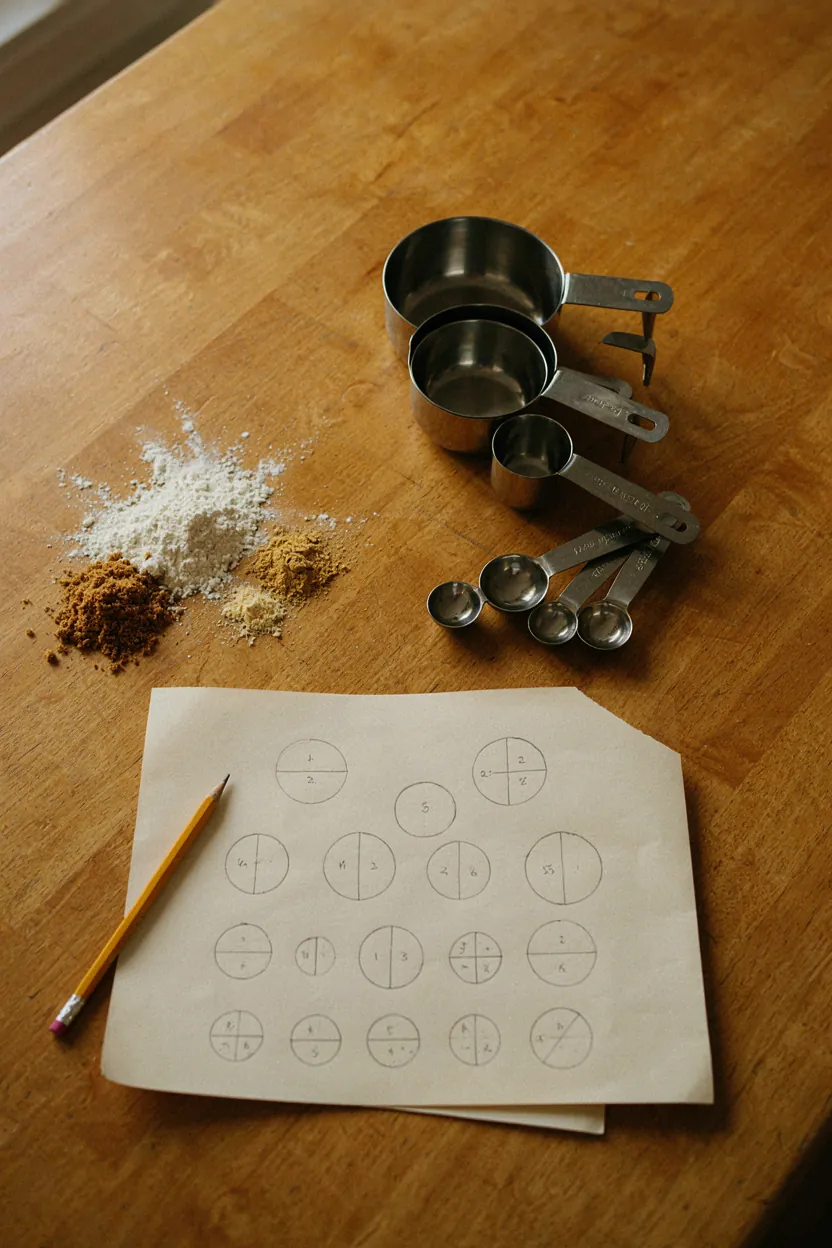
The Challenge: Scale the Recipe
Write the ingredient list from the recipe card on paper. Then pick a challenge:
- Halve it (ages 7 and up): 1 1/2 cups flour becomes 3/4 cup. What does 1/3 cup brown sugar become? (1/6 cup, which is about 2 tablespoons and 2 teaspoons. A great puzzle!)
- Double it (ages 8 and up): every amount times two. How much molasses? (1 cup.)
- One and a half batches (ages 10 and up): for a cookie swap.
Let them check their work by measuring with the cups. If a calculation doesn’t fit a cup, they have to find another way, which is real problem-solving.
The Math, in Kid Words
A fraction tells you how many parts of a whole you have. 1/2 cup means the cup is split into 2 equal parts and you have one. To double, you add the same amount again: 1/2 + 1/2 = 1. To halve, you split it into two equal piles. Recipes are one of the most useful places kids will ever use fractions.
For grown-ups
South Dakota State University Extension notes that children can learn math and science in the kitchen: counting, measuring, sequencing and fractions all come naturally from following a recipe. Let them make mistakes; the dough usually forgives.
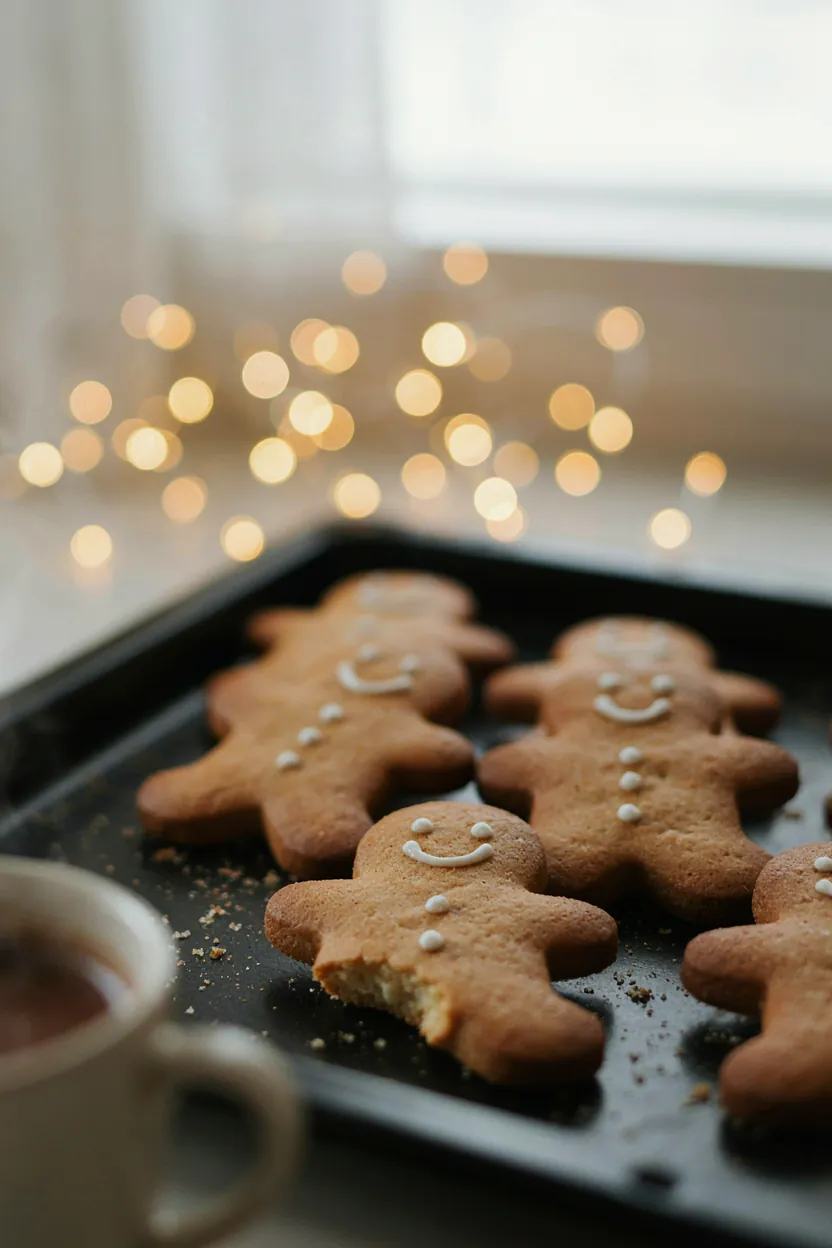
Change One Thing
- Weigh vs measure: weigh a cup of flour three times. Is it always the same? (It isn’t, which is why bakers weigh.)
- Thickness: roll half the dough thicker and compare baking times.
- Spread test: compare shapes in our Gingerbread Man Dough Test.
Make It a STEAM Day
- Art: decorate with icing patterns.
- Engineering: build with gingerbread in our Gingerbread House Earthquake Challenge.
- Math: count the cookies and share them equally (division!).
Safety Notes
- Grown-ups handle the oven.
- Raw dough contains raw egg and flour; bake before tasting.
- Contains wheat, egg and dairy.
FAQ
How do you teach fractions with baking?
Use measuring cups: have kids discover how many quarter, third and half cups fill a whole cup, then scale a real recipe up or down.
How do you halve 1/3 cup?
1/3 cup is 16 teaspoons, so half is 8 teaspoons: 2 tablespoons plus 2 teaspoons.
Can I double this gingerbread recipe?
Yes. Double every ingredient, including the spices and baking soda.
What age is gingerbread math for?
About 6 and up. Younger kids can count spoonfuls while older kids do the calculations.
Why chill the gingerbread dough?
Chilling firms the butter so the dough rolls easily and the shapes hold in the oven.
In Conclusion
When the math comes out of the oven warm and smelling of ginger, kids remember it. Hand them the measuring cups, let them do the thinking, and enjoy the tastiest fractions lesson of the year.