Grinch Green Smoothie Color Science: Why Spinach Doesn’t Make It Taste Green
November 12, 2026 · 4 min read
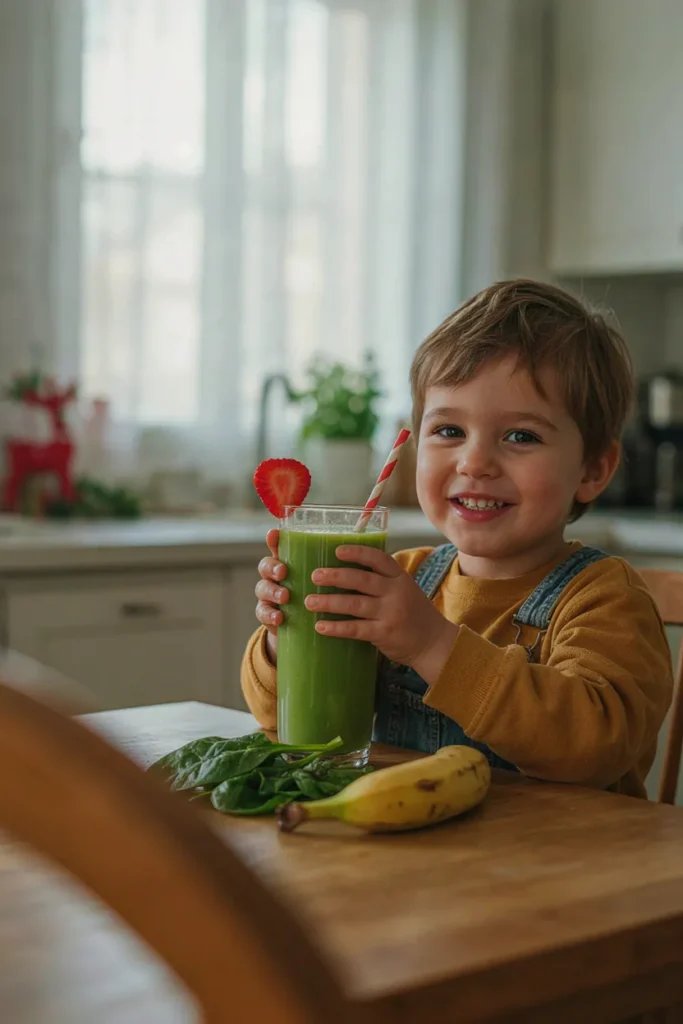
It’s green. Very green. Grinch green. And kids are sure it’s going to taste like salad. Then they try it, and it tastes like banana and pineapple. This smoothie is a color science experiment in disguise, all about the pigment that makes spinach green, and why color and taste are two completely different things.
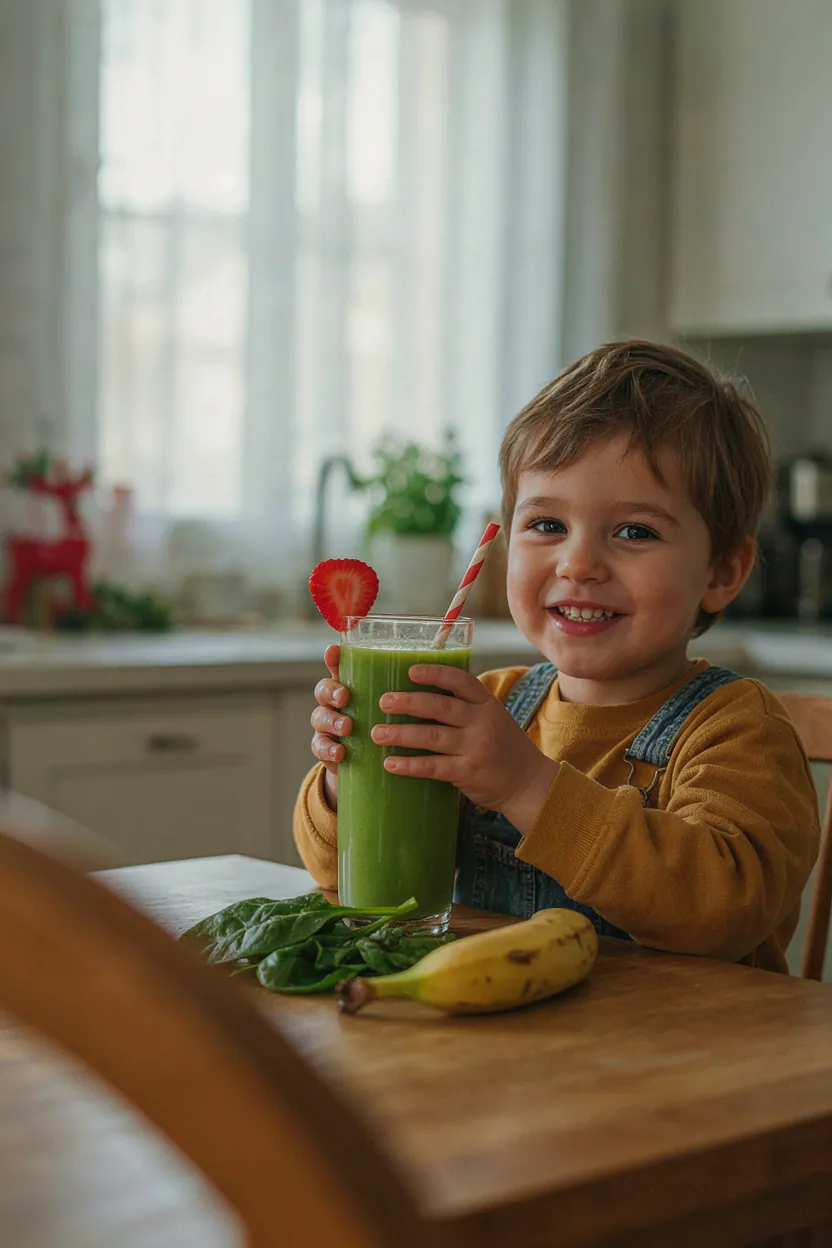
Grinch Green Smoothie
Ingredients
Equipment
Method
- Blend the spinach with the milk until completely smooth.
- Add the banana, pineapple and yogurt and blend until thick and creamy.
- Pour into glasses. Cut a small heart from a strawberry slice and perch it on the rim.
Notes
What Kids Will Discover
Kids learn that the green in spinach comes from a pigment called chlorophyll, which plants use to catch sunlight. A pigment gives color, not flavor, which is why a little spinach can turn a smoothie bright green without making it taste “green”. They also find out how some fruits change the color.
Ages, Time and Mess Level
- Best for: ages 3 to 12
- Time: 15 minutes for the smoothie, 30 minutes for the pigment strip
- Mess level: low
- Grown-up job: running the blender
Experiment 1: The Color Mixing Test
- Make the base smoothie (spinach, banana, milk). It’s bright green.
- Pour it into four small glasses.
- Add pineapple to one, strawberries to one, blueberries to one, and leave one plain.
- Predict, then stir: which stays green? Which turns brown?
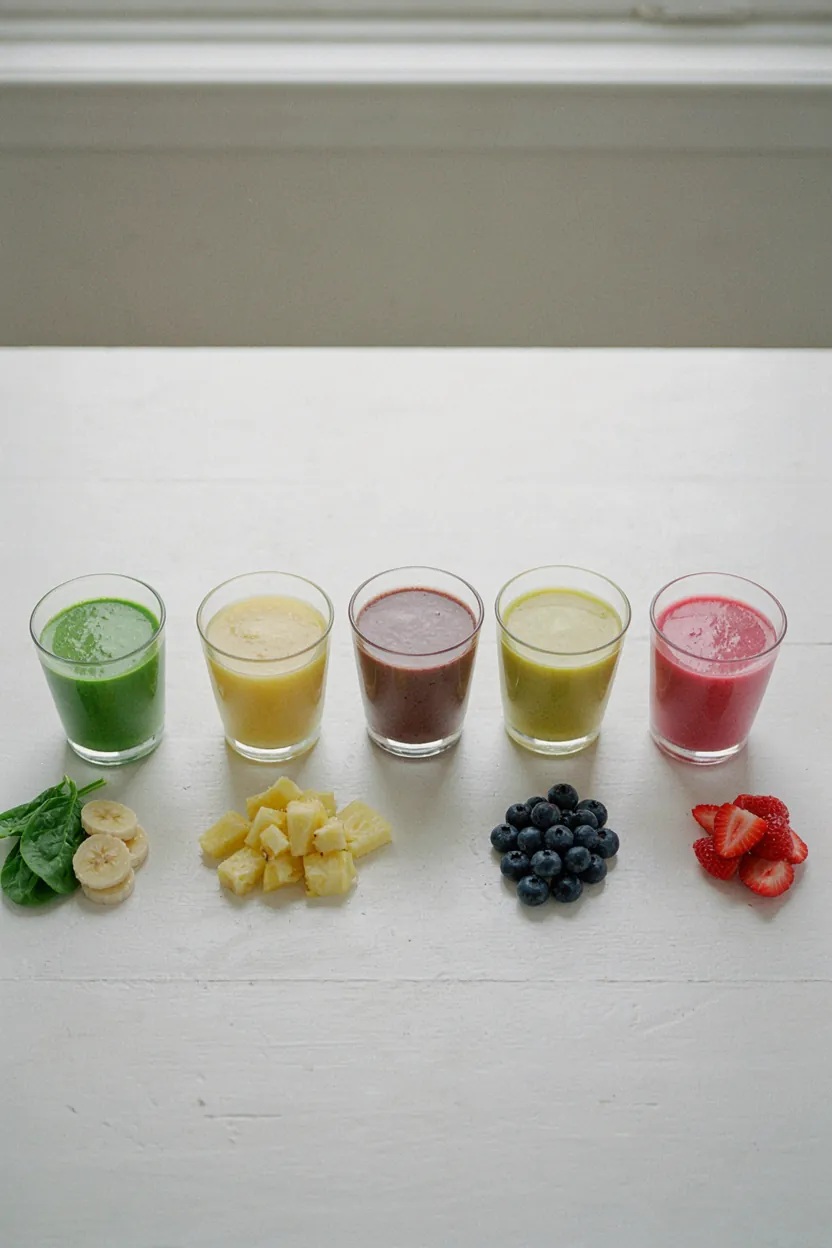
Usually the pineapple glass stays bright green, strawberries shift it toward a muddy olive, and blueberries turn it brownish-purple, because green and purple together make brown, just like in paint.
Experiment 2: Find the Hidden Colors
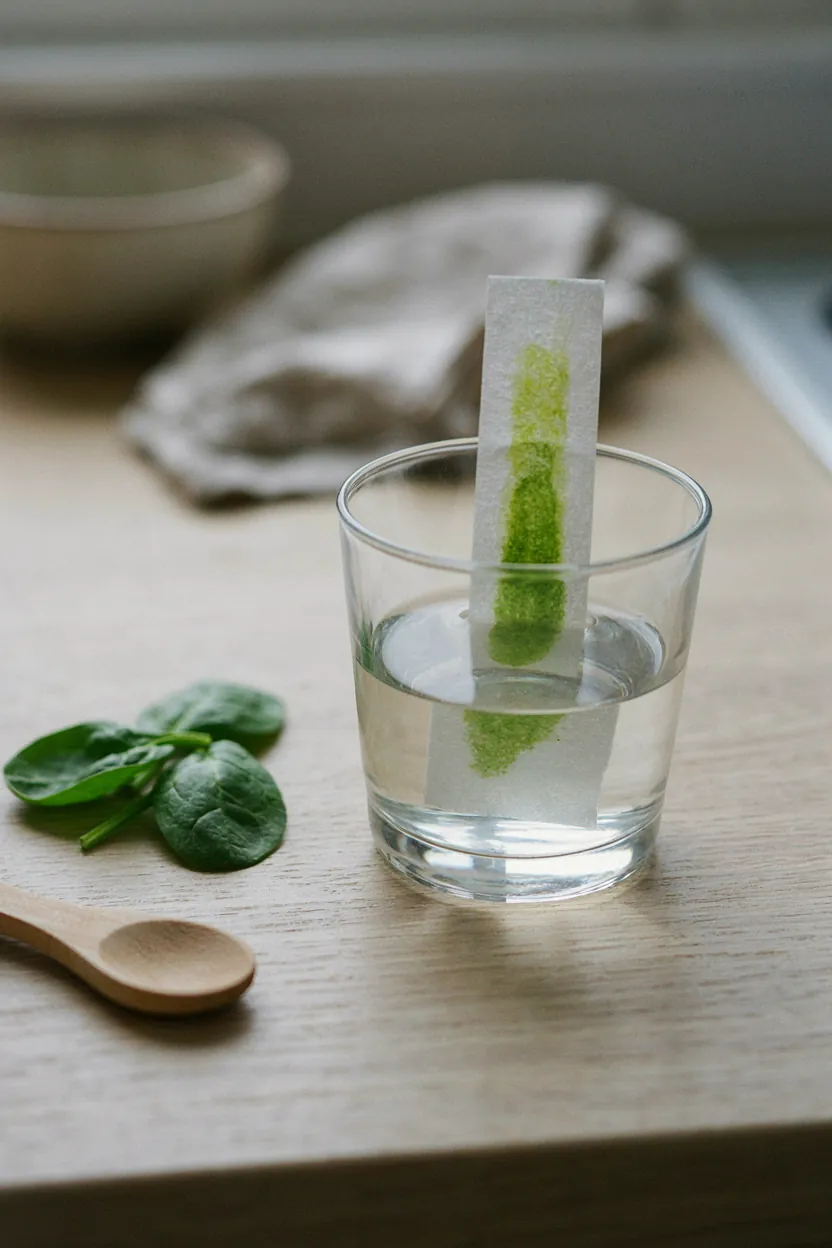
- Rub a spinach leaf hard onto a strip of coffee filter, about an inch from the bottom, until there’s a dark green line. (Pressing with a coin helps.)
- Stand the strip in a glass with a little rubbing alcohol, so the liquid is below the green line. (Grown-ups handle the alcohol.)
- Wait 20 to 30 minutes and watch the colors creep up the paper.
- Look for green and a faint yellow band: spinach hides more than one pigment.
The Science, in Kid Words
Leaves are green because of chlorophyll, a pigment that soaks up sunlight so the plant can make food. Our tongues can’t taste colors at all: they taste sweet, sour, salty, bitter and savory. So when you blend a handful of spinach with sweet fruit, your eyes see green but your tongue mostly tastes the banana and pineapple. Spinach also hides other pigments, like yellow and orange ones, under all that green.
For grown-ups
Science Buddies’ plant pigment chromatography project uses spinach to separate chlorophylls and carotenoids on paper, exactly what Experiment 2 does in miniature. Mild baby spinach also has very little flavor, which is why it disappears into fruit smoothies so well.
Change One Thing
- More spinach: at what point can you taste it?
- Kale vs spinach: which is greener? Which tastes stronger?
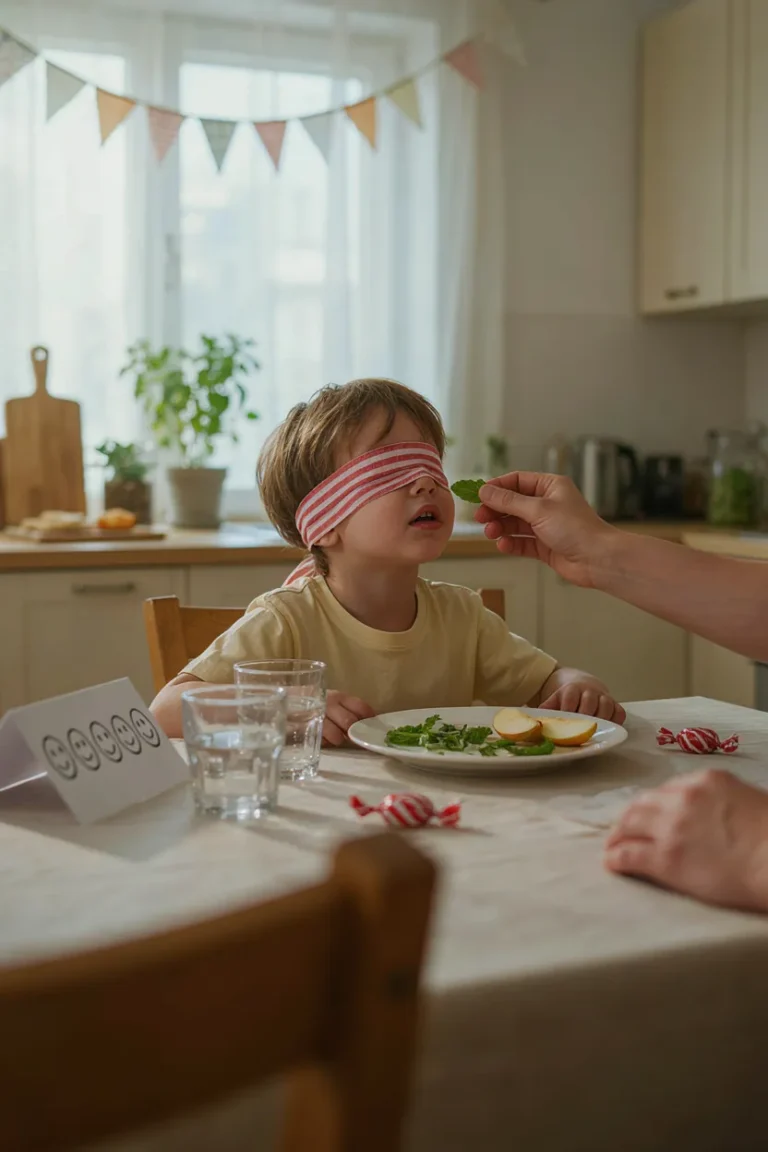
- Blindfold test: can anyone tell which smoothie has spinach with their eyes closed?
Make It a STEAM Day
- Art: paint with spinach juice and beet juice.
- Math: rate how green each smoothie is from 1 to 10 and graph it.
- Science: more surprising senses in our Why Peppermint Feels Cold.
Safety Notes
- Grown-ups handle rubbing alcohol: keep it away from flames and don’t drink it.
- Grown-ups run the blender.
- Use dairy-free yogurt and milk if needed.
FAQ
Can kids taste spinach in a smoothie?
Usually not much. Baby spinach is mild, and sweet fruit like banana and pineapple covers it.
Why did my green smoothie turn brown?
Purple or blue fruit like blueberries mixes with the green to make brown. Use yellow fruit to keep it green.
What makes spinach green?
A pigment called chlorophyll, which plants use to capture sunlight.
Is a spinach smoothie healthy for kids?
Yes: it adds leafy greens to a fruit and yogurt smoothie without changing the flavor much.
What age is this activity for?
Toddlers can help add ingredients; older kids can run the color and chromatography experiments.
In Conclusion
A Grinch smoothie proves that color and taste are two different things. Run the mixing test, find the hidden pigments, then raise a green glass. Even the Grinch would approve.