Yes—research shows protein-rich breakfasts reduce subsequent hunger by an average of 111 calories and increase fullness ratings significantly compared to carb-heavy breakfasts in children and adolescents. But here’s what makes protein waffles particularly effective: the combination of whole grains, protein, and fiber creates the trifecta that stabilizes blood sugar, slows digestion, and actually delivers on the “keeps them full until lunch” promise that regular waffles can’t keep. The question isn’t just whether protein waffles work—it’s how to make them work best for your specific morning chaos.
Medical Disclaimer: This article provides general nutritional information about breakfast choices and satiety in children. It should not replace personalized medical or nutritional advice. If you have concerns about your child’s eating patterns, growth, hunger levels, or dietary needs, please consult your pediatrician or a registered pediatric dietitian for guidance tailored to your child’s individual circumstances.

The Science Behind “Full Until Lunch”
The promise sounds almost too good to be true: swap regular waffles for protein waffles and watch your kids sail through the morning without the 9:30 AM “I’m starving” meltdown. But a substantial body of research supports this seemingly simple swap.
A comprehensive meta-analysis published in Nutrients examined ten studies involving 824 children and adolescents ages 7-19, comparing protein-rich breakfasts to normal-protein traditional breakfasts. The findings were striking: participants who consumed protein-rich breakfasts had lower subsequent energy intake (consuming 111 fewer calories at the next meal), higher fullness ratings, and lower hunger ratings than those who ate traditional breakfasts.
The mechanism behind this extended satiety involves multiple physiological processes. According to research published in the Journal of Nutrition, protein-based breakfasts increase postprandial energy expenditure and fat oxidation while reducing hunger and increasing satiety when compared with carbohydrate-based breakfasts. One study of children ages 8-12 found that a protein breakfast led to significantly higher energy expenditure and fat oxidation over a 4-hour period compared to a carbohydrate-heavy breakfast.

The hormone story is equally compelling. High-protein meals have been shown to induce prolonged increases in peptide YY (PYY)—a satiety-signaling hormone—while reducing ghrelin, the hormone that stimulates hunger. Research from Pennington Biomedical Research Center found that egg breakfast consumption led to a significant increase in serum PYY levels in adolescents, supporting the biological mechanism behind protein’s satiating effect.
What Makes Protein Waffles Different from Regular Waffles
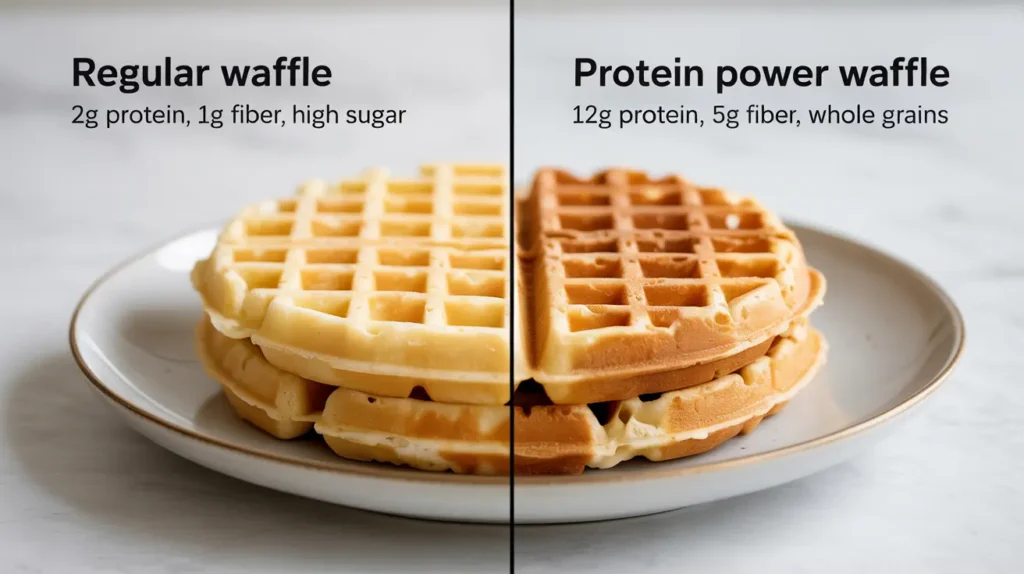
Walk down the frozen waffle aisle and the nutritional differences become stark. Traditional frozen waffles deliver approximately 2 grams of protein, 1 gram of fiber, and a carbohydrate-dominant profile that registered dietitian notes creates “a spike in blood sugar followed by an energy crash.” Protein and fiber are major contributors to satiety—that feeling of fullness and satisfaction after a meal—and traditional waffles simply lack both.
In contrast, protein waffles leverage three key nutritional strategies:
1. Elevated Protein Content
Brands like Kodiak Cakes Power Waffles contain 12 grams of protein per serving (2 waffles) compared to 2 grams in regular waffles—a six-fold increase. Homemade protein waffles using cottage cheese, Greek yogurt, or eggs can deliver 8-15 grams of protein per serving. This protein content approaches the 13-14 gram daily requirement for toddlers ages 1-3, making breakfast a substantial contributor to their nutritional needs.
2. Whole Grain Foundation
Unlike regular waffles made with refined flour, protein waffle mixes use whole grain wheat flour and oat flour as their base. Whole grains are digested more slowly than refined grains, and added protein increases satiety and slows down carbohydrate digestion, helping to lower the glycemic index of the food. According to nutritional analysis, Kodiak Cakes products have a lower glycemic impact than traditional waffle mixes due to their whole grain content combined with added protein from sources like whey or milk.
3. Increased Fiber
Protein waffle mixes like Kodiak Cakes contain 5 grams of fiber per serving compared to 1 gram in traditional waffles. Fiber adds bulk to food without adding calories, contributing to a feeling of satiety and meaning children will feel fuller for longer, reducing the urge for unhealthy snacks between meals.

The Blood Sugar Connection: Why Your Kid Crashes After Regular Waffles
The classic weekend waffle breakfast—fluffy waffles drenched in syrup—creates a predictable pattern: enthusiastic eating at 8 AM, energetic playing until 9:30 AM, then sudden crankiness and demands for snacks. This isn’t behavioral; it’s biochemical.
When children eat high-carbohydrate foods without adequate protein or fiber, blood glucose spikes rapidly. The body responds by releasing a large amount of insulin to bring blood sugar down. Often, this response overshoots, causing blood sugar to drop below baseline within 90 minutes—a phenomenon that signals hunger before actual energy needs arise.
Research in children found that hunger ratings were significantly greater at lunchtime after high-glycemic breakfasts compared to low-glycemic alternatives. One study noted that normal-weight children consuming a high-carbohydrate breakfast had significantly lower glucose control at 30 minutes compared to children consuming a high-protein breakfast, suggesting that diets higher in protein and lower in carbohydrate improve glycemic control.
The practical implication is stark: a lot of typical breakfast foods kids gravitate toward are high in sugar and simple carbs, which can give kids a quick burst of energy but then lead to a drop in blood sugar, making kids feel lethargic, irritable, and unable to concentrate.
Protein waffles interrupt this cycle. Unlike regular waffles that spike blood sugar and leave kids hungry an hour later, protein waffles provide steady energy that lasts. The protein content slows the absorption of carbohydrates, creating a more gradual rise and fall in blood sugar that sustains energy and focus through the morning.

Real-World Performance: What the Research Actually Shows
The controlled laboratory findings translate remarkably well to practical morning scenarios. Research consistently demonstrates that protein-rich breakfasts deliver measurable benefits:
Reduced Mid-Morning Hunger
A study of overweight children ages 8-12 found that after a protein breakfast, children had higher energy expenditure and fat oxidation over the 4-hour period and reduced hunger compared to those consuming a carbohydrate-based breakfast. The protein meal kept kids satisfied longer, delaying the typical mid-morning hunger pangs.
Lower Subsequent Food Intake
The meta-analysis found that children consuming protein-rich breakfasts ate 111 fewer calories at their next meal compared to those eating traditional breakfasts. While this might not sound dramatic, over days and weeks, this pattern supports healthy weight maintenance and prevents the excessive snacking that contributes to childhood obesity.
Improved Appetite Regulation
Research on adolescent girls who typically skipped breakfast found that consuming a high-protein breakfast (35 grams protein) led to greater daily fullness, reduced daily ghrelin (hunger hormone), and increased daily peptide YY (satiety hormone) compared to both breakfast skipping and normal-protein breakfasts. Perhaps most notably, the high-protein breakfast reduced evening snacking on high-fat foods—a common problem among breakfast skippers.
Enhanced Diet Quality
A study of low-income preschoolers found that high-protein and high-fiber breakfasts resulted in improved diet quality (12% increase) compared to control breakfasts, without lowering feelings of satiation or satiety. The children consumed, on average, 65 fewer calories during the protein/fiber intervention breakfasts yet maintained equal fullness ratings, demonstrating that nutrient density matters more than sheer calorie volume.
The Protein Waffle Hierarchy: What Works Best
Not all protein waffles are created equal. Understanding the hierarchy helps parents make strategic choices:
Tier 1: Whole-Food Homemade Protein Waffles
The gold standard combines eggs, Greek yogurt or cottage cheese, oats, and whole grain flour. These waffles deliver 8-12 grams of protein per serving from whole food sources, plus fiber, healthy fats, and micronutrients. A basic three-ingredient protein waffle recipe—cottage cheese, eggs, and oats—provides approximately 8 grams of protein per waffle with no added protein powder required.
Registered dietitian Alicia Chacha Miller emphasizes: “Protein is found in several foods, from whole grains and beans to nuts, seeds, and even some vegetables. Starting the day with options like eggs, nut butter, or Greek yogurt can help increase satiety—especially when combined with fiber-rich grains or fruits, but balance and variety are key to properly fueling both the body and the mind throughout the day.”
Tier 2: High-Quality Protein Waffle Mixes
Products like Kodiak Cakes Power Cakes deliver 14 grams of protein per half-cup of dry mix (before adding eggs and milk), made from whole grain wheat flour, whole grain oat flour, and whey protein isolate. When prepared according to package directions with eggs and milk, the final waffles contain substantial protein—approximately 12-15 grams per serving—plus 5 grams of fiber.
Registered dietitian reviews confirm these nutritional advantages: “Kodiak waffles are a great healthy choice for a premade waffle. They are full of fiber and protein and quite low in sugar.” The mix contains only 2 grams of added sugars, significantly lower than many competing products.
Tier 3: Protein-Enhanced Regular Waffles
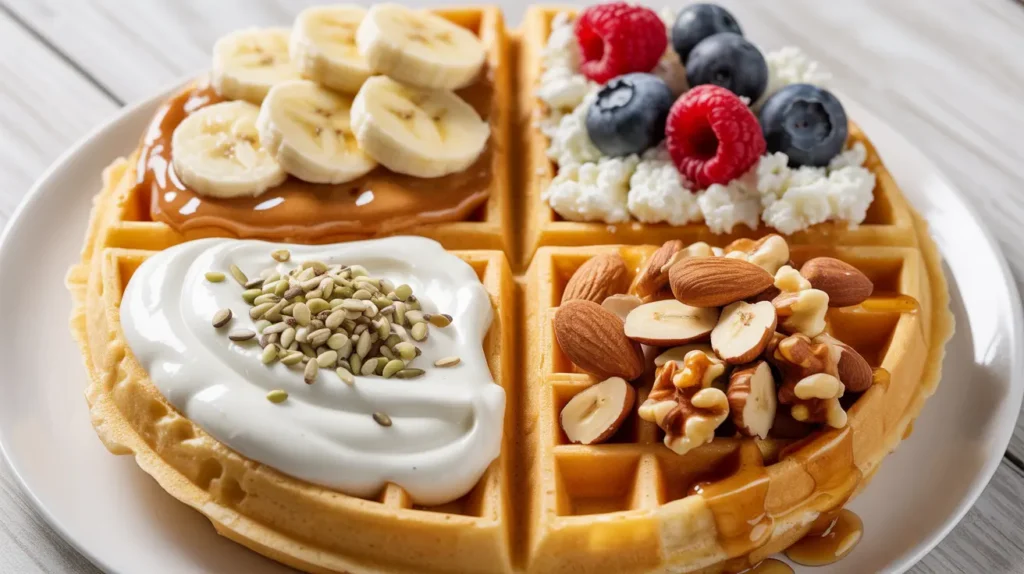
Adding protein toppings to regular waffles—peanut butter, Greek yogurt, cottage cheese, or a side of eggs—transforms a carb-dominant breakfast into a more balanced meal. While not as effective as inherently protein-rich waffles, this strategy still improves satiety compared to plain waffles with syrup.
Making Protein Waffles Work in Real Life
The research is compelling, but morning logistics present real challenges. Here’s how to translate the science into sustainable breakfasts:
Strategy 1: Weekend Batch Cooking
Make a double or triple batch of protein waffles on Sunday, let them cool completely, then stack them with parchment paper between each waffle in a gallon freezer bag. Frozen protein waffles last 2-3 months and reheat perfectly in the toaster in 3-5 minutes. Parents consistently report this as their most sustainable protein waffle strategy: “These waffles are such an easy meal prep recipe and make a great quick breakfast on busy mornings. I like to cook up a batch and freeze them. In the morning we just grab a frozen waffle from the freezer and pop it into the toaster before heading out to school and work.”
Strategy 2: The Strategic Topping Boost
Even with protein waffles, toppings matter. Instead of drowning waffles in syrup (pure simple carbohydrates), use a protein-fat combination:
- Nut butter (peanut, almond, cashew): adds 8 grams protein per 2 tablespoons
- Greek yogurt: adds 8-12 grams protein per half cup
- Cottage cheese: adds 12-13 grams protein per half cup
- Cream cheese with nuts: adds protein and healthy fats
One mother describes her winning combination: “I like to serve these waffles with additional banana slices, a drizzle of peanut butter, chopped walnuts, a sprinkle of chocolate chips and a bit of maple syrup. So delicious!”
Strategy 3: The Flavor Upgrade
Many protein waffle recipes lack the exciting flavors that make kids enthusiastic about breakfast. Simple additions transform basic protein waffles:
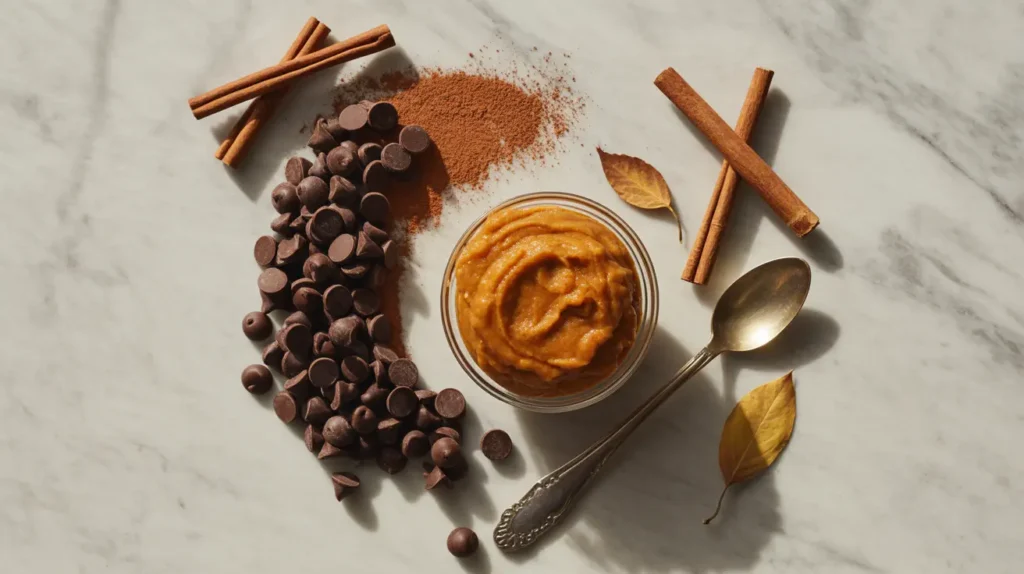
- Chocolate chip protein waffles: stir in dark chocolate chips (1/2 cup)
- Banana blueberry waffles: replace some Greek yogurt with mashed banana and fold in blueberries
- Cinnamon apple waffles: add cinnamon and shredded apple to the batter
- Pumpkin spice waffles: incorporate pumpkin puree and pumpkin pie spice
Parents emphasize customization: “The best part of using Kodiak Cakes as a base for your protein waffles is that you can easily customize and adjust the flavors to your liking. I love using a little vanilla extract, cinnamon and brown sugar, but if your family prefers some bolder flavors try some pumpkin spice seasoning.”

Strategy 4: The Temperature Trick
Proper waffle iron temperature is crucial for protein waffles because the protein content can make them stick more than regular batter. A properly heated, well-greased iron ensures perfect release and even browning. Test readiness by sprinkling a few drops of water on the iron—if they sizzle and evaporate immediately, it’s ready.
When Protein Waffles Aren’t Enough
Despite their satiety benefits, protein waffles aren’t a universal solution. Some scenarios require additional strategies:
The Ultra-Active Child
Kids who play competitive sports or engage in high-intensity activities may burn through even protein-rich breakfasts quickly. For these children, add a protein-rich side: hard-boiled eggs, turkey sausage, or a yogurt parfait alongside the protein waffles extends fullness further.
The Small Eater
Toddlers with tiny appetites might struggle to finish a full serving of protein waffles. Mini waffles in fun shapes often work better—the novelty encourages eating, and the smaller size feels more manageable. As one dietitian notes: “My kids love these in our different fun waffle maker shapes.”
The Texture-Sensitive Child
Some children find protein waffles denser or more textured than regular waffles. Blending all ingredients in a high-powered blender until completely smooth creates a lighter, more familiar texture. Adding slightly more milk to the batter also creates thinner, less dense waffles.

The Morning Hunger Avoider
Children genuinely not hungry at 7 AM won’t benefit from any breakfast, no matter how protein-packed. For these kids, send protein waffles as a mid-morning snack at school, or offer them at 8 or 8:30 AM when natural hunger emerges.
The Bigger Picture: Balance Beyond Protein
While protein waffles dramatically outperform regular waffles for satiety, nutrition experts emphasize that no single food creates optimal nutrition. According to the American Academy of Pediatrics, breakfast should include 3-4 food groups. A complete protein waffle breakfast might include:
- Protein waffles (grain + protein)
- Fresh fruit (vitamins + fiber)
- Whole milk (protein + calcium + vitamin D + healthy fats)
- Optional side (eggs, yogurt, or nut butter for additional protein)
This combination delivers the macronutrient balance—protein, complex carbohydrates, healthy fats, and fiber—that research consistently shows provides sustained energy and satiety.
Registered dietitian emphasis echoes this principle: “Balance and variety are key to properly fueling both the body and the mind throughout the day.” While protein waffles represent a significant upgrade from traditional waffles, they work best as part of a thoughtful breakfast strategy rather than as an isolated magic solution.
The Verdict: Worth the Swap?
The evidence is remarkably consistent across multiple studies and age groups: protein waffles do keep kids fuller longer. The combination of elevated protein, whole grains, and increased fiber creates measurable differences in hunger, satiety, blood sugar stability, and subsequent food intake compared to traditional waffles.
For busy parents, this translates to fewer mid-morning snack demands, better focus and mood stability in children, and eating patterns that support healthy weight maintenance. The initial investment—whether purchasing protein waffle mix or ingredients for homemade versions—pays dividends in reduced food battles and improved morning nutrition.
The real question isn’t whether protein waffles work—the research settles that convincingly—but whether they’ll work in your specific morning reality. The answer depends on your willingness to batch cook on weekends, your child’s flavor preferences, and your family’s breakfast routine.
Start with one small change: this weekend, make a batch of protein waffles using your preferred method. Freeze the extras. Next Tuesday morning, when you’d normally reach for frozen regular waffles, toast a protein waffle instead and top it with peanut butter and banana. Then observe what happens between breakfast and lunch.

The science predicts your child will stay satisfied longer, maintain steadier energy, and skip the 9:30 AM hunger meltdown. But the real test isn’t what happens in a research lab—it’s what happens in your kitchen on a chaotic school morning. And on that measure, thousands of parents have reached the same conclusion: protein waffles deliver on their promise.
Ready to power up your breakfasts with protein-rich options that actually work? Sign up for our newsletter to receive practical, family-tested breakfast strategies that keep kids full, focused, and thriving—without turning every morning into a food battle. [SIGN UP LINK TO BE ADDED]
References
Baum JI, et al. Short-term satiety in preschool children: a comparison between high protein meal and a high complex carbohydrate meal. International Journal of Food Sciences and Nutrition. 2000 Mar;51(2):119-24. Available at: https://pubmed.ncbi.nlm.nih.gov/10953755/
Qiu M, Zhang Y, Long Z, He Y. Effect of Protein-Rich Breakfast on Subsequent Energy Intake and Subjective Appetite in Children and Adolescents: Systematic Review and Meta-Analysis of Randomized Controlled Trials. Nutrients. 2021 Aug 18;13(8):2840. doi: 10.3390/nu13082840. Available at: https://pubmed.ncbi.nlm.nih.gov/34445000/
Bellissimo N, et al. Breakfasts Higher in Protein Increase Postprandial Energy Expenditure, Increase Fat Oxidation, and Reduce Hunger in Overweight Children from 8 to 12 Years of Age. The Journal of Nutrition. 2015 Oct;145(10):2229-35. doi: 10.3945/jn.115.214551. Available at: https://pubmed.ncbi.nlm.nih.gov/26269241/
Kral TV, et al. The Effect of an Egg Breakfast on Satiety in Children and Adolescents: A Randomized Crossover Trial. Journal of the American College of Nutrition. 2016;35(3):224-30. doi: 10.1080/07315724.2014.1003969. Available at: https://pubmed.ncbi.nlm.nih.gov/25748830/
Leidy HJ, Ortinau LC, Douglas SM, Hoertel HA. Beneficial effects of a higher-protein breakfast on the appetitive, hormonal, and neural signals controlling energy intake regulation in overweight/obese, “breakfast-skipping,” late-adolescent girls. The American Journal of Clinical Nutrition. 2013 Apr;97(4):677-88. doi: 10.3945/ajcn.112.053116. Available at: https://pubmed.ncbi.nlm.nih.gov/23446906/
Sturm R, et al. High-Protein and High-Dietary Fiber Breakfasts Result in Equal Feelings of Fullness and Better Diet Quality in Low-Income Preschoolers Compared with Their Usual Breakfast. The Journal of Nutrition. 2017 Mar;147(3):445-452. doi: 10.3945/jn.116.238626. Available at: https://pmc.ncbi.nlm.nih.gov/articles/PMC5320397/
Kodiak Cakes. Buttermilk & Vanilla Power Waffles – Nutritional Information. Available at: https://kodiakcakes.com/products/buttermilk-vanilla-power-waffles
Mama Knows Nutrition. Best Healthy Frozen Waffles. 2025. Available at: https://mamaknowsnutrition.com/healthy-frozen-waffles/
American Academy of Pediatrics. Serving Sizes for Toddlers. HealthyChildren.org. Available at: https://www.healthychildren.org/English/ages-stages/toddler/nutrition/Pages/serving-sizes-for-toddlers.aspx
Bellissimo N, Fansabedian T, Wong VCH, et al. Effect of Increasing the Dietary Protein Content of Breakfast on Subjective Appetite, Short-Term Food Intake and Diet-Induced Thermogenesis in Children. Nutrients. 2020 Oct 2;12(10):3025. doi: 10.3390/nu12103025. Available at: https://pubmed.ncbi.nlm.nih.gov/33023221/