Dinner for Breakfast Guide – Pasta for Breakfast
December 2, 2025 · 8 min read
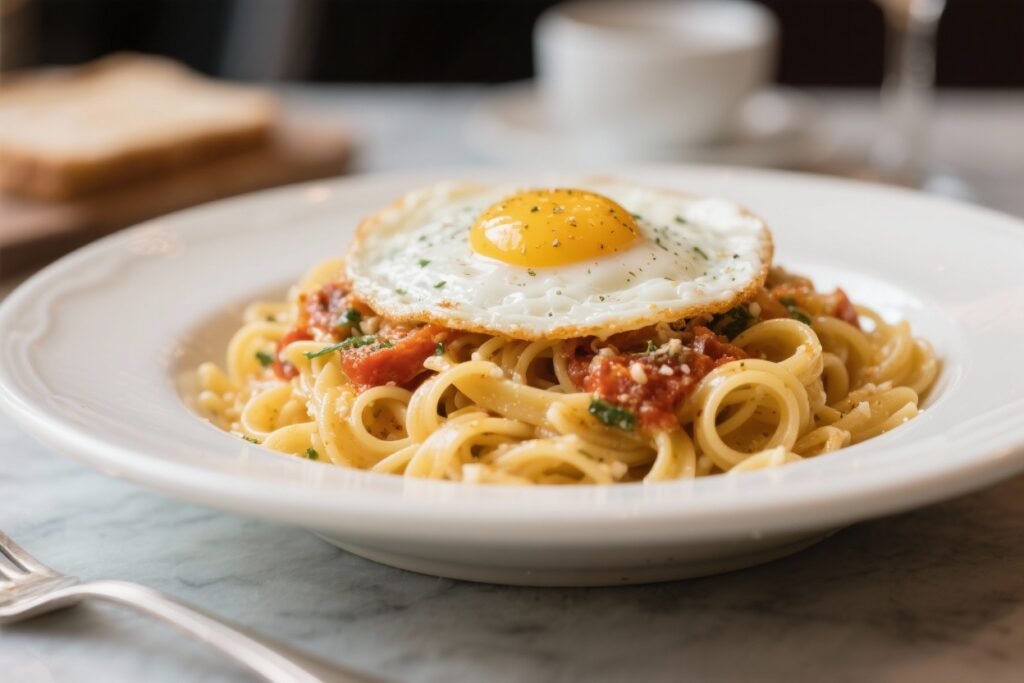
If you’ve ever opened the fridge in the morning and wished last night’s pasta could pass for breakfast, this guide is for you. Pasta for breakfast isn’t just acceptable—it’s honestly great. It’s warm, satisfying, and surprisingly quick to turn into a proper morning meal.
Think silky eggs, salty cheese, and a little crunch—everything you love about breakfast, tossed with noodles. This version is simple, flexible, and weekday-friendly.
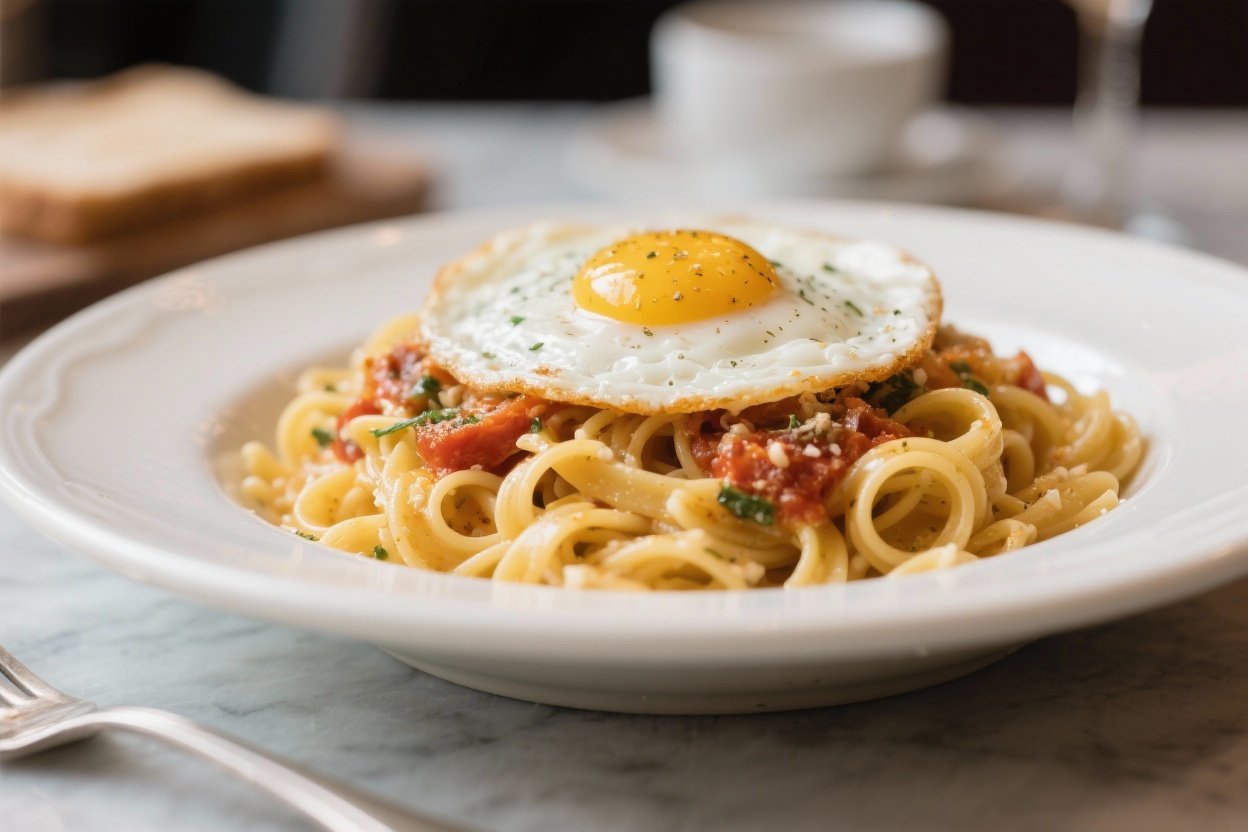
Dinner for Breakfast Guide - Pasta for Breakfast
Ingredients
Method
- Prep the pasta: If using leftover pasta, loosen it with a splash of water. If cooking fresh, boil in salted water until al dente, then drain, reserving 1/2 cup pasta water.
- Cook the breakfast meat (optional): In a large skillet over medium heat, cook the bacon or sausage until browned and crisp. Remove and set aside, leaving the fat in the pan.If not using meat, add 1 tablespoon olive oil or butter to the skillet.
- Sauté aromatics: Add onion or shallot to the skillet and cook 2–3 minutes until soft. Stir in garlic for 30 seconds until fragrant, not browned.
- Add veggies: Toss in spinach, peas, or mushrooms. Cook until wilted or tender.Season lightly with salt and pepper.
- Warm the pasta: Add the pasta to the skillet. Toss to coat in the pan juices. If it looks dry, add a splash of reserved pasta water.
- Make the egg mixture: In a bowl, whisk the eggs, extra yolk, cheese, a pinch of salt, lots of black pepper, and a splash of milk or cream if using.
- Turn the heat down: Lower the skillet to low heat.You want gentle heat so the eggs turn creamy, not scrambled.
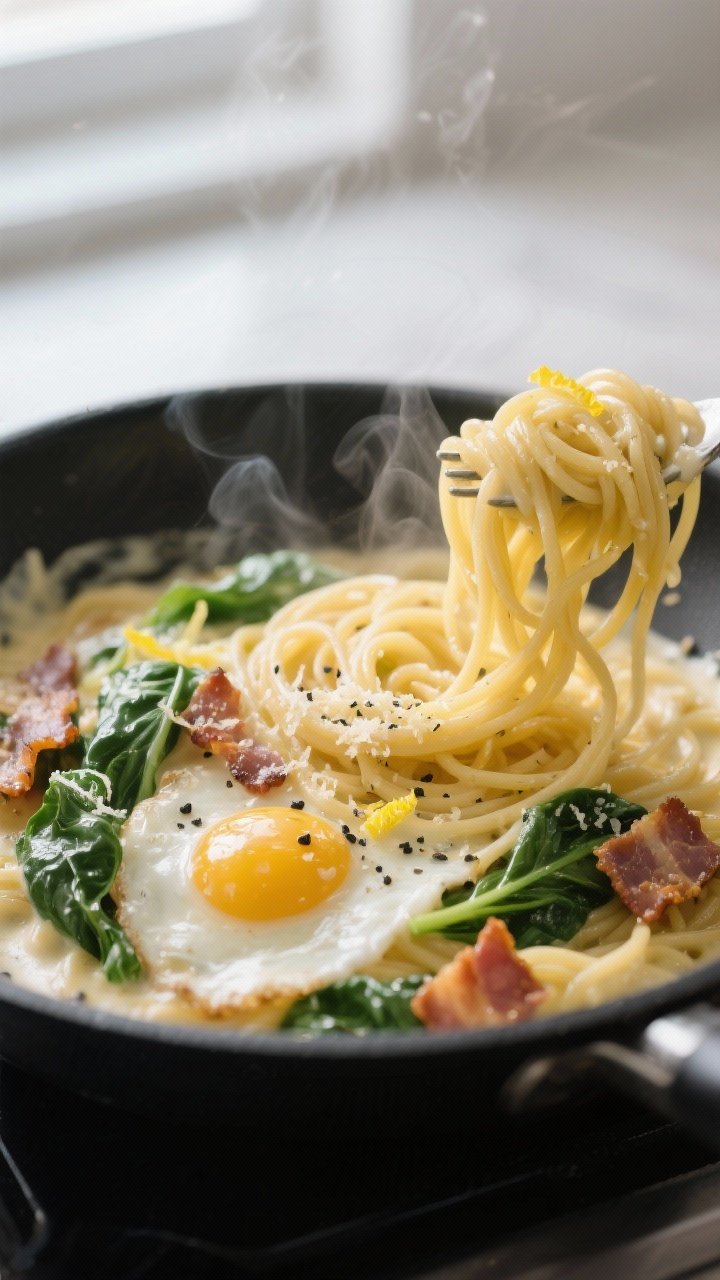
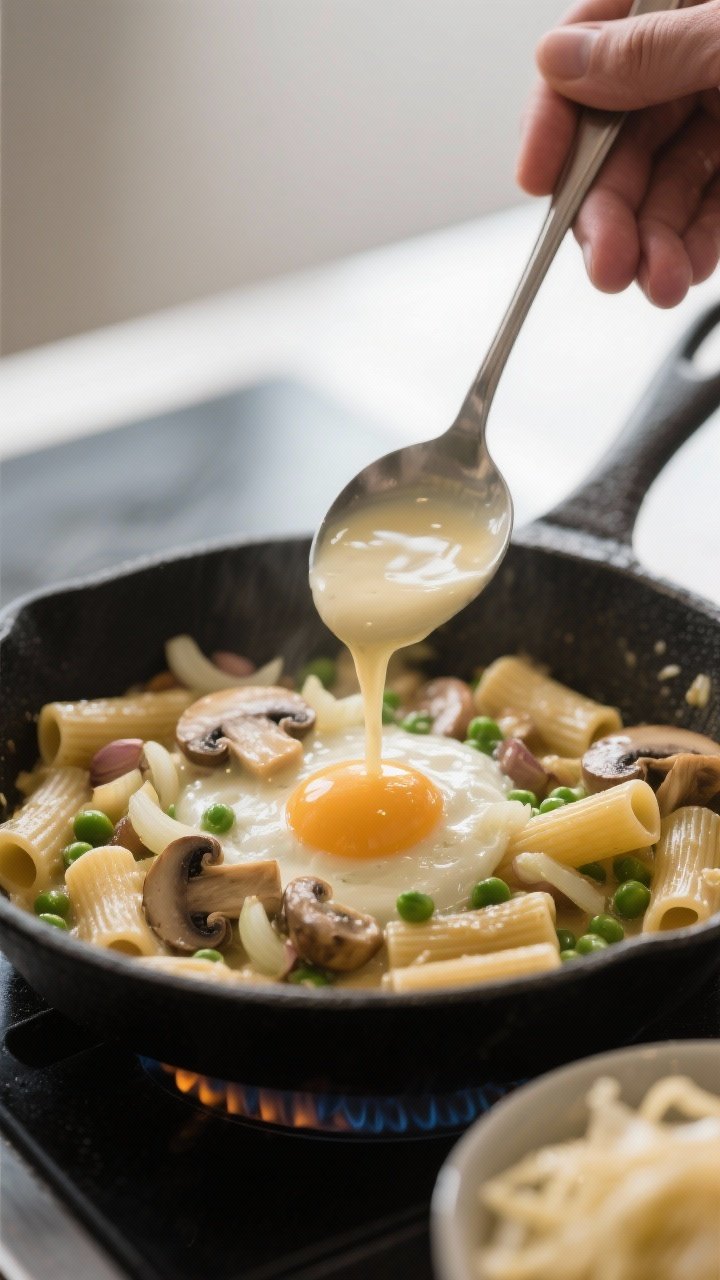
- Stir in the eggs: Pour the egg mixture over the pasta. Toss constantly for 1–2 minutes until the eggs just thicken and coat the noodles. Add a few tablespoons of pasta water if needed to keep it glossy.
- Finish and season: Stir in bacon or sausage, lemon zest, a small squeeze of lemon juice, and herbs.Taste and adjust salt and pepper.
- Serve hot: Top with more cheese, a pinch of red pepper flakes if you like heat, and a drizzle of olive oil. Eat right away.
What Makes This Recipe So Good
- It’s fast: From pan to plate in about 20 minutes, especially if you use leftover pasta.
- Comforting but fresh: Creamy eggs and cheese meet bright herbs and lemon. It feels cozy without being heavy.
- Protein-packed: Eggs, cheese, and optional bacon or sausage make it a real breakfast.
- Flexible: Works with almost any pasta shape and whatever you have—spinach, mushrooms, peas, even roasted veggies.
- One pan, minimal mess: Cook it all in a skillet.
Less cleanup, more coffee time.
What You’ll Need
- Pasta: 8 ounces cooked pasta (spaghetti, rigatoni, or short shapes work well). Leftover pasta is perfect.
- Eggs: 3 large eggs, plus 1 extra yolk for silkiness (optional but recommended).
- Cheese: 1/2 cup grated Parmesan or Pecorino Romano.
- Dairy: 2 tablespoons butter or olive oil. A splash (2–3 tablespoons) of milk or cream if you like it extra creamy.
- Breakfast bite: 3 slices bacon or 2 breakfast sausages, chopped (optional).
Pancetta works too.
- Veggies: 1 cup spinach or kale, or 1/2 cup peas or sautéed mushrooms.
- Aromatics: 1 small garlic clove, minced; 1/4 small onion or shallot, finely chopped (optional).
- Freshness: Zest of 1/2 lemon and a squeeze of juice; 2 tablespoons chopped parsley or chives.
- Seasoning: Salt and black pepper, red pepper flakes (optional).
Instructions
- Prep the pasta: If using leftover pasta, loosen it with a splash of water. If cooking fresh, boil in salted water until al dente, then drain, reserving 1/2 cup pasta water.
- Cook the breakfast meat (optional): In a large skillet over medium heat, cook the bacon or sausage until browned and crisp. Remove and set aside, leaving the fat in the pan.
If not using meat, add 1 tablespoon olive oil or butter to the skillet.
- Sauté aromatics: Add onion or shallot to the skillet and cook 2–3 minutes until soft. Stir in garlic for 30 seconds until fragrant, not browned.
- Add veggies: Toss in spinach, peas, or mushrooms. Cook until wilted or tender.
Season lightly with salt and pepper.
- Warm the pasta: Add the pasta to the skillet. Toss to coat in the pan juices. If it looks dry, add a splash of reserved pasta water.
- Make the egg mixture: In a bowl, whisk the eggs, extra yolk, cheese, a pinch of salt, lots of black pepper, and a splash of milk or cream if using.
- Turn the heat down: Lower the skillet to low heat.
You want gentle heat so the eggs turn creamy, not scrambled.
- Stir in the eggs: Pour the egg mixture over the pasta. Toss constantly for 1–2 minutes until the eggs just thicken and coat the noodles. Add a few tablespoons of pasta water if needed to keep it glossy.
- Finish and season: Stir in bacon or sausage, lemon zest, a small squeeze of lemon juice, and herbs.
Taste and adjust salt and pepper.
- Serve hot: Top with more cheese, a pinch of red pepper flakes if you like heat, and a drizzle of olive oil. Eat right away.
Storage Instructions
- Fridge: Store leftovers in an airtight container for up to 2 days. The texture will be softer, but still tasty.
- Reheat: Warm gently in a nonstick skillet over low heat with a splash of water or milk.
Stir constantly to keep it creamy. Avoid microwaving on high—use medium power and short bursts if needed.
- Make-ahead tip: Cook the pasta and prep the add-ins (meat, veggies) the night before. In the morning, you’re just whisking eggs and pulling it all together in minutes.
Why This is Good for You
- Balanced energy: Pasta gives steady carbs, while eggs and cheese add protein and fat for lasting fullness.
- Micronutrients: Add leafy greens for iron and folate.
Lemon brings vitamin C, which helps with absorption.
- Customizable: You control the richness. Use olive oil instead of butter, add more veggies, or swap in whole-wheat pasta.
- Morning-friendly: One warm, savory bowl can keep cravings at bay and help you focus through the morning.
Common Mistakes to Avoid
- Scrambling the eggs: High heat will curdle the sauce. Keep the flame low and stir constantly.
- Skipping pasta water: That starchy liquid helps the sauce cling and stay silky.
Keep some on hand.
- Under-seasoning: Eggs, pasta, and greens need salt and pepper. Taste as you go.
- Adding eggs to a hot pan: If the skillet is sizzling, wait 30–60 seconds. You want gentle heat for a creamy finish.
- Overloading with dairy: Cream is optional.
Too much can mute flavors. Start small.
Alternatives
- No eggs: Toss pasta with ricotta and a splash of hot pasta water, then finish with lemon zest, herbs, and black pepper.
- Vegetarian: Skip the bacon. Boost umami with mushrooms, sun-dried tomatoes, or a sprinkle of nutritional yeast.
- Dairy-free: Use olive oil instead of butter and swap cheese for a dairy-free Parmesan or toasted breadcrumbs for texture.
- High-protein: Add extra egg whites or sliced chicken sausage.
Finish with more grated cheese for a protein bump.
- Spicy: Stir in Calabrian chili paste or a spoon of harissa at the end. Top with chili crisp.
- Whole grain or gluten-free: Whole-wheat or chickpea pasta increases fiber and protein. Use gluten-free pasta if needed.
- Flavor twists: Try a pesto version with soft-scrambled eggs, or a smoky take with paprika, roasted peppers, and feta.
FAQ
Can I use cold leftover pasta straight from the fridge?
Yes, but warm it in the skillet first with a splash of water or oil.
Cold pasta can clump. Loosen it before adding the egg mixture for an even, silky sauce.
Do I need cream to make it creamy?
No. The eggs, cheese, and a little pasta water create a naturally silky sauce.
Cream is optional if you want extra richness.
What pasta shapes work best?
Spaghetti, bucatini, rigatoni, penne, or any short shape with ridges. Ridges catch the sauce, and long strands give that classic tangle—both are great.
How do I keep the eggs from scrambling?
Lower the heat, pour in the eggs off the direct sizzle, and toss constantly. Add a splash of pasta water if it thickens too fast.
Can I make it without meat?
Absolutely.
Use mushrooms, spinach, or peas. A handful of toasted nuts or seeds can add crunch and protein.
Is this good for meal prep?
It’s best fresh, but you can prep components ahead. Cook pasta and chop add-ins.
In the morning, combine and cook in 5–7 minutes.
What if I don’t have Parmesan?
Use Pecorino Romano for a sharper bite, or try grated Asiago. In a pinch, a mix of cheddar and a little butter works, though the flavor will be different.
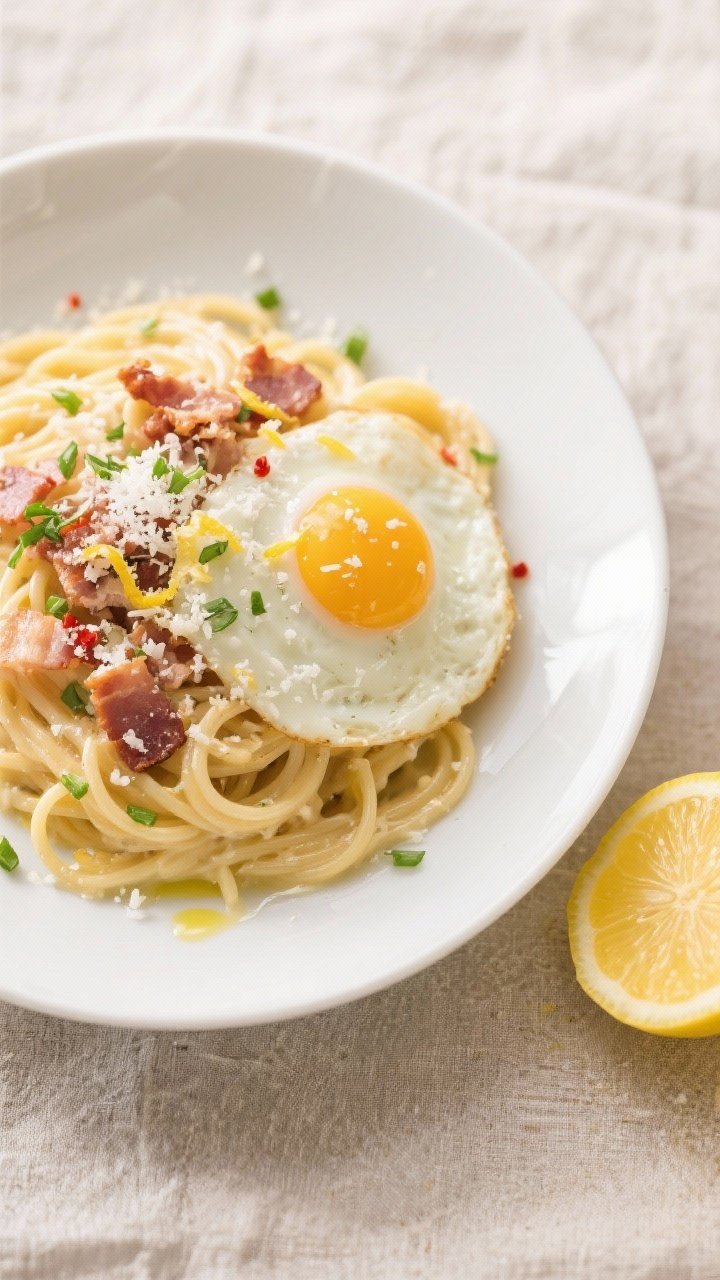
Can I add a fried egg on top?
Yes, and it’s fantastic. A runny yolk over the pasta adds richness and looks great.
Crisp edges add texture, too.
In Conclusion
Pasta for breakfast is practical, satisfying, and easy to adapt to whatever you have. With a few eggs, a bit of cheese, and some greens, last night’s noodles turn into a proper morning meal. Keep the heat low, save your pasta water, and taste as you go.
Once you’ve tried it, you’ll keep a container of cooked pasta in the fridge on purpose.
Printable Recipe Card
Want just the essential recipe details without scrolling through the article? Get our printable recipe card with just the ingredients and instructions.