The Disappearing Candy Cane Experiment (Then Turn It Into Peppermint Hot Cocoa)
October 22, 2026 · 7 min read
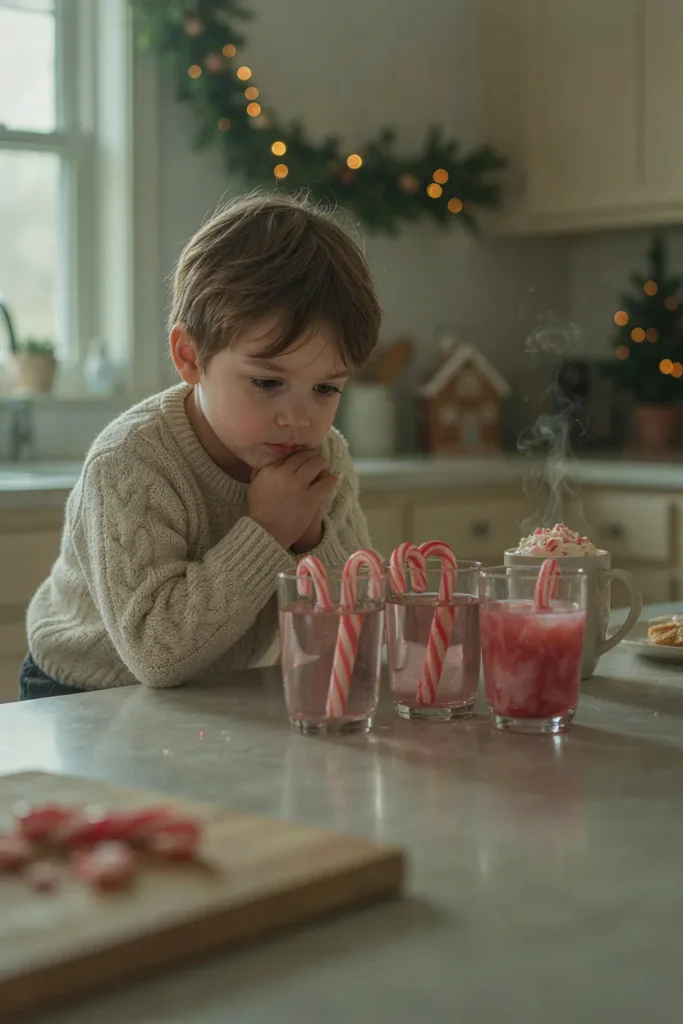
Here’s a Christmas science experiment that takes five minutes to set up, uses things already in your pantry, and ends with a mug of hot cocoa. Drop a candy cane into a few different glasses of liquid and ask your kids one simple question: which one will make the candy cane disappear fastest?
They’ll make predictions, watch red swirls spread through the water, and find out that one glass doesn’t dissolve the candy cane at all. Then you crush one more candy cane into a pot of real cocoa and everyone gets a warm reward. Science you can drink is our favorite kind.
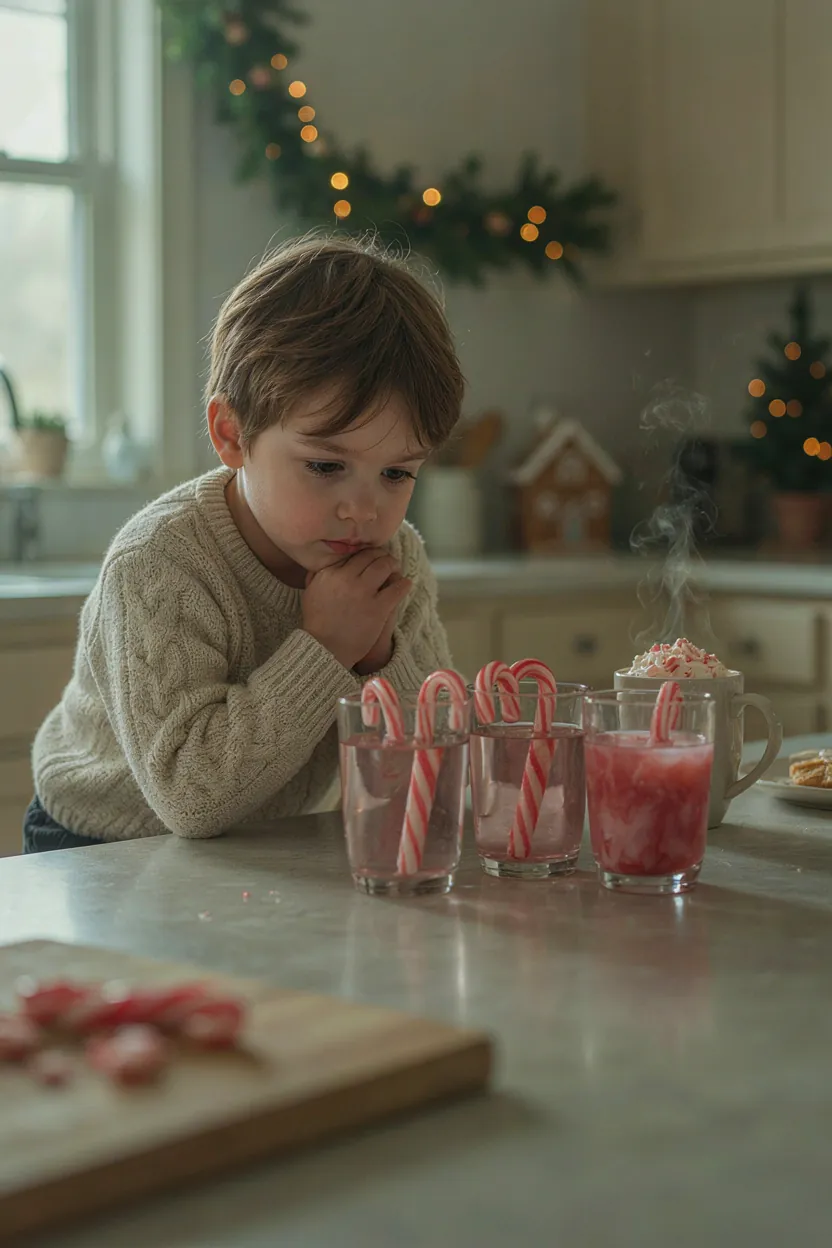
Candy Cane Peppermint Hot Cocoa
Ingredients
Equipment
Method
- Put the candy cane in a zip-top bag and let your kids crush it with a rolling pin. Keep a spoonful aside for the topping.
- Whisk the cocoa powder with about 3 tablespoons of the milk in a small saucepan until smooth, so there are no dry lumps.
- Add the rest of the milk and the crushed candy cane. Warm over medium-low heat, whisking, for 4 to 5 minutes until steaming and the candy has melted. Do not let it boil.
- Take it off the heat and stir in the vanilla and salt. Taste, then add maple syrup only if it needs it.
- Pour into two mugs, let it cool to a comfortable sipping temperature for kids, and sprinkle the reserved candy cane on top.
Notes
What Kids Will Discover
Kids find out that some liquids dissolve sugar and some don’t, and that temperature changes how fast it happens. They also practice the scientific method without anyone calling it that: guess, test, watch and write down what happened.
Ages, Time and Mess Level
- Best for: ages 4 to 10. Under-6s need help pouring; 7 and up can run the whole test and record the results themselves.
- Time: 5 minutes to set up, 10 to 20 minutes of watching, 10 minutes to make the cocoa.
- Mess level: low. Sticky glasses at worst.
- Grown-up job: pouring the warm water and everything at the stove.
What You Need for the Experiment
- 4 identical clear glasses or jars
- 4 small candy canes, all the same size (mini ones work well)
- Cold water from the fridge
- Room-temperature water
- Warm water (comfortably hot from the tap, not boiling)
- Cooking oil (any kind)
- A timer and paper and pencil for recording
The Experiment: Step by Step
- Label the glasses cold, room temperature, warm and oil.
- Make predictions. Ask each child to rank the glasses from fastest to slowest. Write their guesses down before anything goes in; that’s what makes it an experiment.
- Fill each glass with the same amount of liquid, about 1 cup.
- Drop in the candy canes at the same moment and start the timer.
- Check every 2 minutes. Watch for red streaks curling into the water and for the stripes fading. Older kids can sketch each glass at each check.
- Record the finish. Note when each candy cane is mostly gone. Leave the oil glass running for as long as anyone has patience; it’s the twist.
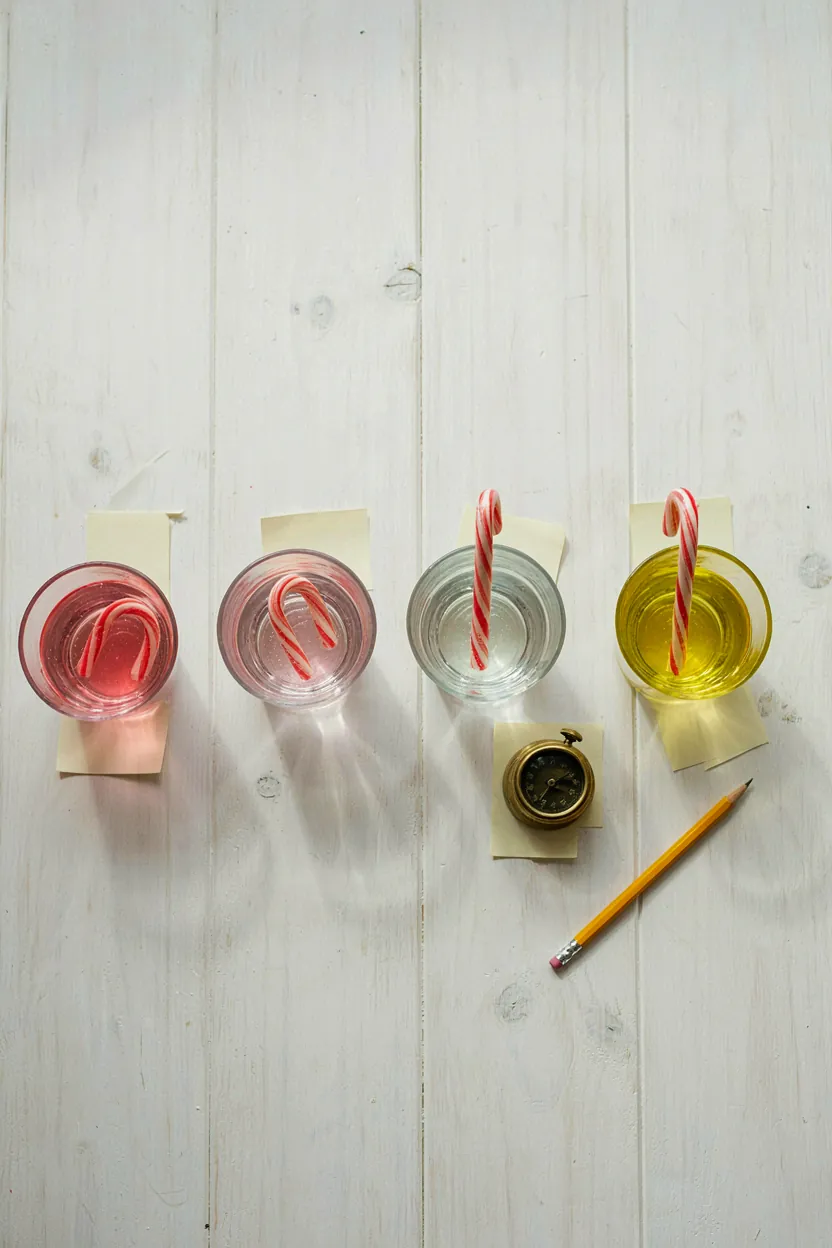
What usually happens
The warm water wins easily, often within 10 minutes. Room temperature comes second and cold water is noticeably slower. The candy cane in oil barely changes at all, even after an hour. Kids love that one, because nobody expects it.
The Science, in Kid Words
A candy cane is mostly sugar. Water is made of tiny pieces called molecules that are always jiggling around. When the candy cane goes in, water molecules bump into the sugar and pull little bits of it away, one by one, until the whole candy cane has spread out into the water. That’s dissolving.
In warm water the molecules jiggle faster, so they bump into the sugar more often and harder, and the candy cane disappears faster. Cold water molecules are slower, so it takes longer.
Oil is different. Oil molecules don’t grab onto sugar the way water molecules do, so the sugar just sits there. Sugar dissolves in water, but not in oil.
For grown-ups
Sugar (sucrose) is a polar molecule, so it dissolves readily in polar water but not in non-polar oil. Raising the temperature increases molecular motion, which speeds up the rate of dissolving. The red stripe spreading out ahead of the white sugar is a nice bonus demonstration of diffusion. Scientists in School’s Disappearing Candy Canes activity covers the same experiment for classroom use.
Change One Thing
Once they’ve seen the basic result, let kids design their own follow-up. Change just one thing at a time so the test stays fair:
- Stirred vs not stirred: two glasses of room-temperature water, stir only one.
- Whole vs crushed: does a crushed candy cane dissolve faster than a whole one? (It does, because there’s more surface for the water to work on.)
- Other liquids: try vinegar, milk or fizzy water and compare.
Turn It Into Peppermint Hot Cocoa
Once the experiment is over, crush one more candy cane and melt it straight into a pot of real cocoa. The same science is at work in the saucepan: warm milk dissolves the candy cane in minutes, and the peppermint flavors the whole mug. Pour the experiment glasses away, because they’ve been sitting out; the cocoa uses a fresh candy cane. The full recipe is in the card above.

If your kids love peppermint, try our Candy Cane Energy Balls or Candy Cane Protein Pops next. For a cocoa that skips the candy entirely, our homemade hot chocolate mix is a pantry staple.
Make It a STEAM Day
- Math: turn the results into a bar chart, minutes on one side and glasses along the bottom.
- Art: draw what the red swirls looked like at each check. Some kids end up with beautiful patterns.
- Engineering: challenge them to make a candy cane last as long as possible in water. What would you change?
Safety Notes
- Use warm tap water, not boiling water from the kettle, for the experiment.
- Candy cane pieces are a choking risk for children under 4. Keep crushed pieces for older kids, or let little ones watch while you handle the candy.
- Let the cocoa cool before small children drink it.
- Don’t drink the experiment liquids.
FAQ
Why does the candy cane dissolve faster in warm water?
Warm water molecules move faster, so they hit the sugar more often and carry it away more quickly. Cold water molecules move more slowly, so the candy cane lasts longer.
Why doesn’t the candy cane dissolve in oil?
Sugar only dissolves in liquids whose molecules can grab onto it, and water can while oil can’t. That’s why the candy cane in oil stays almost exactly the same.
Can we use the dissolved candy cane water in the hot cocoa?
We don’t recommend it. The glasses sit out during the experiment, so use a fresh candy cane for anything you’ll drink.
What age is this experiment best for?
Preschoolers enjoy watching and guessing, and children from about 7 can run it, time it and record the results on their own.
How long does it take a candy cane to dissolve?
It depends on the size of the candy cane and the water temperature. In warm water a mini candy cane is usually mostly gone in 5 to 15 minutes; in cold water it can take much longer.
In Conclusion
Four glasses, four candy canes and a timer make a real science lesson in the middle of the Christmas rush, and the hot cocoa means everyone remembers it fondly. Ask your kids to predict, watch closely and write it down, and you’ve done science together. Then pour the cocoa.
Printable Recipe Card
Want just the essential recipe details without scrolling through the article? Get our printable recipe card with just the ingredients and instructions.