Heart Magic Milk and Pink Pancakes: Valentine Color Science
November 28, 2026 · 3 min read
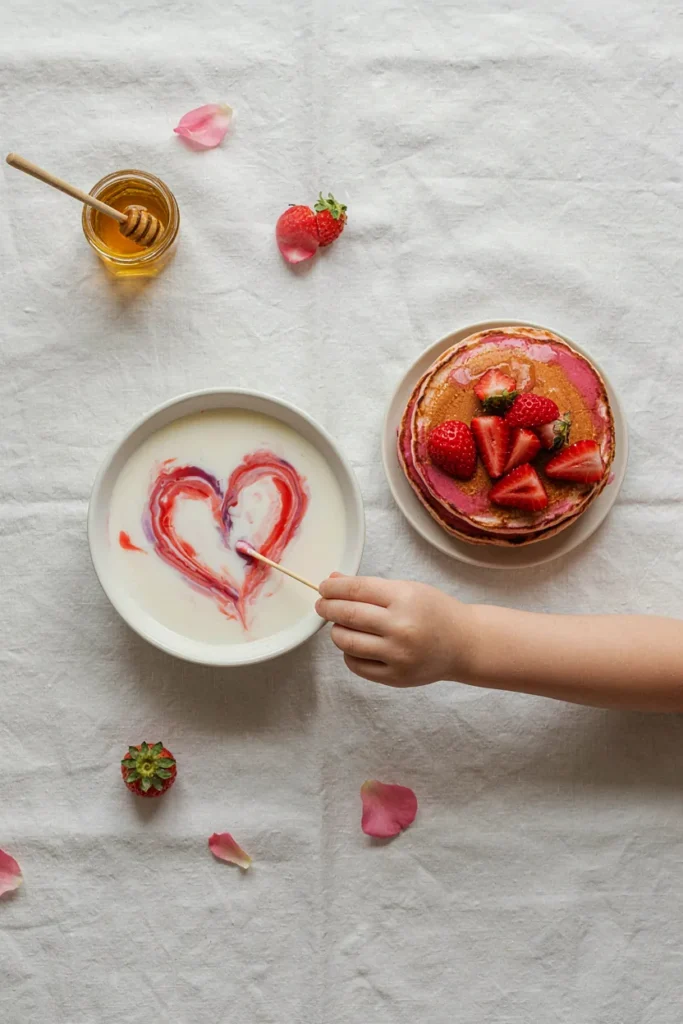
One drop of dish soap, a dish of milk and some food coloring create one of the most magical reactions in the kitchen: colors that burst and swirl across the milk on their own. It’s a perfect Valentine’s experiment in pinks and reds, followed by naturally pink pancakes for breakfast.
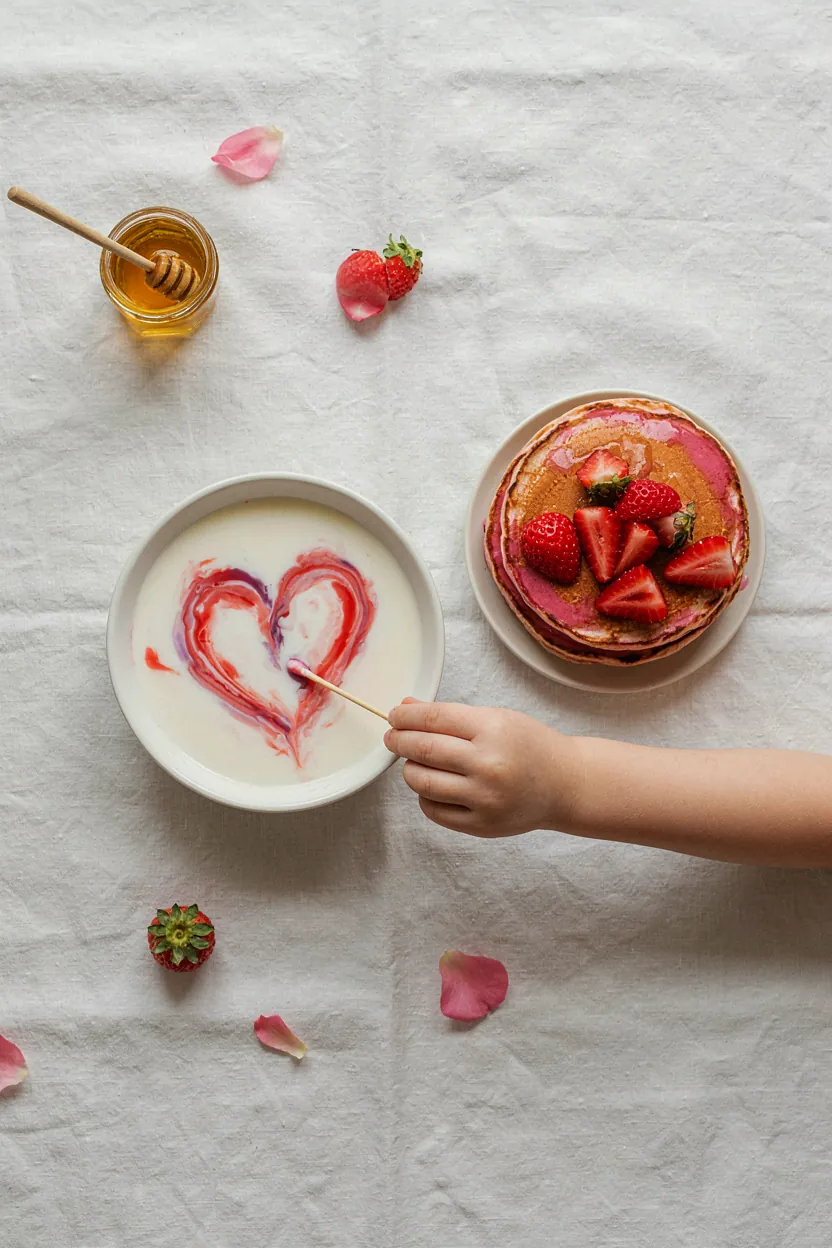
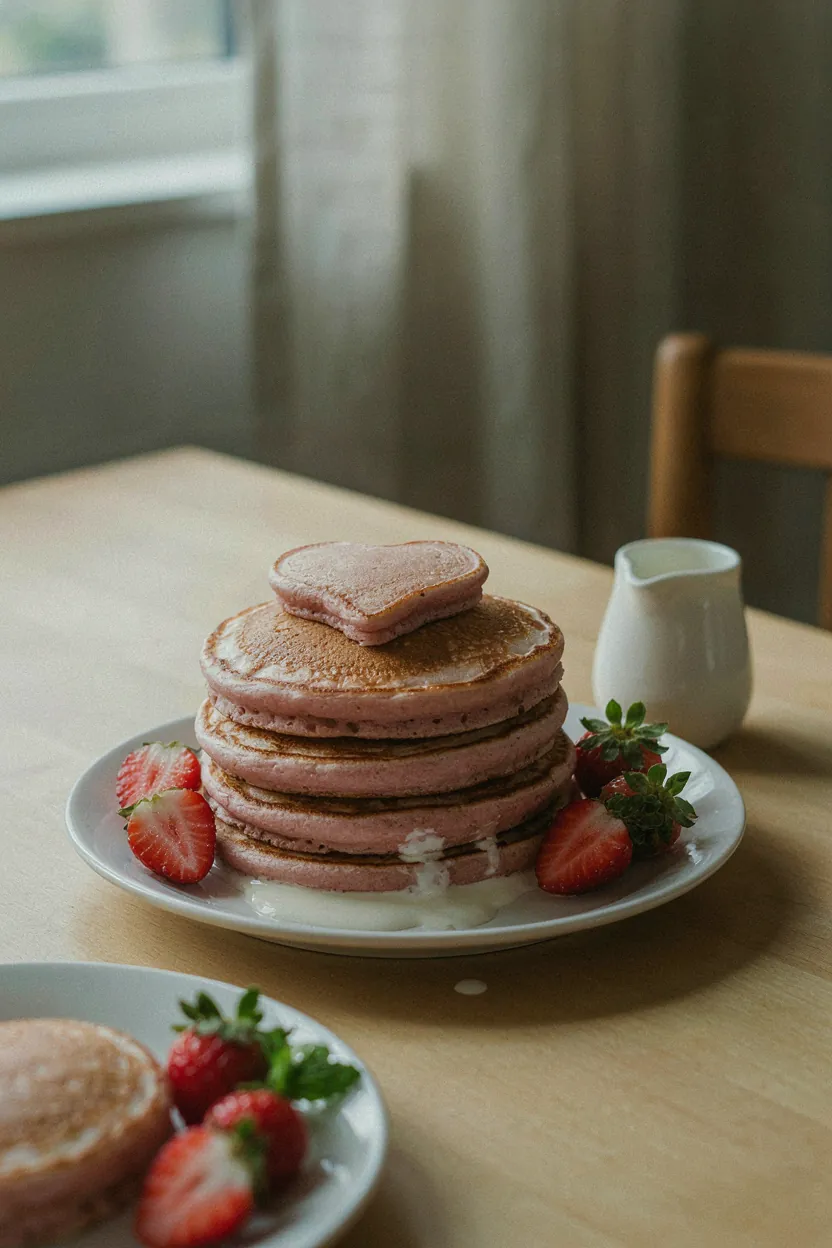
Naturally Pink Pancakes
Ingredients
Equipment
Method
- Whisk the flour, baking powder and salt.
- Blend or whisk the egg, milk, beet or strawberry, maple and butter until smooth and pink.
- Stir the wet into the dry until just combined.
- Cook 1/4 cupfuls on a medium-low pan until bubbles form, then flip. Serve with strawberries.
Notes
What Kids Will Discover
Kids learn about surface tension, the “skin” on top of liquids, and how soap breaks it and chases after the fat in milk, dragging the colors along for the ride.
Ages, Time and Mess Level
- Best for: ages 3 to 10
- Time: 15 minutes for the milk, 25 for pancakes
- Mess level: medium
- Grown-up job: the stove
The Experiment: Magic Milk
- Pour whole milk into a shallow dish, just enough to cover the bottom.
- Add drops of red, pink and purple food coloring near the middle, in a heart shape.
- Dip a cotton swab in dish soap.
- Predict: what will happen when it touches the milk?
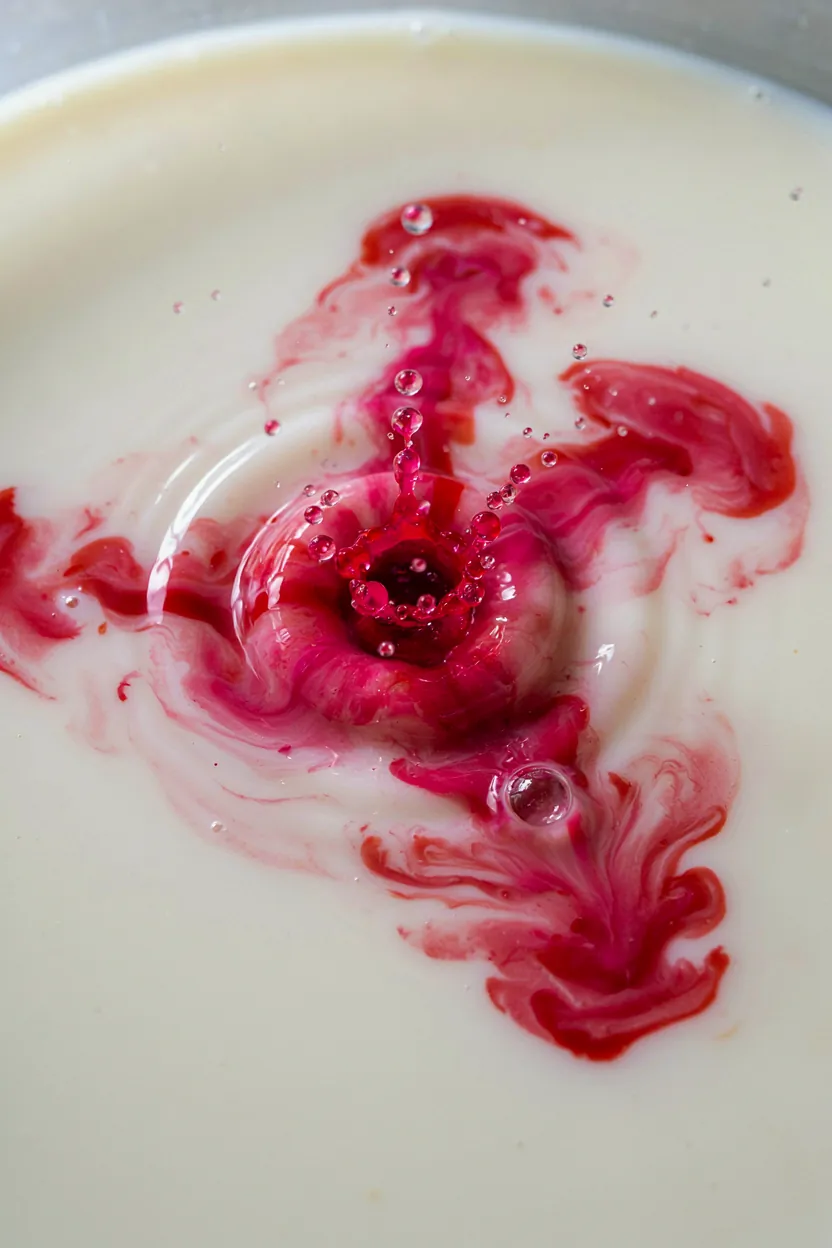
- Touch the center and hold it there. Watch the colors explode!
The Science, in Kid Words
The top of the milk has a stretchy “skin” called surface tension. Soap weakens it where it touches, so the skin pulls away toward the edges and takes the colors with it. Soap also loves to grab onto the tiny drops of fat in milk, so it zooms around chasing them, swirling the colors as it goes. It keeps moving until the soap has spread everywhere.
For grown-ups
Scientific American’s Surfactant Science: Make a Milk Rainbow explains that dish soap is a surfactant: it lowers surface tension and its molecules have a water-loving end and a fat-loving end, which drives the motion as they interact with milk fat. Whole milk works better than skim because of the extra fat.
Change One Thing
- Milk type: whole vs skim vs cream. Which swirls most?
- Water instead of milk: does it still work?
- Natural color: try a drop of beet juice instead of food coloring.
Make It a STEAM Day
- Art: press a sheet of paper onto the swirled milk for a marbled Valentine card.
- Science: more color in our Grinch Smoothie Color Science.
- More: all our Valentine Science Activities You Can Eat.
Safety Notes
- The magic milk is not for drinking (it has soap in it).
- Grown-ups handle the hot pan.
- Pancakes contain wheat, egg and dairy.
FAQ
How does the magic milk experiment work?
Soap breaks the milk’s surface tension and chases the fat, dragging the food coloring into swirls.
Why use whole milk?
More fat means more movement and bigger swirls.
How do you make pink pancakes without food dye?
Add a little beet puree or blended strawberries to the batter.
Can you taste the beet in pink pancakes?
Barely; a small amount gives lots of color.
What age is magic milk for?
From about 3 with help; it’s a favorite with preschoolers.
In Conclusion
A drop of soap turns a dish of milk into fireworks of color. Make a marbled Valentine card from it, then flip a stack of naturally pink pancakes.