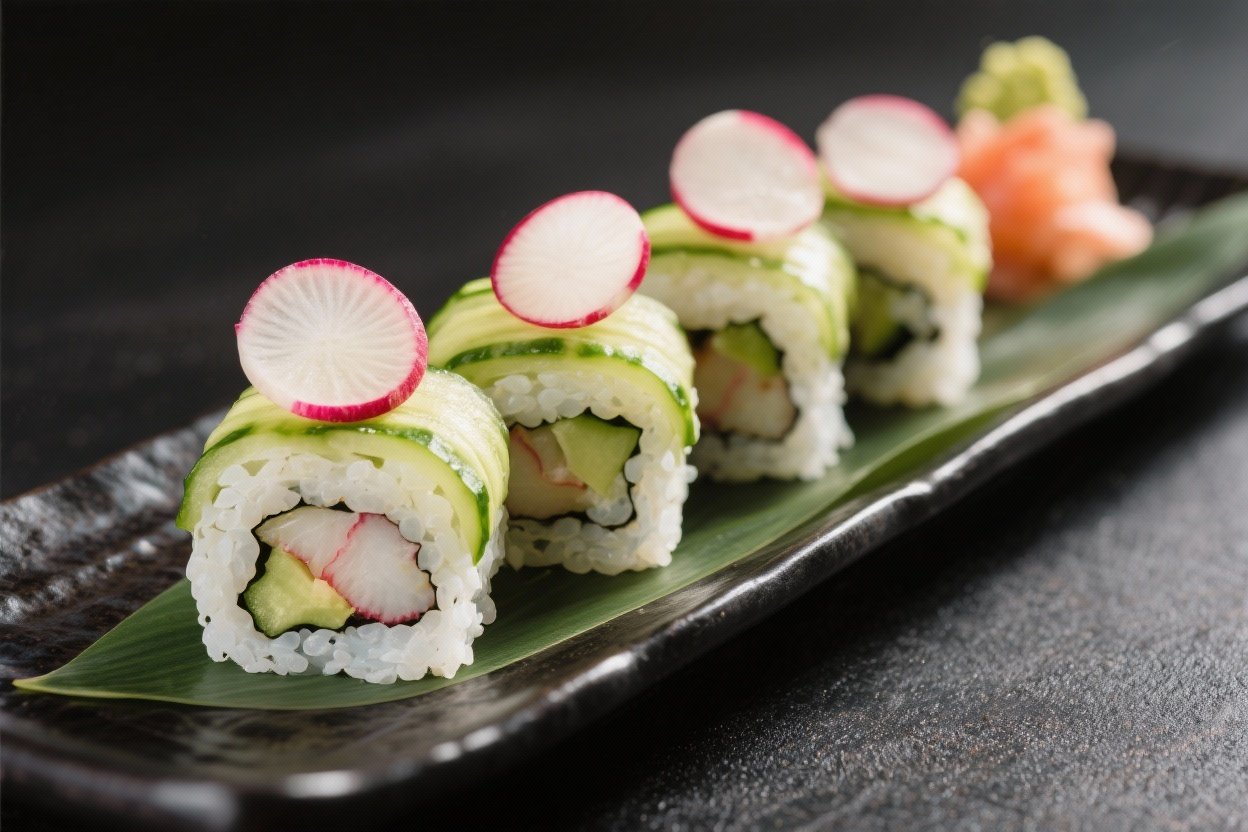
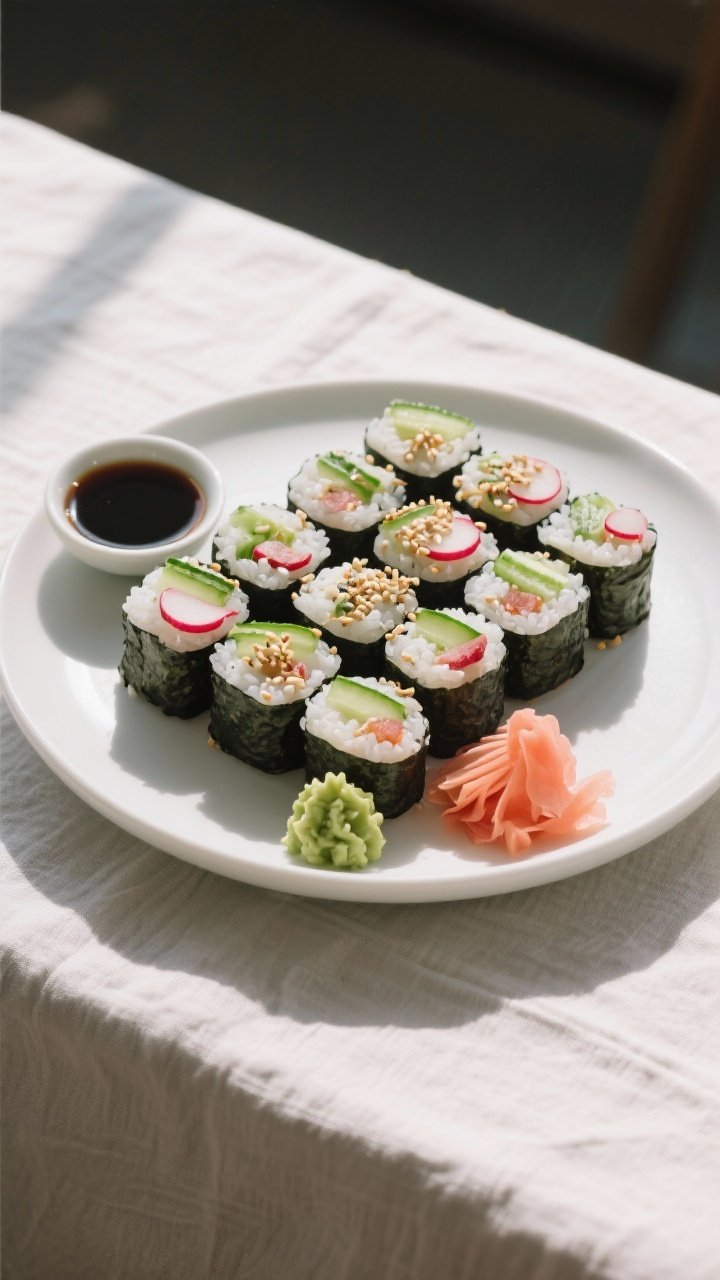
Radish & Cucumber Sushi Rolls – Fresh, Crunchy, and Easy
If you love clean flavors and crisp textures, these Radish & Cucumber Sushi Rolls are a great fit for your next lunch or light dinner. They’re simple to make, even if you’re new to rolling sushi at home. The radish brings a peppery bite, while the cucumber adds cool crunch.
Paired with seasoned sushi rice and nori, the balance is fresh and satisfying. It’s a budget-friendly recipe that looks impressive but is very doable on a weeknight.
Ingredients
Method
- Rinse the rice: Place sushi rice in a bowl and cover with cold water. Swirl, drain, and repeat until the water runs mostly clear. This removes excess starch and helps the rice stay fluffy.
- Cook the rice: Use a rice cooker or stovetop per package instructions. Aim for tender grains that hold their shape. Let it sit covered for 10 minutes after cooking.
- Season the rice: Warm the rice vinegar with sugar and salt until dissolved. Transfer the hot rice to a wide bowl. Pour the vinegar mixture over and fold gently with a spatula to coat. Fan to cool until just warm and glossy.
- Prep the vegetables: Slice cucumber and radishes into thin matchsticks. Pat them dry with a paper towel. Slice green onion if using.
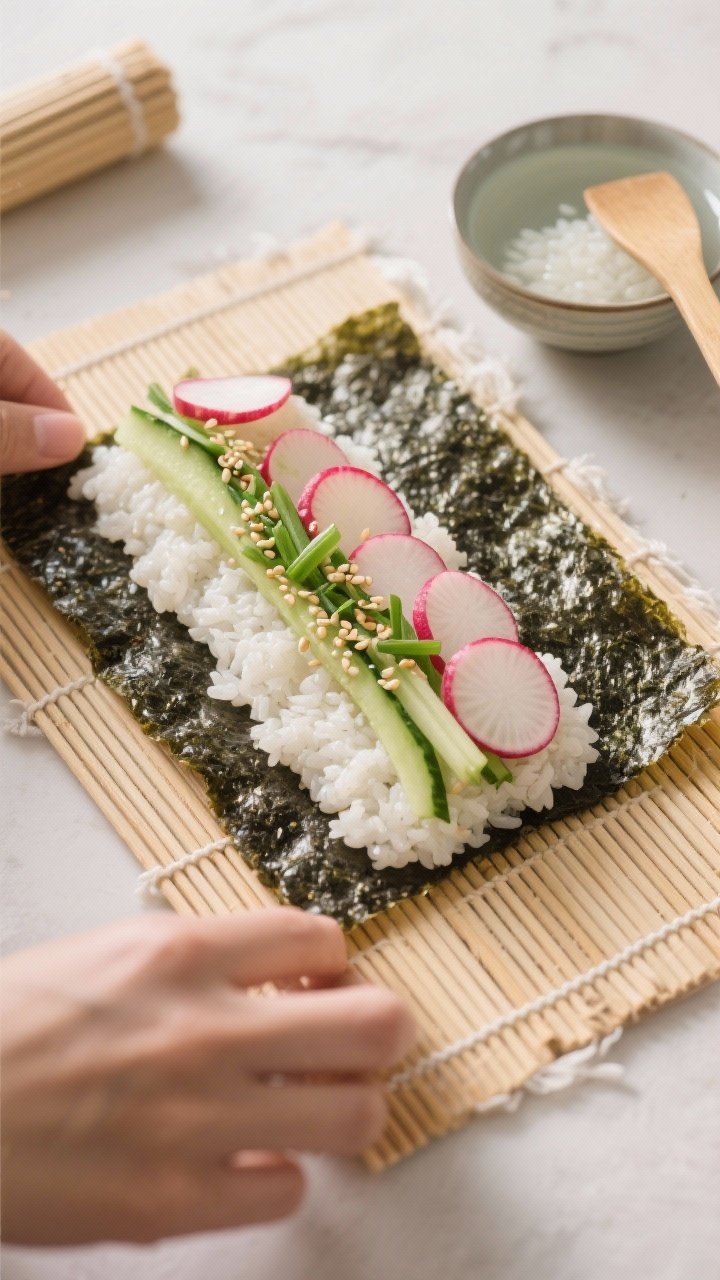
- Set up your station: Place the bamboo mat on a clean surface. Put the nori shiny side down with the short edge facing you. Keep a small bowl of water nearby to wet your fingers.
- Spread the rice: With damp fingers, spread a thin, even layer of rice over about two-thirds of the nori, leaving a 1-inch strip at the top edge bare. Don’t pack the rice tightly.
- Add fillings: Arrange a line of cucumber and radish matchsticks across the rice about 1 inch from the bottom edge. Add green onion and a sprinkle of sesame seeds.
- Roll it up: Lift the edge of the mat closest to you and roll over the filling, tucking it gently to keep everything snug. Continue rolling until you reach the bare strip of nori.
- Seal the roll: Wet the bare edge with a little water and finish rolling to seal. Give the roll a gentle squeeze with the mat to set its shape.
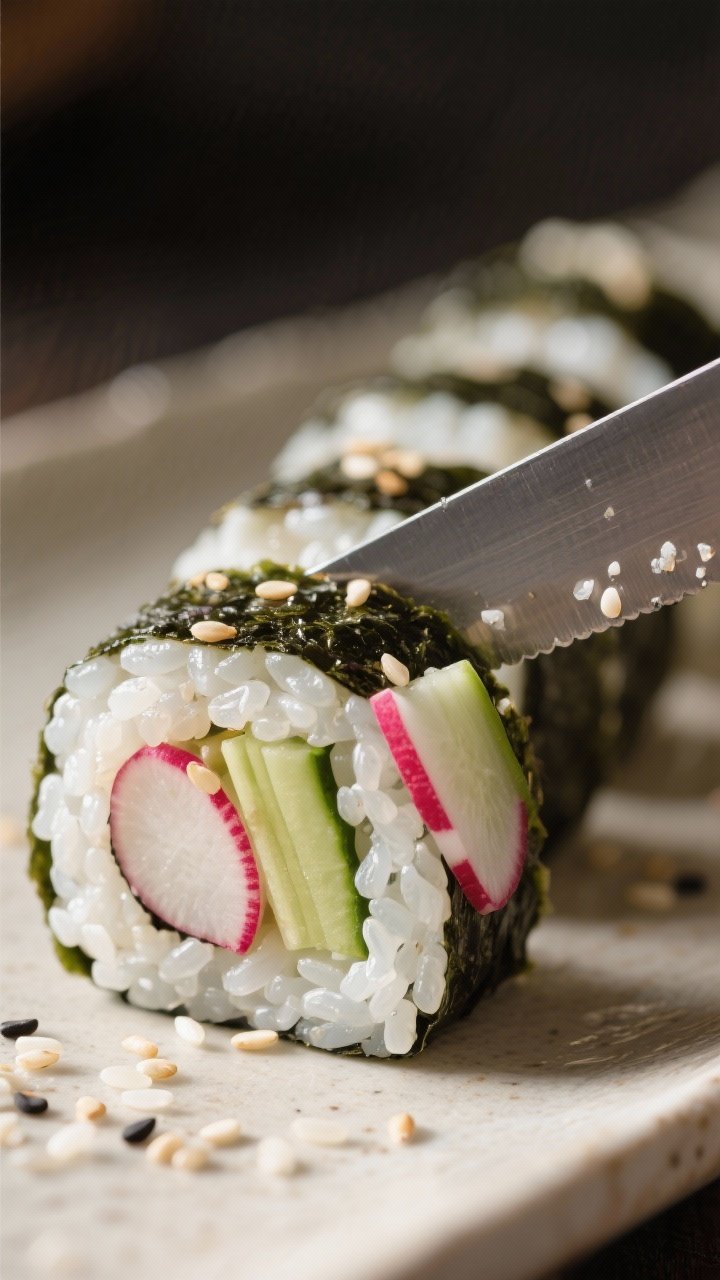
- Slice: Use a sharp, slightly damp knife to cut the roll into 6–8 pieces. Wipe the blade between cuts for clean slices.
- Repeat: Assemble and roll the remaining nori sheets and fillings.
- Serve: Arrange on a platter. Sprinkle more sesame seeds on top if you like. Serve with soy sauce, wasabi, and pickled ginger.
What Makes This Recipe So Good
- Bright, crunchy texture: Radish and cucumber together give these rolls a refreshing snap with every bite.
- Quick prep: With a few pantry staples and fresh produce, you can have rolls ready in under an hour.
- Light yet filling: Sushi rice gives gentle comfort, while the vegetables keep things light and fresh.
- Customizable: Add avocado, herbs, or a drizzle of spicy mayo for your favorite twist.
- No fish needed: Perfect for vegetarians, or anyone wanting a simple, plant-forward meal.
What You’ll Need
- Nori sheets: 4–6 full sheets, toasted.
- Sushi rice: 1 1/2 cups uncooked short-grain rice (about 4 cups cooked).
- Rice vinegar: 1/4 cup.
- Sugar: 1–2 tablespoons, to taste.
- Salt: 1 teaspoon.
- Cucumber: 1 large English cucumber or 2 small Persian cucumbers, cut into thin matchsticks.
- Radishes: 6–8 small red radishes, cut into thin matchsticks.
- Green onion: 2 stalks, finely sliced (optional for mild onion flavor).
- Sesame seeds: 1–2 tablespoons, toasted (white or black).
- Soy sauce or tamari: For dipping.
- Wasabi and pickled ginger: Optional but recommended.
- Neutral oil: A few drops to keep your knife clean between cuts (optional).
- Equipment: Bamboo rolling mat (or a clean kitchen towel wrapped in plastic), sharp knife, rice paddle or spatula, small bowl of water for dipping fingers.
Instructions
- Rinse the rice: Place sushi rice in a bowl and cover with cold water. Swirl, drain, and repeat until the water runs mostly clear.
This removes excess starch and helps the rice stay fluffy.
- Cook the rice: Use a rice cooker or stovetop per package instructions. Aim for tender grains that hold their shape. Let it sit covered for 10 minutes after cooking.
- Season the rice: Warm the rice vinegar with sugar and salt until dissolved.
Transfer the hot rice to a wide bowl. Pour the vinegar mixture over and fold gently with a spatula to coat. Fan to cool until just warm and glossy.
- Prep the vegetables: Slice cucumber and radishes into thin matchsticks.
Pat them dry with a paper towel. Slice green onion if using.
- Set up your station: Place the bamboo mat on a clean surface. Put the nori shiny side down with the short edge facing you.
Keep a small bowl of water nearby to wet your fingers.
- Spread the rice: With damp fingers, spread a thin, even layer of rice over about two-thirds of the nori, leaving a 1-inch strip at the top edge bare. Don’t pack the rice tightly.
- Add fillings: Arrange a line of cucumber and radish matchsticks across the rice about 1 inch from the bottom edge. Add green onion and a sprinkle of sesame seeds.
- Roll it up: Lift the edge of the mat closest to you and roll over the filling, tucking it gently to keep everything snug.
Continue rolling until you reach the bare strip of nori.
- Seal the roll: Wet the bare edge with a little water and finish rolling to seal. Give the roll a gentle squeeze with the mat to set its shape.
- Slice: Use a sharp, slightly damp knife to cut the roll into 6–8 pieces. Wipe the blade between cuts for clean slices.
- Repeat: Assemble and roll the remaining nori sheets and fillings.
- Serve: Arrange on a platter.
Sprinkle more sesame seeds on top if you like. Serve with soy sauce, wasabi, and pickled ginger.
Storage Instructions
These rolls are best the day they’re made, ideally within a few hours. If you need to store them, wrap tightly in plastic and keep in an airtight container in the fridge for up to 24 hours.
The rice may firm up a bit, and the nori can soften. To refresh, let the rolls sit at room temperature for 15–20 minutes before serving. Avoid freezing, as the texture of the rice and vegetables won’t hold up.
Health Benefits
- Hydration and fiber: Cucumber is high in water, while radishes offer fiber to support digestion.
- Vitamins and antioxidants: Radishes provide vitamin C and compounds that support overall wellness.
- Lower in calories: These veggie-forward rolls are naturally light, making them a smart option for a balanced meal.
- Customizable nutrition: Add avocado for healthy fats, or swap in brown sushi rice for more fiber and minerals.
- Sodium control: Use low-sodium soy sauce or tamari to keep sodium levels in check.
Pitfalls to Watch Out For
- Overfilling: Too many fillings make the roll fall apart.
Keep the line of vegetables neat and modest.
- Wet vegetables: Excess moisture leads to soggy nori. Pat cucumber and radish dry before rolling.
- Sticky hands: Rice clings to dry fingers. Dip your fingertips in water to spread the rice easily.
- Dull knife: A dull blade crushes the roll.
Use a sharp knife and clean it between slices.
- Rice temperature: Very hot rice can melt the nori, while cold rice won’t spread well. Aim for warm and slightly sticky.
Recipe Variations
- Avocado boost: Add creamy avocado slices for richness that pairs well with the crisp vegetables.
- Herb lift: Add shiso leaves, cilantro, or fresh dill for an aromatic twist.
- Spicy kick: Spread a thin line of sriracha mayo or wasabi mayo over the rice before adding the vegetables.
- Brown rice rolls: Use short-grain brown sushi rice for a heartier texture and more fiber. Cook it a bit longer for tenderness.
- Inside-out (uramaki): Flip the nori so the rice is on the outside, then roll the same way.
Finish with a coating of toasted sesame seeds.
- Pickled radish: Use matchsticks of pickled daikon (takuan) for sweet-tangy crunch.
- Protein add-ins: Add strips of baked tofu or a light egg omelet (tamagoyaki) for more substance.
FAQ
Do I need a bamboo mat to make these rolls?
No, but it helps. You can improvise with a clean kitchen towel wrapped in plastic wrap. The plastic keeps the towel from sticking to the rice and gives you a bit of grip while rolling.
What’s the best rice for sushi rolls?
Short-grain sushi rice is best because it’s sticky enough to hold the roll together.
Medium grain can work in a pinch, but avoid long-grain rice, which won’t hold shape well.
How do I keep the nori from getting soggy?
Use slightly warm rice, pat your veggies dry, and roll soon after spreading the rice. Serve shortly after slicing. If storing, wrap tightly to keep moisture from seeping in.
Can I make these gluten-free?
Yes.
Use tamari or a certified gluten-free soy sauce for dipping, and check that your rice vinegar and other seasonings are gluten-free.
How thin should I slice the vegetables?
Matchsticks about the thickness of a chopstick or smaller work well. Thin slices make rolling easier and help the roll hold together cleanly.
Can I prepare the rice ahead of time?
You can cook the rice a few hours ahead, season it, and keep it covered with a damp towel at room temperature. Avoid refrigerating the rice before rolling, as it becomes hard and difficult to spread.
What’s the trick to clean slices?
Use a very sharp knife, dip it in water, and wipe between cuts.
Gentle sawing motions work better than pressing straight down.
Wrapping Up
Radish & Cucumber Sushi Rolls are light, crunchy, and easy to master at home. With a few basic techniques and simple ingredients, you’ll get beautiful, fresh rolls that feel restaurant-worthy. Keep the steps simple, don’t overfill, and use a sharp knife.
Serve with soy sauce, wasabi, and a little ginger, and enjoy a clean, satisfying meal any day of the week.
Printable Recipe Card
Want just the essential recipe details without scrolling through the article? Get our printable recipe card with just the ingredients and instructions.