Santa’s Sleigh Engineering: Build a Snack Sleigh and Race It Down a Ramp
November 7, 2026 · 4 min read
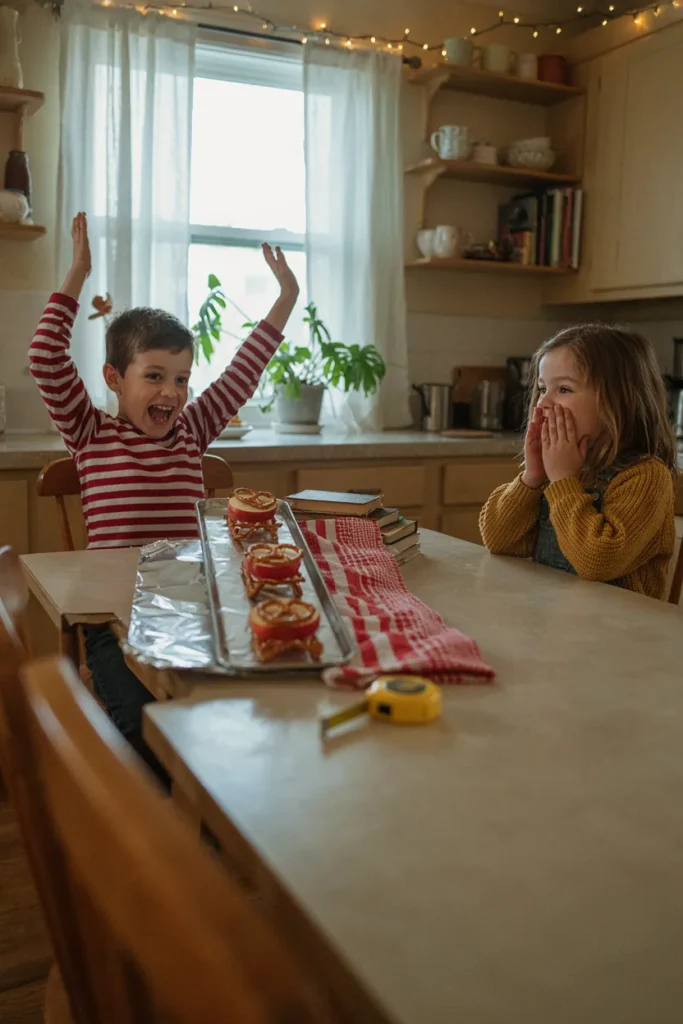
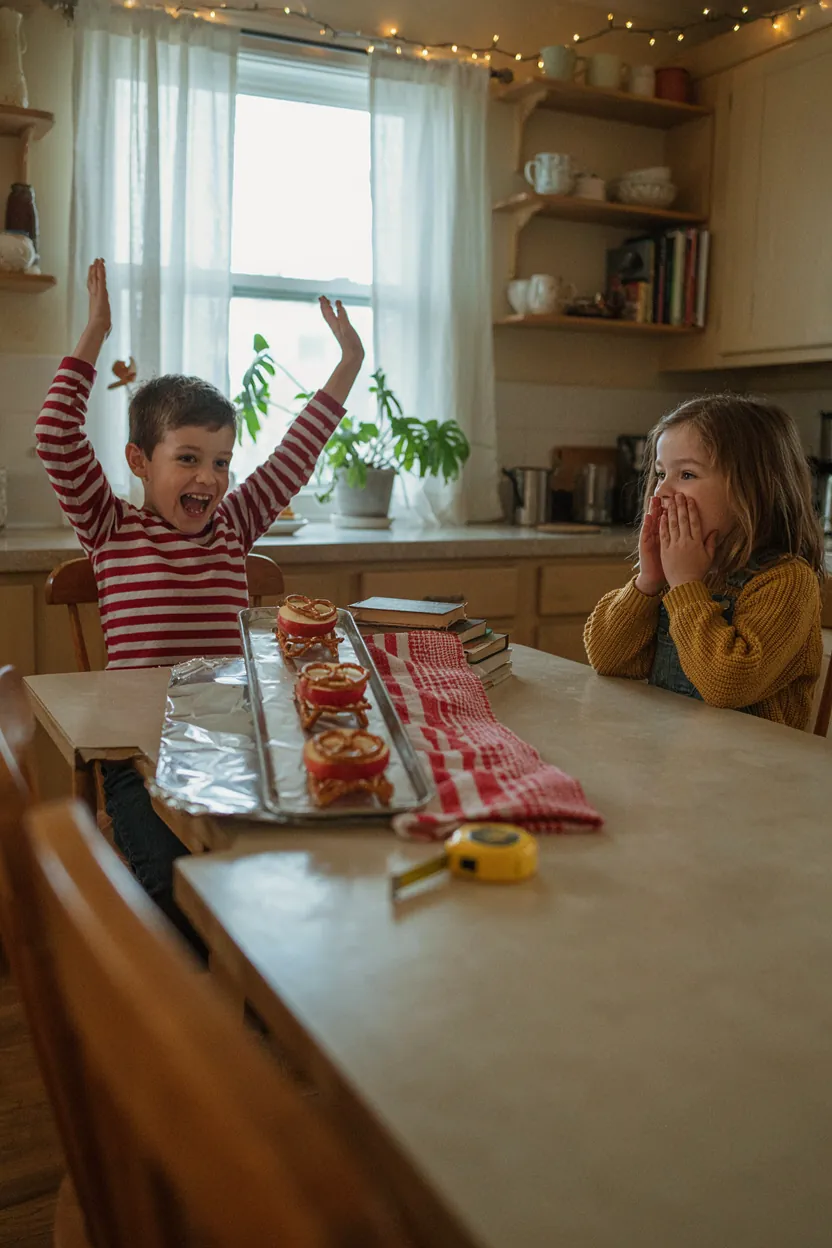
Santa’s sleigh has to fly, but ours only have to slide. Kids build snack sleighs from apple slices and pretzel runners, then race them down a ramp over different surfaces. Which surface makes the sleigh go furthest? Which stops it dead? The answer is friction.
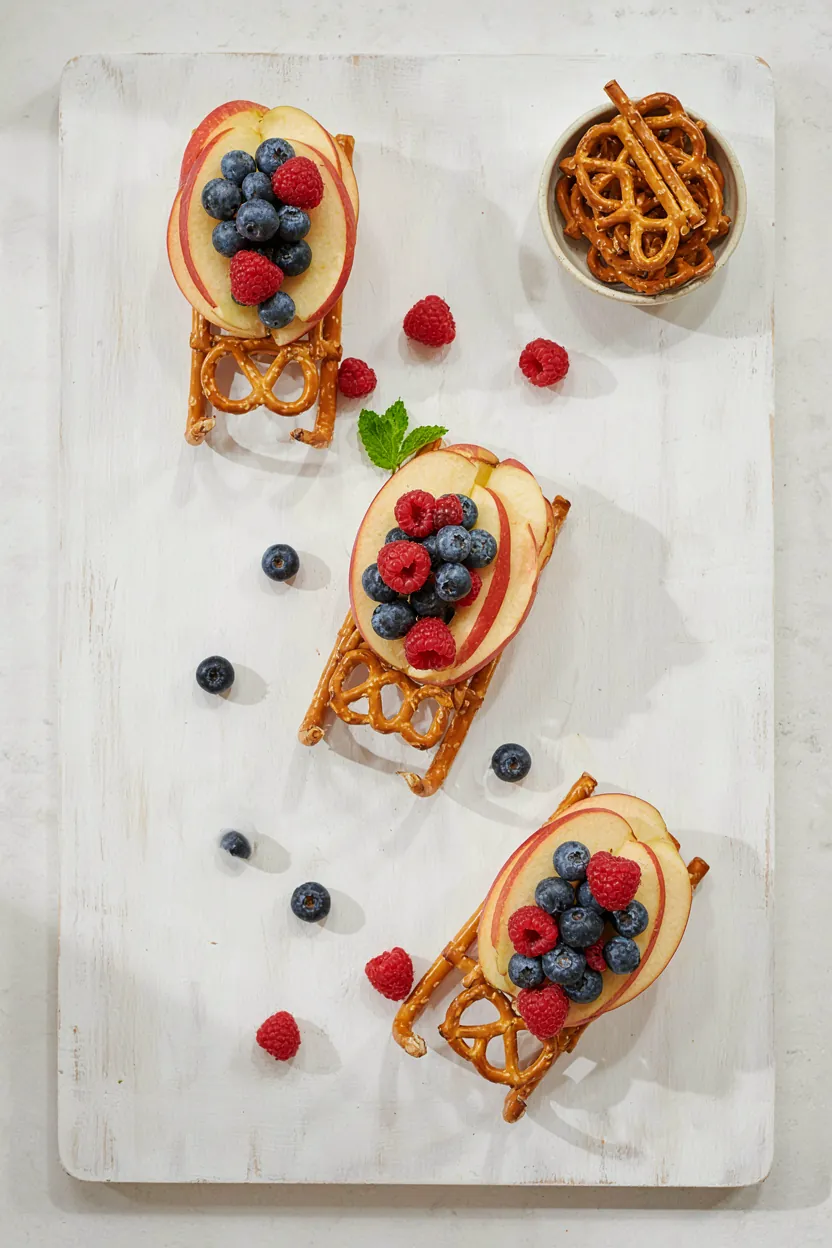
Apple Slice Sleighs
Ingredients
Equipment
Method
- Cut apples into thick wedges and brush with lemon juice.
- Lay each wedge skin-side down and press two pretzel sticks underneath with a dab of seed butter as runners.
- Spread a little seed butter on top and load on berry cargo.
- Race them (see the experiment), then eat fresh ones.
Notes
What Kids Will Discover
Kids learn about friction, the force that slows things down when two surfaces rub together. Smooth surfaces have less friction; rough surfaces have more.
Ages, Time and Mess Level
- Best for: ages 4 to 10
- Time: 30 minutes
- Mess level: low to medium
- Grown-up job: cutting the apples
What You Need
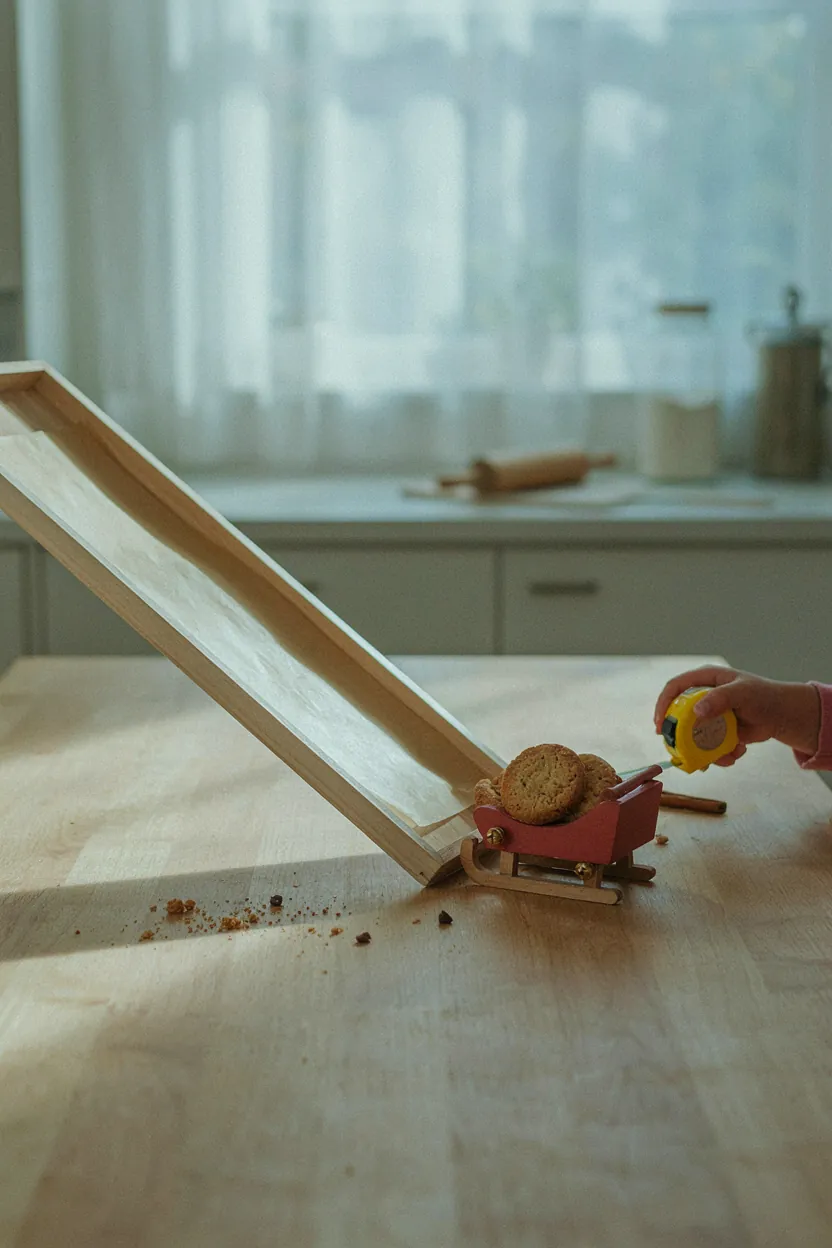
- A baking tray or a board propped on 2 or 3 books as a ramp
- Test surfaces: aluminum foil, parchment paper, a kitchen towel, bare tray
- A tape measure or ruler
- Snack sleighs (see the recipe card)
The Experiment
- Set up the ramp on a table with a clear runway at the bottom.
- Cover the ramp with the first test surface.
- Predict: which surface will make the sleigh slide furthest?
- Release the sleigh from the same spot each time. Don’t push!
- Measure how far it travels past the bottom of the ramp. Do three runs per surface and pick the middle result.
- Change the surface and repeat.
The Science, in Kid Words
Even surfaces that look smooth have tiny bumps you can’t see. When the sleigh slides, those bumps catch on each other and slow it down. That’s friction. Foil and parchment are slippery and have small bumps, so the sleigh zooms. A towel is fuzzy and rough, so its bumps grab the runners and stop the sleigh quickly.
Real sleighs use smooth metal runners on slippery snow for exactly this reason.
For grown-ups
K5 Learning’s frictional force experiment uses the same ramp setup: rough surfaces create more friction and slow objects sooner, while smooth ones let them travel further. Keeping the release point and ramp height the same is what makes it a fair test.
Change One Thing
- Ramp height: add a book. Does a steeper ramp beat friction?
- Cargo: load the sleigh with more berries. Does extra weight change the distance?
- Runners: pretzel sticks vs flat (no runners).
Make It a STEAM Day
- Math: make a bar chart of distances for each surface.
- Engineering: redesign the sleigh to go further, then try our Reindeer Pretzel Bridge Challenge.
- Art: draw Santa’s dream sleigh with “low friction” features.
Safety Notes
- Grown-ups cut the apples.
- Pretzels and whole berries can be choking hazards for children under 4; halve berries.
- Use fresh sleighs for eating, not the ones that raced across the table.
FAQ
What is friction?
A force that slows things down when two surfaces rub together. Rough surfaces create more friction than smooth ones.
Which surface makes the sleigh go furthest?
Usually the smoothest, such as foil or parchment. Towels and fabric slow it down the most.
Why do real sleighs have runners?
Smooth runners touch the snow along a thin edge, which reduces friction and lets the sleigh glide.
How do I make the test fair?
Use the same ramp height, release from the same spot, don’t push, and repeat each test three times.
What age is this experiment for?
About 4 and up. Older kids can measure and graph the results.
In Conclusion
Build a sleigh, race it, measure it, eat it. Friction is one of the easiest forces to feel and see, and a snack-sleigh race makes it one of the most fun to learn.