

Why Toddlers Get Hungry So Fast After Breakfast
Toddlers burn energy at nearly twice the adult rate per pound of body weight, and their brains alone consume up to 66% of their total energy—making post-breakfast hunger completely normal and physiologically inevitable. This represents a fundamental difference in how small bodies work, not a feeding problem. Research from Duke University found toddlers expend 50% more energy than adults adjusted for body size, while their walnut-sized stomachs can only hold 1-2 cups of food. The solution lies not in larger portions but in strategic meal composition: combining protein, healthy fats, and fiber to slow digestion and stabilize blood sugar.

Toddlers burn energy like “a different species”

The metabolic demands of early childhood are extraordinary. According to research published in Science, children ages 9-15 months expend 50% more energy per day than adults when adjusted for body size. “Little people are not burning energy like small adults. They are burning energy superfast… like a different species,” explains Dr. Herman Pontzer, Duke University evolutionary biologist. Science
The numbers tell a striking story. Toddlers ages 1-3 require approximately 80 calories per kilogram of body weight daily—compared to just 35-45 calories/kg for adults. NCBI A 25-pound toddler needs roughly 1,125 calories daily, which means they require nearly 2-3 times more calories per pound than their parents.
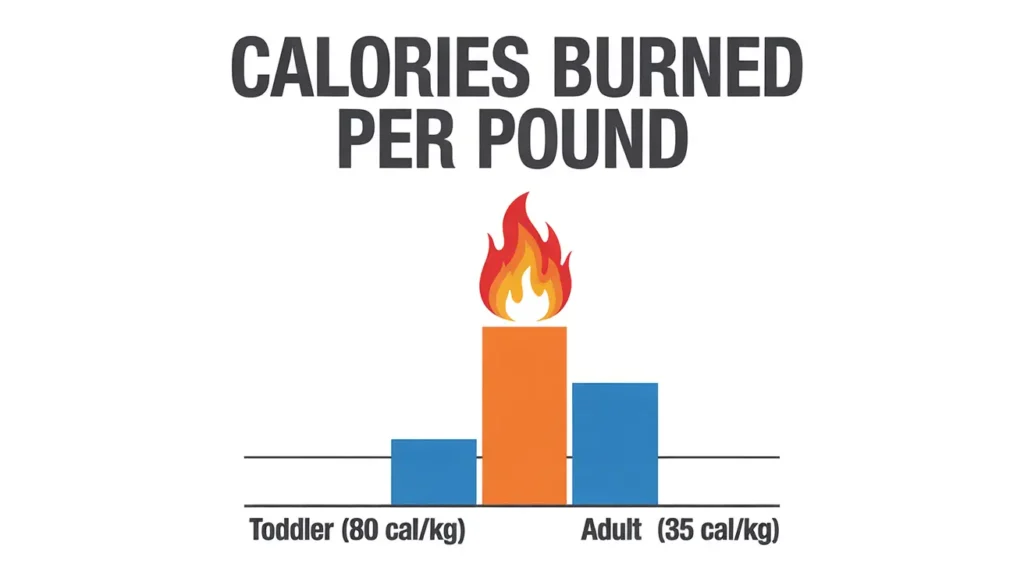
Perhaps most remarkably, the toddler brain is an energy furnace. Research from Northwestern University found that at ages 4-5, brain glucose consumption peaks at 66% of the body’s resting metabolic rate— American Physiological Societycompared to just 20-25% in adults. “Our findings suggest that our bodies can’t afford to grow faster during the toddler and childhood years because a huge quantity of resources is required to fuel the developing human brain,” notes Dr. Christopher Kuzawa, Northwestern anthropology professor. Northwestern Now This massive neural energy demand creates near-constant need for glucose replenishment.
Tiny stomachs empty in under two hours
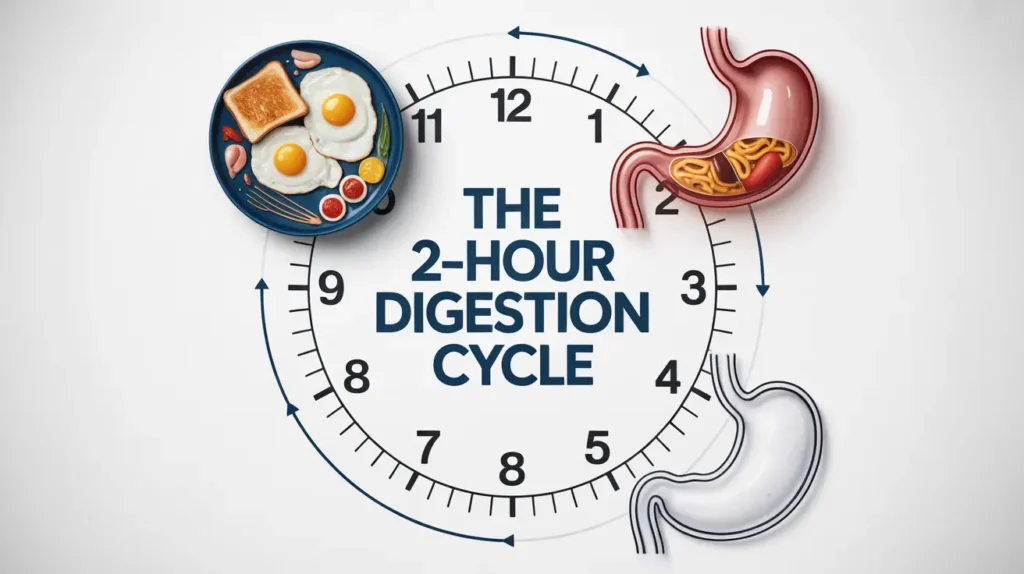
A toddler’s stomach capacity presents a fundamental physical constraint. At one year old, the stomach holds approximately 1 cup (8 ounces); by age three, capacity reaches roughly 2 cups (16 ounces)— Natural Parenting Centerjust one-quarter to one-half an adult stomach. This biological reality means toddlers simply cannot store enough food to fuel their high-energy bodies for long periods.

Research from Children’s National Medical Center reveals the timeline: gastric emptying reaches 43% at one hour and 91% at three hours in children ages 0-5. SNMMI Liquids clear the stomach in approximately 45 minutes; solid foods typically empty within 1.5-2 hours. PubMed Central The practical implication is clear: a breakfast eaten at 7 AM may be largely digested before 9 AM.
The pediatric guidance of “one tablespoon per year of age” per food item—meaning a two-year-old starts with two tablespoons—reflects this anatomical reality. Natural Parenting Center Nationwide Children’s Hospital recommends this approach rather than adult-sized portions that overwhelm small digestive systems.
Macronutrients affect satiety differently in young children
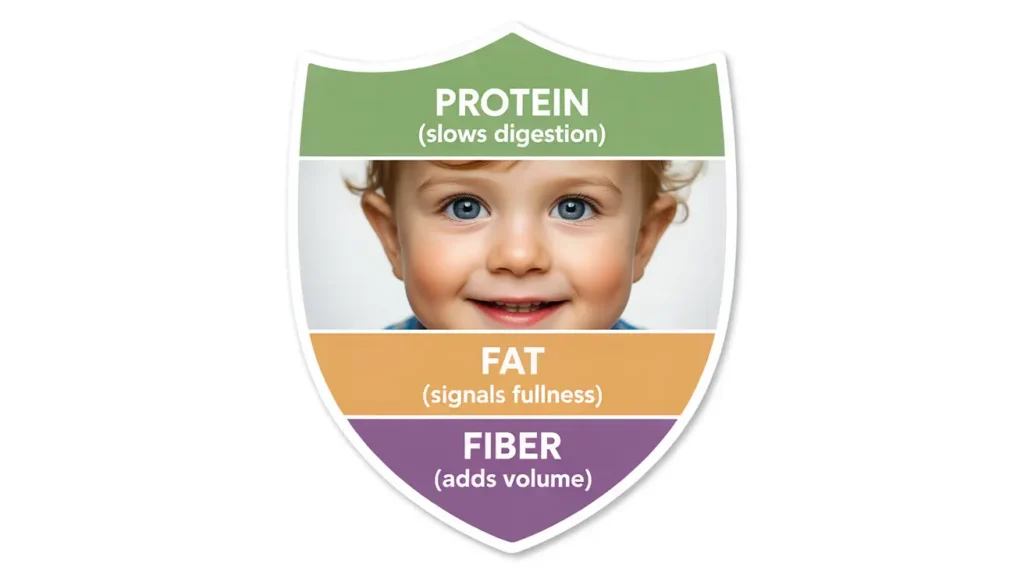
Not all breakfast calories are equal when it comes to sustaining toddler energy. Research reveals significant differences in how macronutrients affect fullness and subsequent eating.
Protein produces the strongest satiety effect. A study of 35 preschool children ages 5-6 found that energy intake at the next meal was significantly greater after high-carbohydrate lunches versus high-protein lunches. nihPubMed The mechanism involves slower digestion—proteins take 2-3 hours to leave the stomach— Fluidhealthandfitnessand hormonal signaling: the amino acid phenylalanine triggers gut hormone peptide YY, which signals fullness to the brain. Eat This!
Healthy fats keep children full longest because they take the longest to digest of all macronutrients. Huckleberry Fats slow gastric emptying Snuggy Mom and help stabilize blood sugar by moderating carbohydrate absorption. The Academy of Nutrition and Dietetics recommends toddlers get 30-40% of daily calories from fat—higher than adult recommendations—to support brain development and sustained energy. University of Hawaii Pressbooks
Fiber extends fullness by adding bulk, attracting water, and slowing nutrient absorption. A study of children ages 7-12 found chicory root fiber supplementation reduced appetite and improved body composition. dietary Toddlers ages 1-3 need 19 grams of fiber daily eatright according to the Academy of Nutrition and Dietetics, though the AAP offers a simpler formula: age plus five grams as a minimum target. Cleveland Clinic
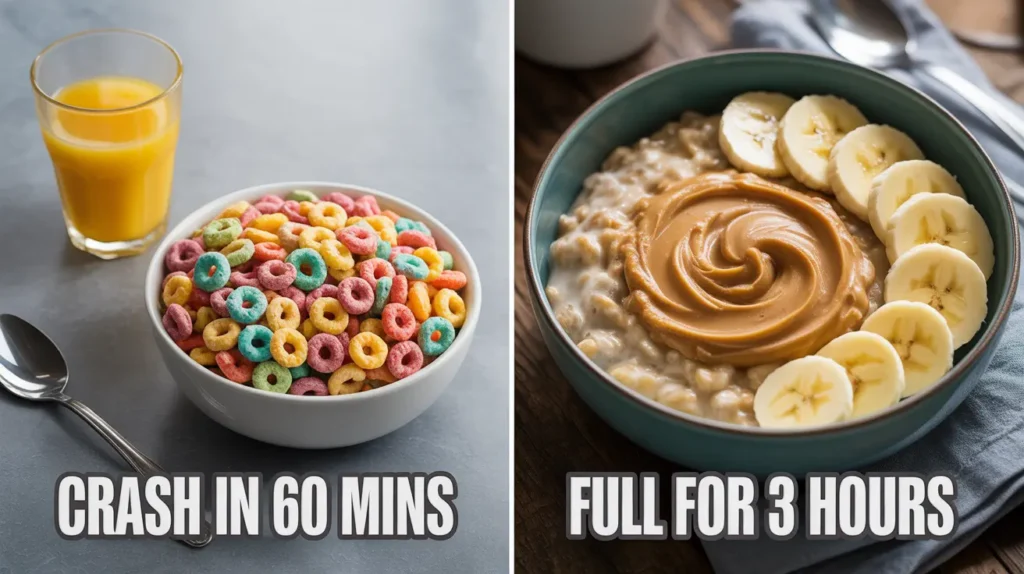
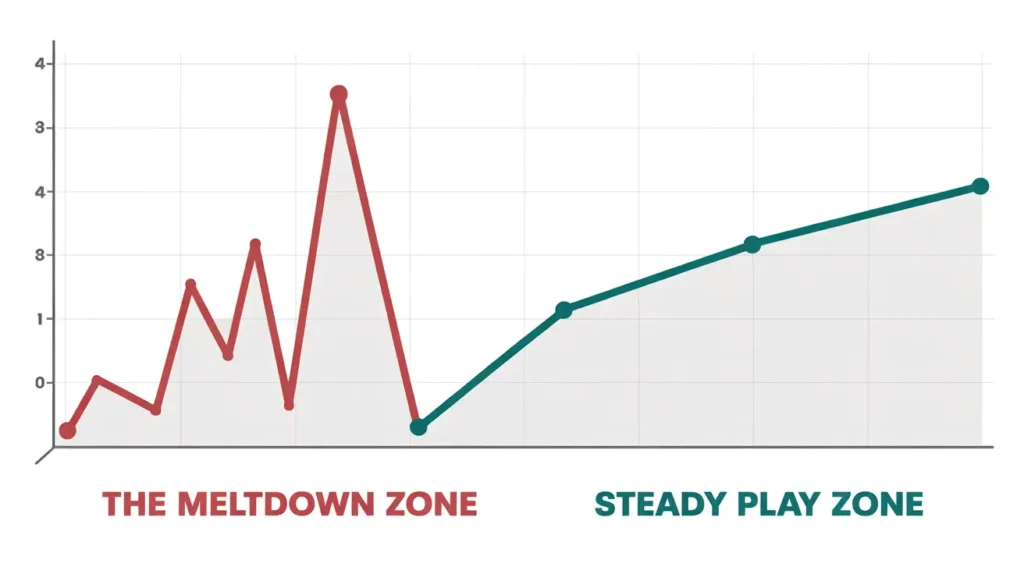
Simple carbohydrates cause rapid hunger return. When children eat sugary cereals or white bread, blood glucose spikes quickly, triggering a large insulin release. KidsHealth The subsequent blood sugar crash—sometimes dropping below baseline within 90 minutes—signals hunger before actual energy needs arise. Research in children found hunger ratings were significantly greater at lunchtime after high-glycemic breakfasts compared to low-glycemic alternatives. PubMed
Expert guidance on recognizing true hunger versus behavioral eating
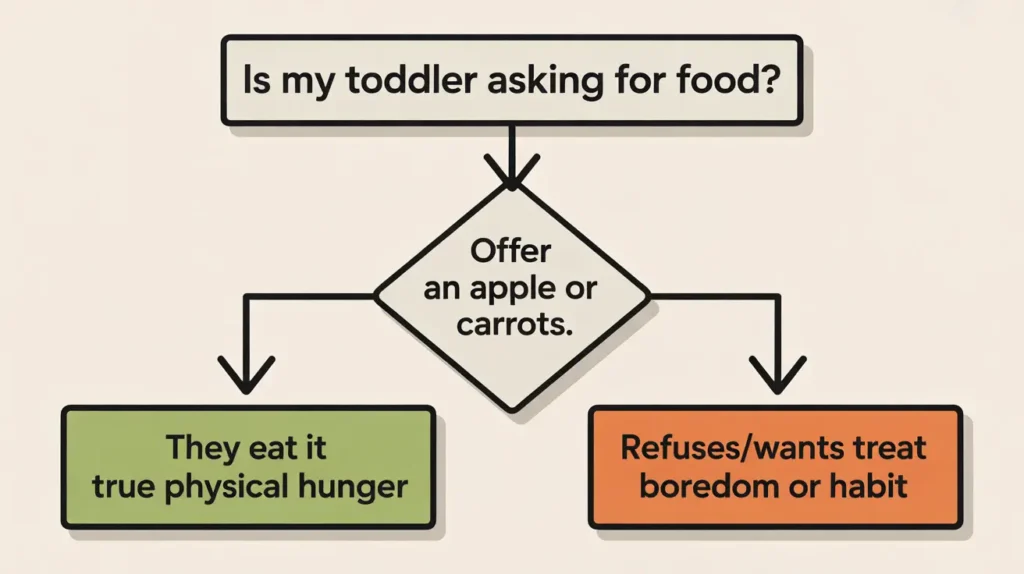
Distinguishing physical hunger from emotional or habitual eating requires attention to specific cues. Jill Castle, MS, RD, pediatric dietitian and author of The Nourished Child, offers a practical test: “If your child is truly, physically hungry, they will eat an apple, carrot sticks, or another nutritious food. If they are bored, or emotional, or just asking out of habit, they may be unhappy with this option, wanting something more enticing.” The Nourished Child
Physical hunger builds gradually, includes stomach sensations like growling, and resolves with any nutritious food. Behavioral hunger appears suddenly, often involves craving specific treats, and frequently connects to boredom, screen time, or emotional states. KidsHealth/Nemours notes that “around the preschool years, many kids start to use the word ‘hungry’ to express other feelings such as boredom, loneliness, sadness, or other emotions they don’t understand or can’t name.” KidsHealth
Dr. Eileen Murray, pediatrician at Elliot Pediatrics, recommends giving children agency: “Parents can offer choices and provide limits/structure but allow the child to determine how much of the meal they eat. This facilitates a healthier relationship with food and our senses of hunger/fullness.” Elliot Hospital
The American Academy of Pediatrics describes responsive feeding as “You provide, your child decides”— University of Hawaii Pressbooksresearch shows children nourished using this approach are less likely to develop obesity later in life.
Red flags that warrant medical evaluation
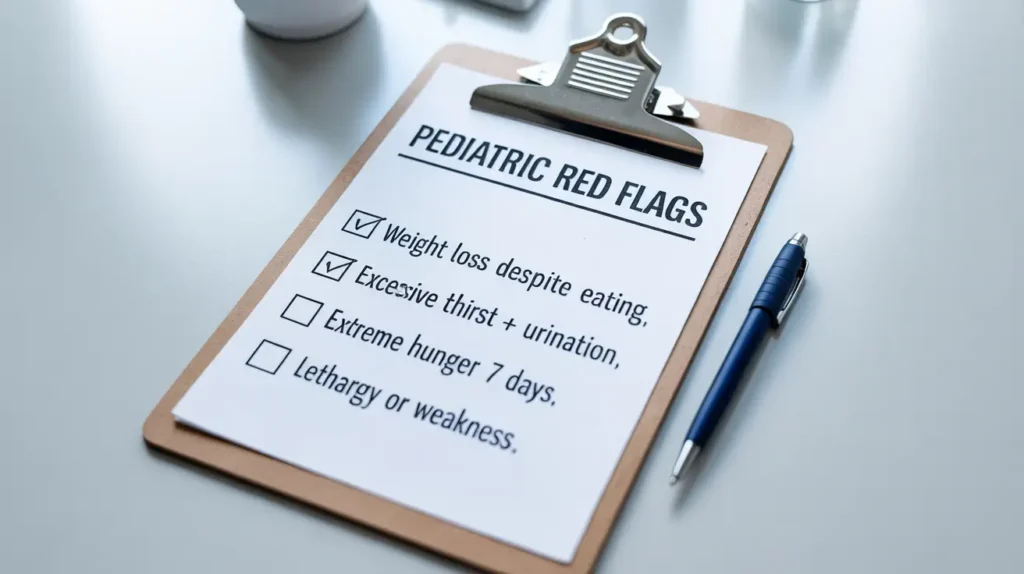
While frequent hunger is usually normal, certain patterns should prompt a pediatrician visit. Dr. Danelle Fisher, Vice Chair of Pediatrics at Providence Saint John’s Health Center, advises: “If you’ve exhausted all possibilities and your child continues to be hungry all the time, it’s time to get some professional advice and support… consult your pediatrician to rule out a medical condition.”
The classic warning constellation is excessive hunger combined with excessive thirst and frequent urination—potential signs of Type 1 diabetes. Other conditions causing polyphagia (excessive hunger) include hyperthyroidism, which speeds metabolism and may present with rapid heartbeat and sweating; Drugs.com intestinal parasites, which cause weight loss despite adequate eating; and Prader-Willi syndrome, a rare genetic disorder causing insatiable appetite.
Parents should seek evaluation for:
- Unexplained weight loss despite increased eating
- Rapid or significant weight changes in either direction
- Excessive hunger lasting more than one week after dietary adjustments
- Hunger accompanied by fatigue, weakness, or lethargy
- Appetite increase that seems “exponentially beyond normal,” per Dr. Alyssa Swick, pediatrician at Riley Children’s Health
Building breakfasts that sustain energy

Evidence-based breakfast composition follows a clear formula: protein plus healthy fat plus fiber plus complex carbohydrates. The AAP recommends including 3-4 food groups at breakfast, and research from NIH/PMC confirms that high-protein, high-fiber breakfasts result in better diet quality and satiety in preschoolers.
Strong4Life at Children’s Healthcare of Atlanta recommends combinations like scrambled eggs with avocado and whole-grain toast, or plain Greek yogurt parfaits with berries and oats. Linda Conder The Academy of Nutrition and Dietetics suggests oatmeal cooked with milk and topped with fruit, or whole-grain toaster waffles with nut butter.
Common mistakes that accelerate hunger return include relying on sugary cereals or flavored yogurts (some contain more added sugar than toddlers should have daily), serving carb-only breakfasts without protein or fat, EatRight and allowing grazing rather than structured mealtimes. Research from Action on Sugar found some commercial toddler breakfast pouches contain four teaspoons of sugar per serving— Action on Sugarapproaching the AAP limit of less than 25 grams (six teaspoons) daily for children over two.
Appropriate portions follow the tablespoon-per-year-of-age guideline: a two-year-old might receive two tablespoons each of oatmeal and scrambled egg, a quarter-cup of fruit, and half a cup of whole milk. Mama Knows Nutrition Toddlers should eat every 2-3 hours—typically three meals plus two to three snacks— KidsHealthwith morning snack arriving approximately 2-2.5 hours after breakfast concludes.
Conclusion

Toddler hunger patterns reflect remarkable biological realities: metabolic rates nearly double adult levels per body weight, brains consuming the majority of available energy, and stomachs that empty within two hours. These facts transform frequent hunger from parenting frustration to expected physiology. The evidence points clearly toward meal composition—not portion size—as the lever for extending satiety. Protein, healthy fats, and fiber slow digestion and stabilize blood sugar, while simple sugars accelerate the hunger cycle. When parents understand that a hungry toddler at 9 AM likely represents normal digestion rather than inadequate breakfast, they can respond with appropriately-timed nutritious snacks rather than worry. The key insight: toddlers are designed to eat often, and strategic food combinations make the intervals between meals more manageable for everyone.