Gingerbread House STEM Challenge: Can Your House Survive the Earthquake Test?
October 23, 2026 · 6 min read

Gingerbread houses are already a Christmas tradition. This version adds one twist that turns decorating into real engineering: when the houses are finished, you shake them. Kids design a graham cracker house, build it with an icing “mortar”, and then put it through a three-level earthquake test on a baking tray.
Suddenly it isn’t only about the decorations. Where do the walls go? Does a triangle roof help? Will pretzel braces hold it together? Kids think like engineers, laugh when a roof slides off, and rebuild it stronger, which is the whole point.

Graham Cracker Gingerbread House With Quick Icing Mortar
Ingredients
Equipment
Method
- Make the mortar: beat the powdered sugar, meringue powder and 3 tablespoons of warm water for 4 to 5 minutes until thick and glossy. It should hold a stiff peak; add water a few drops at a time if it is too thick to pipe.
- Spoon the icing into a zip-top bag, snip a small corner, and cover any extra icing with a damp towel.
- For the roof triangles, an adult gently saws one graham cracker sheet in half diagonally with a serrated knife. Expect a few breaks; spares are part of engineering.
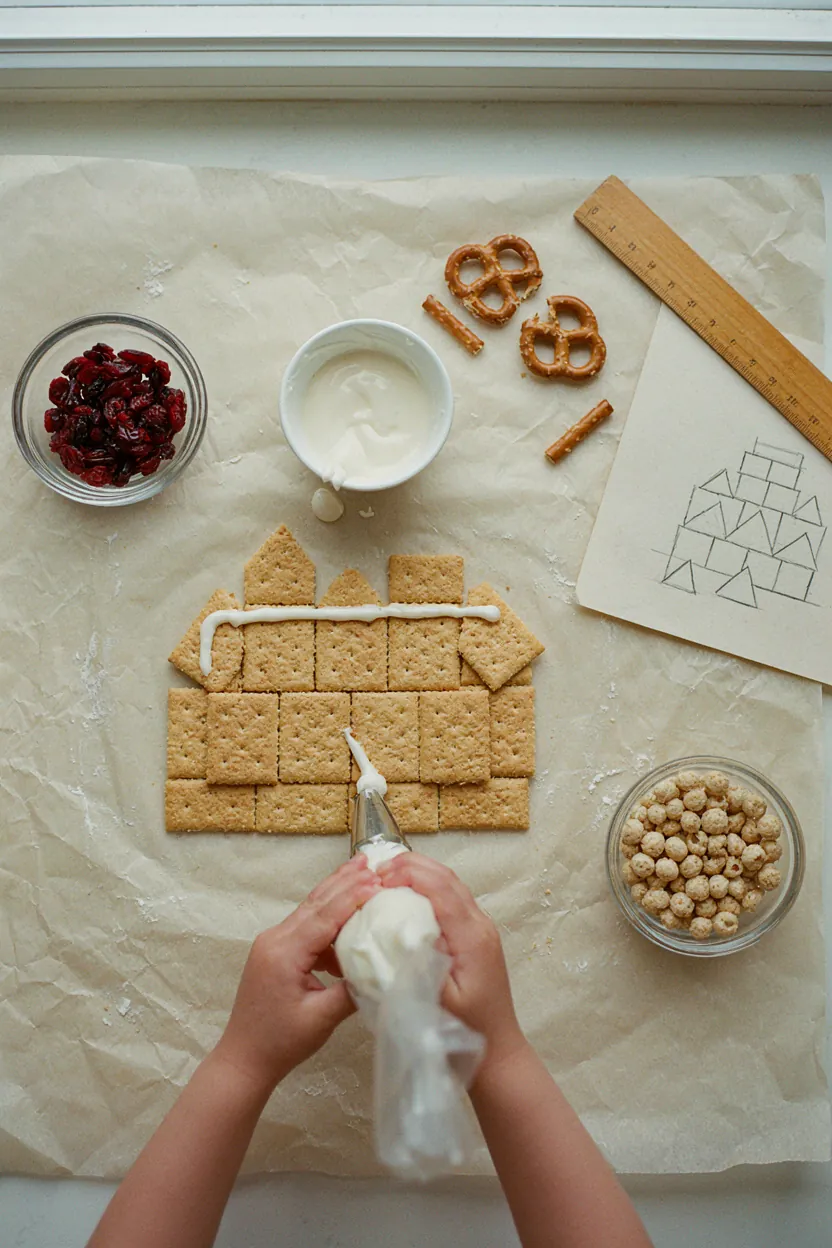
- Pipe a thick line of icing on the tray for each wall, stand the walls in it, and pipe along every inside corner. Hold for 30 seconds, then let the walls set for 10 minutes before adding the roof.
- Add the roof panels with icing along the top edges. Add pretzel beams or bracing where your design needs them.
- Decorate with cereal tiles, dried cranberries and coconut snow. Let the house dry for at least 30 minutes before the earthquake test.
Notes
What Kids Will Discover
Kids learn the same ideas engineers use for buildings in earthquake zones: triangles are strong, a wide base is steadier than a tall, narrow one, and joints matter. They also learn the engineering design process: plan, build, test, improve.
Ages, Time and Mess Level
- Best for: ages 5 to 12. Younger builders do best with a grown-up holding walls while the icing sets; older kids can design their own floor plans.
- Time: about an hour, including drying time. Building over two sessions works well.
- Mess level: medium. Icing gets everywhere; a baking tray under each house helps.
- Grown-up job: cutting graham crackers with a serrated knife.
The Challenge
Read this out to your engineers:
Design and build a house from graham crackers and icing that can survive an earthquake. Your house needs four walls and a roof. You can use pretzels for support. After it dries, it will face three earthquake levels. The house that stays standing through the most levels wins.
Plan and Build
- Sketch first. Give each child a minute to draw their house. Ask: where will the strongest parts be?
- Make the mortar using the recipe card above. Stiff icing works like cement; runny icing makes wobbly houses.
- Build the walls on the baking tray, piping icing along the bottom and every inside corner.
- Let the walls set for 10 minutes. Patience is an engineering skill too.
- Add the roof and any pretzel bracing.
- Decorate, but remember that every decoration adds weight up high.
- Dry for 30 minutes before testing.
The Earthquake Test
Put each house, still on its own baking tray, on a flat table. A grown-up or a fair-minded older sibling runs the test:
- Level 1, tremor: slide the tray gently back and forth 5 times.
- Level 2, quake: slide it quickly back and forth for 5 seconds.
- Level 3, the big one: slide it hard side to side for 10 seconds.
Record which level each house reaches and what failed first: a wall, the roof, or a corner joint. Then the most important step: let kids fix the weak spot and test again.
The Science, in Kid Words
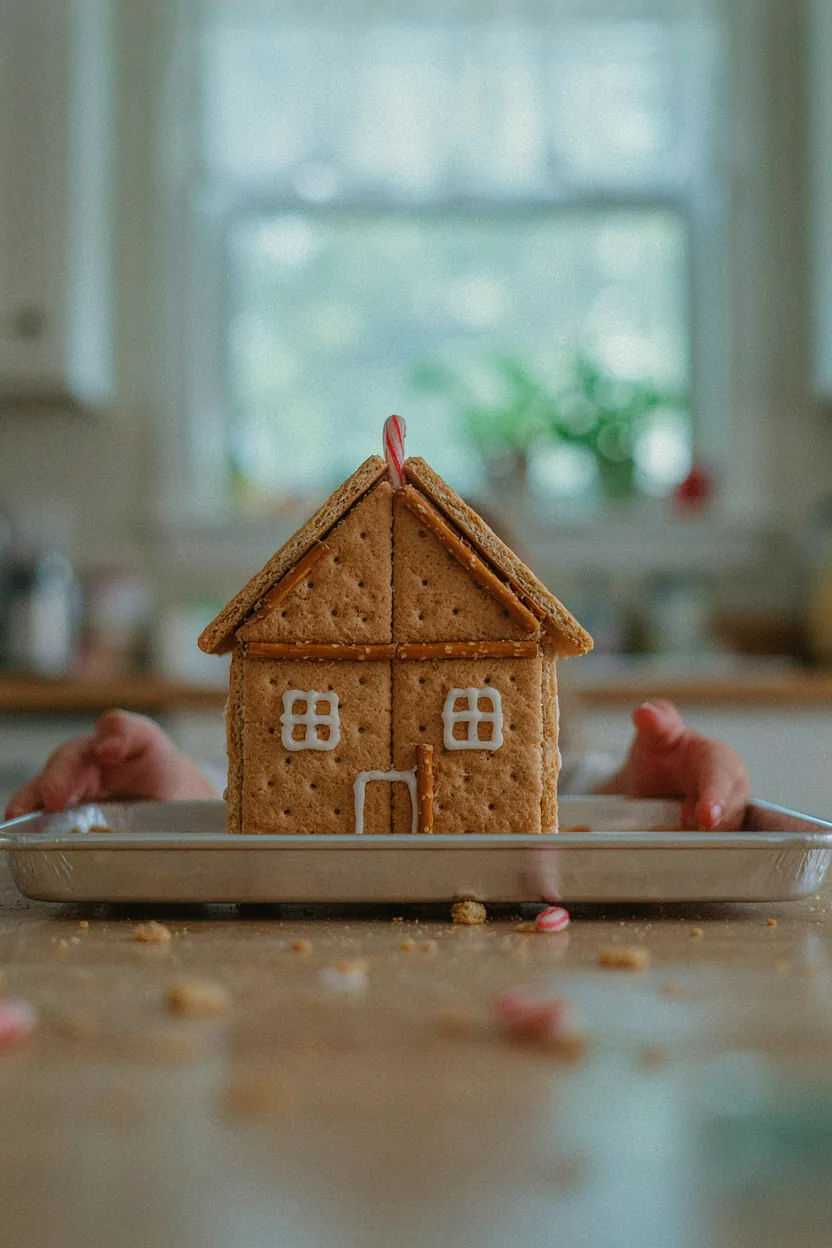
When the ground shakes, buildings get pushed sideways. Squares and rectangles can squash into wonky diamond shapes when they’re pushed. A triangle can’t change shape unless one of its sides breaks, so triangles make buildings much stronger. That’s why bridges, roofs and cranes are full of them.
A wide, low house is harder to tip over than a tall, skinny tower. And a heavy roof full of decorations makes the top of the house sway more, so lots of candy on top can bring the whole thing down.
For grown-ups
Engineers protect real buildings with cross-bracing (triangles), wide footprints, low centres of gravity and strong connections. DiscoverE’s Build an Earthquake-Resistant Structure challenge teaches the same ideas with marshmallows, toothpicks and a homemade shake table, if your kids want to keep going after the gingerbread.
Change One Thing
- Roof shape: build one house with a flat roof and one with a triangle roof. Which survives longer?
- Bracing: add pretzel “X” braces to one wall only and compare.
- Weight: test the same design bare, then fully decorated.
- Base: build a tall two-storey tower and a wide bungalow from the same number of crackers.
Make It a STEAM Day
- Math: measure each wall with a ruler and work out the area of the floor. Did the bigger floor survive better?
- Art: design a “street” of houses with a color theme.
- Science: follow up with our Disappearing Candy Cane Experiment, another five-minute Christmas lab.
Want gingerbread flavor without the building? Our Gingerbread House Energy Bites and Gingerbread Man Energy Balls are quick no-bake snacks for after the big shake.
Safety Notes
- Grown-ups handle the serrated knife.
- Hard icing, pretzels, cereal and dried fruit can be choking hazards for children under 4.
- Check labels if you’re cooking for allergies: graham crackers contain wheat, and some contain milk or honey. Honey isn’t suitable for babies under 12 months.
- Houses that have been handled and shaken all afternoon are better as decorations than snacks.
FAQ
Why are triangles stronger than squares?
A square can be pushed into a diamond shape without any side breaking. A triangle can’t change shape unless a side breaks, so it holds firm. That’s why engineers add triangle bracing to buildings and bridges.
What is the best glue for a graham cracker house?
Royal icing made with meringue powder sets hard and holds best. Frosting from a tub stays soft, so walls slide, which can be a good comparison test.
How long should the house dry before shaking?
At least 30 minutes. An hour or more is even better for big houses.
Can we eat the house afterwards?
You can, if it was built with clean hands and eaten the same day. Many families keep them as decorations instead.
What age is this STEM challenge for?
Children from about 5 can build with help. Kids aged 8 to 12 can plan, build and improve their designs on their own.
In Conclusion
The best part of this challenge isn’t the house that survives; it’s the moment a roof slides off and your kid says “I know what to fix.” That’s engineering. Build, shake, laugh, rebuild, and then decide whether anyone is allowed to eat the winner.
Printable Recipe Card
Want just the essential recipe details without scrolling through the article? Get our printable recipe card with just the ingredients and instructions.