Christmas Cookie Chemistry: What Baking Soda vs Baking Powder Does to Your Cookies
October 26, 2026 · 5 min read
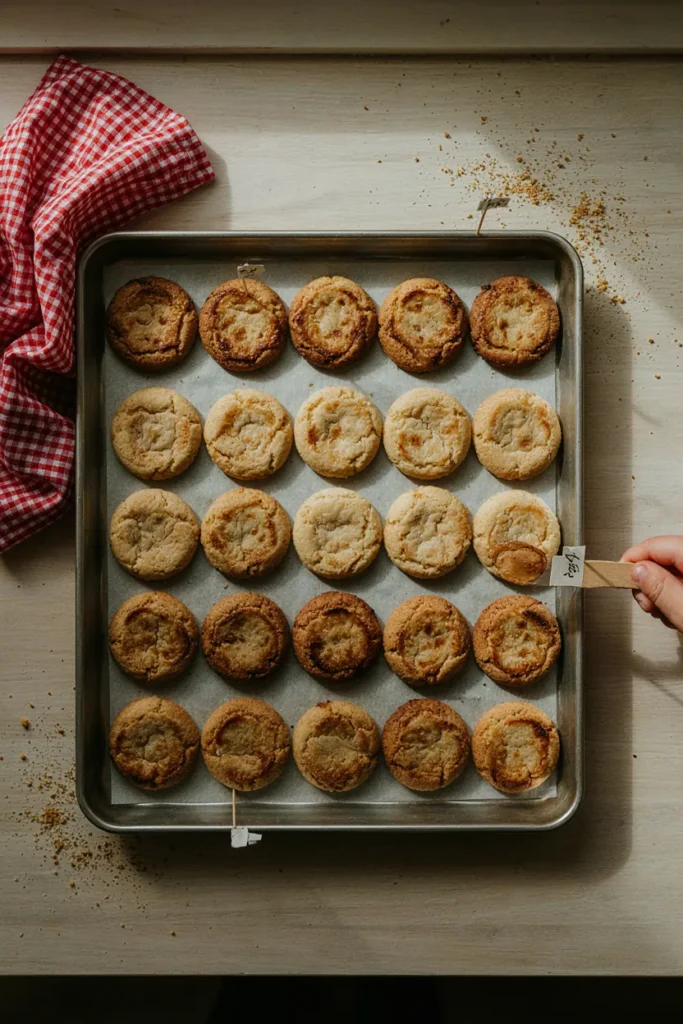
Every cookie recipe asks for baking soda, baking powder or both, and most of us never ask why. This Christmas, let your kids find out. You make one cookie dough, split it three ways, and change only the leavener. Out of the oven come three different cookies: one flat and golden, one puffy and pale, one in between.
It’s real chemistry, it takes the same time as a normal batch, and you end up with a tin of cookies.
Brown Sugar Christmas Cookies (Three-Way Test Batch)
Ingredients
Equipment
Method
- Heat the oven to 350°F (175°C) and line a tray with parchment.
- Beat the butter and brown sugar until fluffy. Beat in the egg and vanilla.
- Mix in the flour, salt and cinnamon until a soft dough forms.
- Divide the dough evenly between three bowls. Mix the baking soda into bowl 1, the baking powder into bowl 2 and the mix of both into bowl 3.
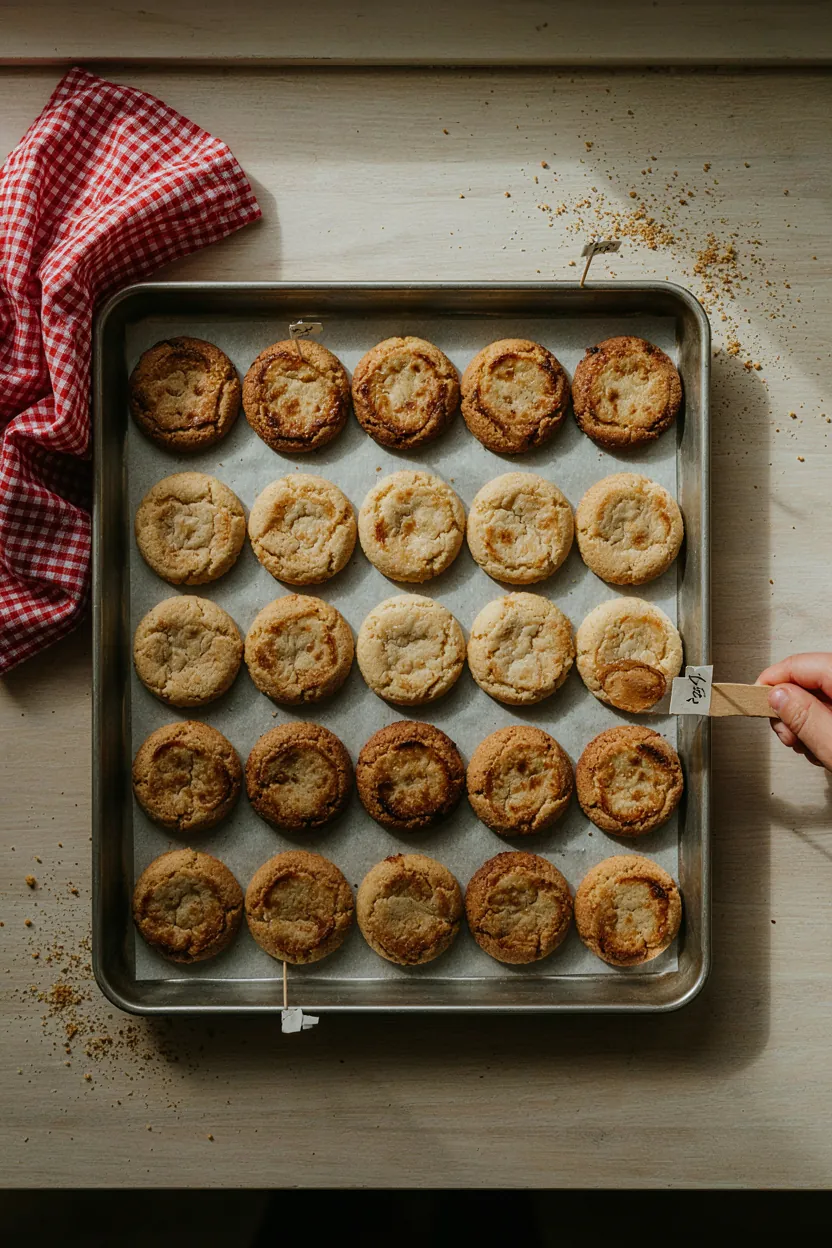
- Roll each bowl into 6 equal balls and arrange them in three labeled rows on the tray, well spaced.
- Bake for 9 to 11 minutes until set at the edges. Cool on the tray for 5 minutes, then compare before anyone eats them.
Notes
What Kids Will Discover
Kids see that tiny amounts of baking soda and baking powder change how a cookie spreads, rises and browns. They learn that baking soda needs an acid to work, and that baking powder brings its own.
Ages, Time and Mess Level
- Best for: ages 5 to 12; little ones can roll dough balls, older kids can measure, label and record
- Time: about 30 minutes plus cooling
- Mess level: medium (flour)
- Grown-up job: the oven
The Experiment: Three Bowls, One Change
- Make the base dough from the recipe card above.
- Split it into three equal bowls and label them: soda, powder, both.
- Predict: which cookies will be the flattest? The puffiest? The brownest?
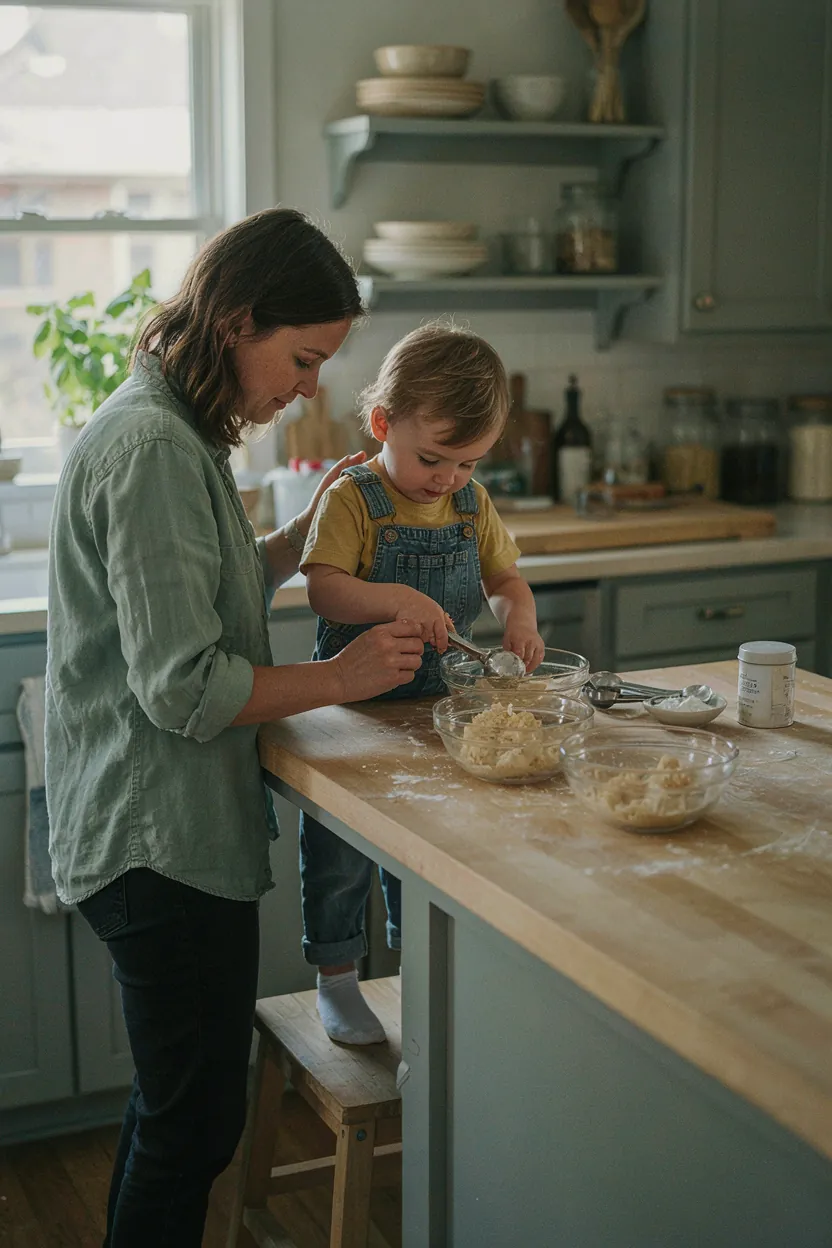
- Mix in the leaveners and roll equal-sized balls. Equal sizes keep the test fair.
- Bake them on the same tray at the same time.
- Compare: measure the width of each cookie with a ruler, look at them side-on for thickness, and compare the colors.
What usually happens
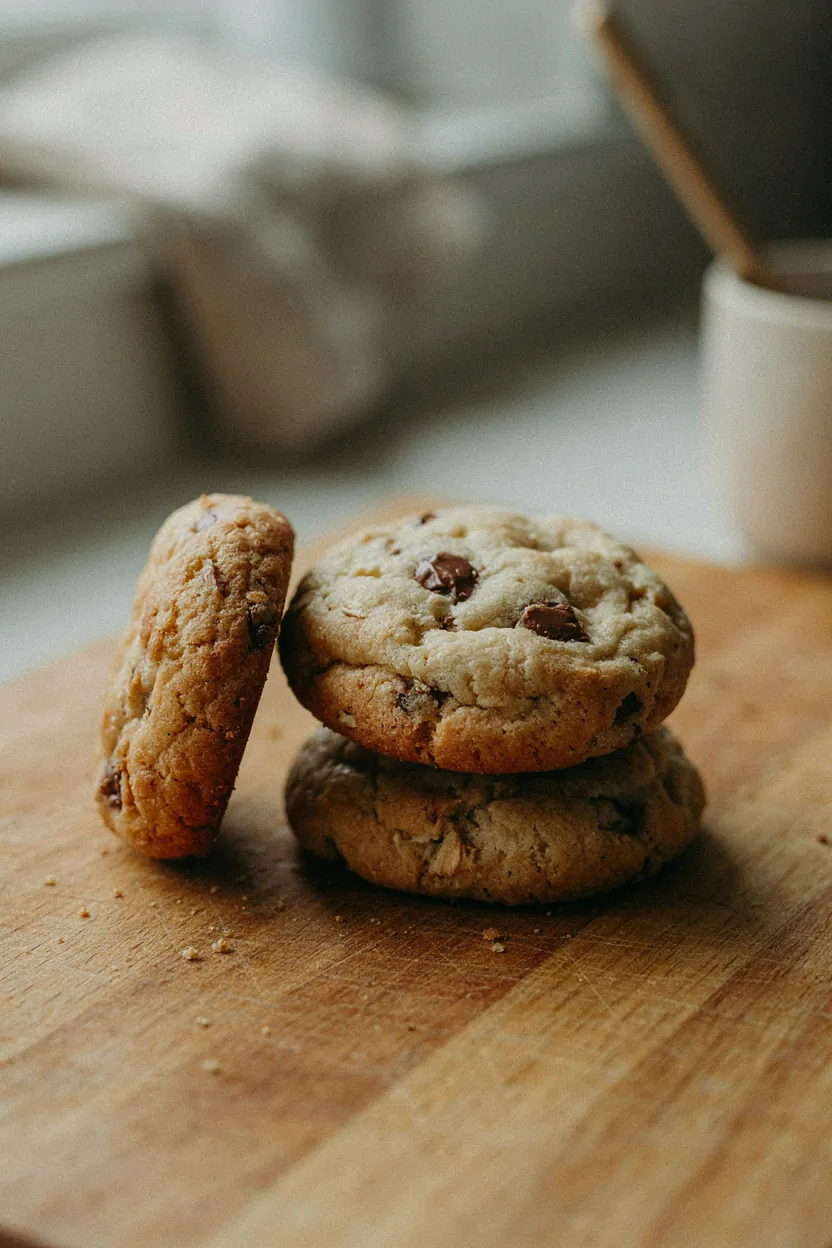
The baking soda cookies spread wider and come out darker and more golden. The baking powder cookies stay thicker, puffier and paler. The “both” cookies land in the middle, which is why so many recipes use the two together.
The Science, in Kid Words
Both powders make little bubbles of a gas called carbon dioxide, and the bubbles help cookies puff up. Baking soda is a base, so it needs an acid to react with. In this recipe the acid comes from the brown sugar. Baking powder is baking soda with a dry acid already mixed in, so it can make bubbles on its own.
Baking soda also makes the dough less acidic, and that helps it brown faster and spread more in the oven. That’s why the soda cookies are the darkest and flattest.
For grown-ups
Cook’s Country’s guide to baking soda vs baking powder explains it well: baking soda raises the pH of the dough, which increases browning and spread, while baking powder leavens without needing an acidic ingredient and gives a puffier, paler result. Recipes often combine them to get both lift and color.
Change One Thing
- No leavener at all: add a fourth bowl with nothing in it as a “control”.
- Double the soda: what happens to color and taste? (Too much soda can taste soapy.)
- Butter temperature: carry on with our The Great Cookie Spread Test.
Make It a STEAM Day
- Math: measure every cookie’s width and work out the average for each bowl.
- Art: decorate the winners and arrange a “results” plate.
- Science: find out why cookies turn golden in Why Do Cookies Brown?.
Safety Notes
- Grown-ups handle the oven and hot trays.
- Raw dough contains raw egg and flour, so no nibbling before baking.
- This recipe contains wheat, egg and dairy.
FAQ
What’s the difference between baking soda and baking powder?
Baking soda is a base that needs an acidic ingredient to make bubbles. Baking powder is baking soda with a dry acid already added, so it works on its own.
Why do cookies with baking soda spread more?
Baking soda makes the dough less acidic, which lets it spread and brown more in the oven.
Can I swap baking powder for baking soda?
Not one-for-one. You need roughly three times as much baking powder, and the cookies will be puffier and paler.
Why do recipes use both?
Baking powder gives reliable lift, and a little baking soda adds browning, spread and flavor.
What age is this experiment for?
Children from about 5 can help roll and compare; 8 and up can run the measuring and recording.
In Conclusion
One dough, three bowls, one change: that’s a proper fair test, and it ends with a plate of cookies. Your kids will never look at that little orange box of baking soda the same way again.