Edible Christmas Ornament Geometry: Fruit Cubes, Spheres and Pyramids
November 8, 2026 · 3 min read
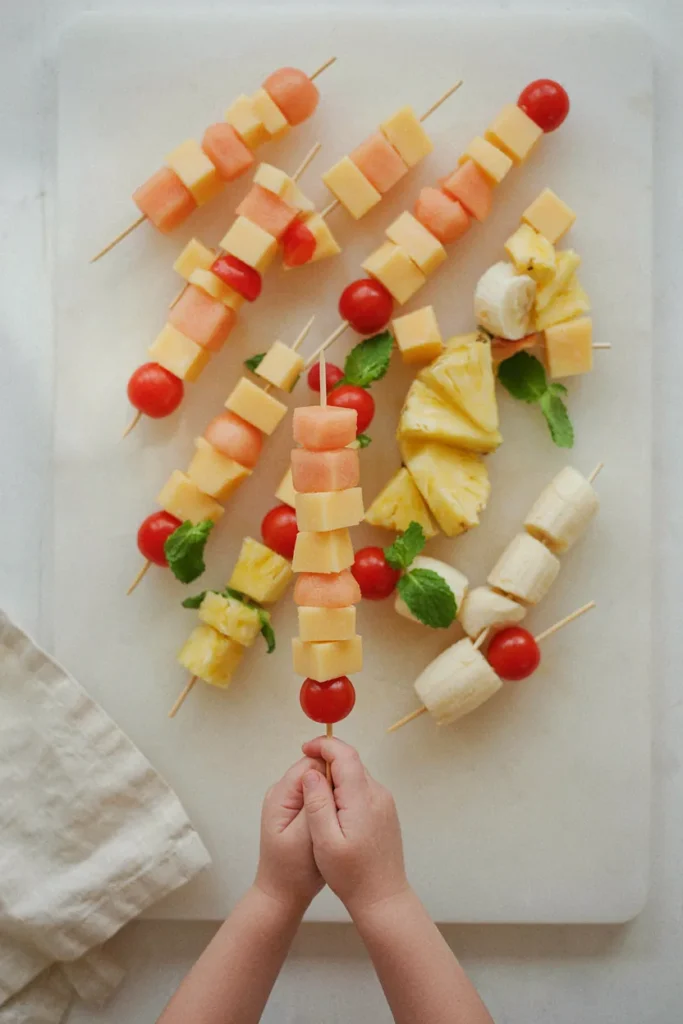
Shapes are easier to understand when you can hold them, count their corners and eat them. In this activity kids turn fruit and cheese into cubes, spheres, pyramids and cylinders, explore what makes each one different, and thread them into edible ornaments.
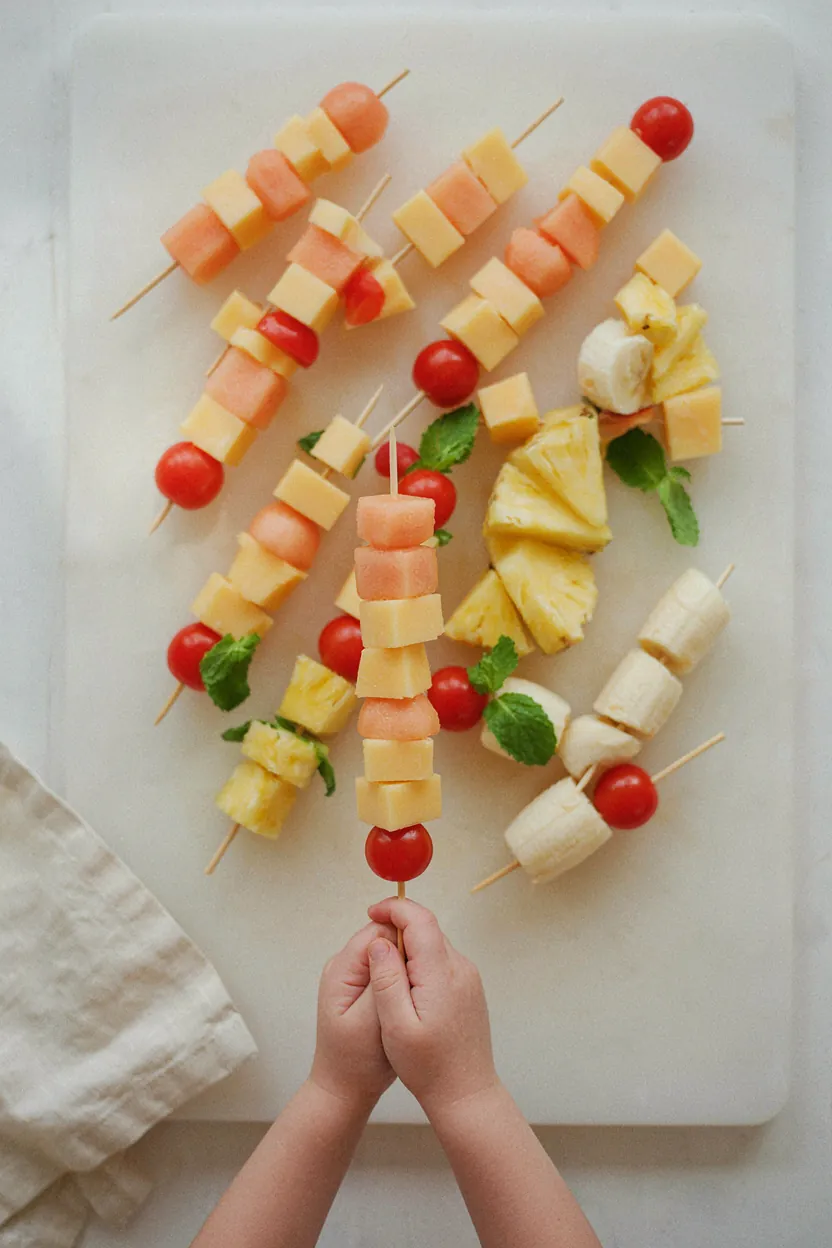
Fruit and Cheese Ornament Skewers
Ingredients
Equipment
Method
- Scoop melon balls, cut cheese into cubes, cut pineapple into small triangular pyramids and banana into cylinders.
- Sort the shapes into groups on a board and name each one.
- Thread the shapes onto skewers in patterns, like ornaments.
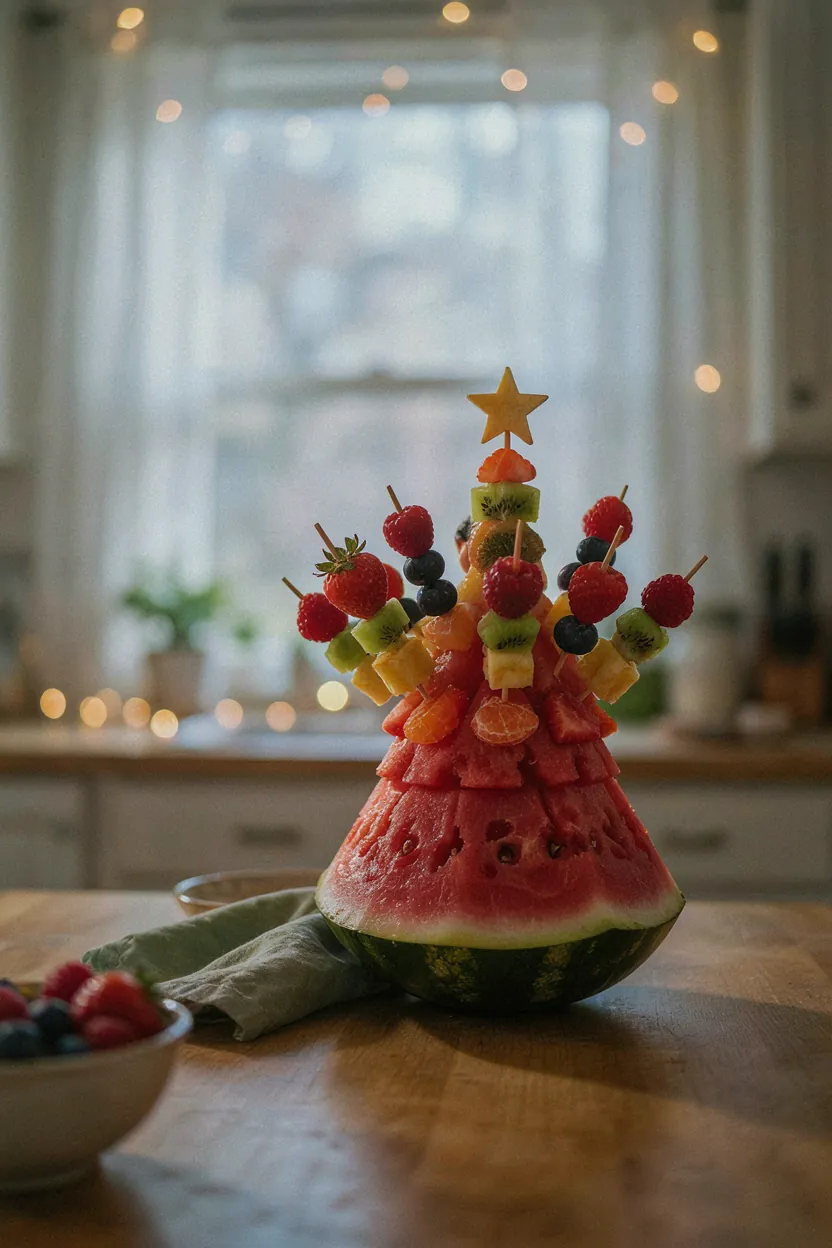
- Serve straight away, or stand them in a melon half to make a fruit Christmas tree.
Notes
What Kids Will Discover
Kids learn the names of 3-D shapes and how to describe them by their faces (flat sides), edges (where faces meet) and vertices (corners).
Ages, Time and Mess Level
- Best for: ages 3 to 10
- Time: 20 minutes
- Mess level: low (sticky fingers)
- Grown-up job: knife work
The Activity: Shape Detectives
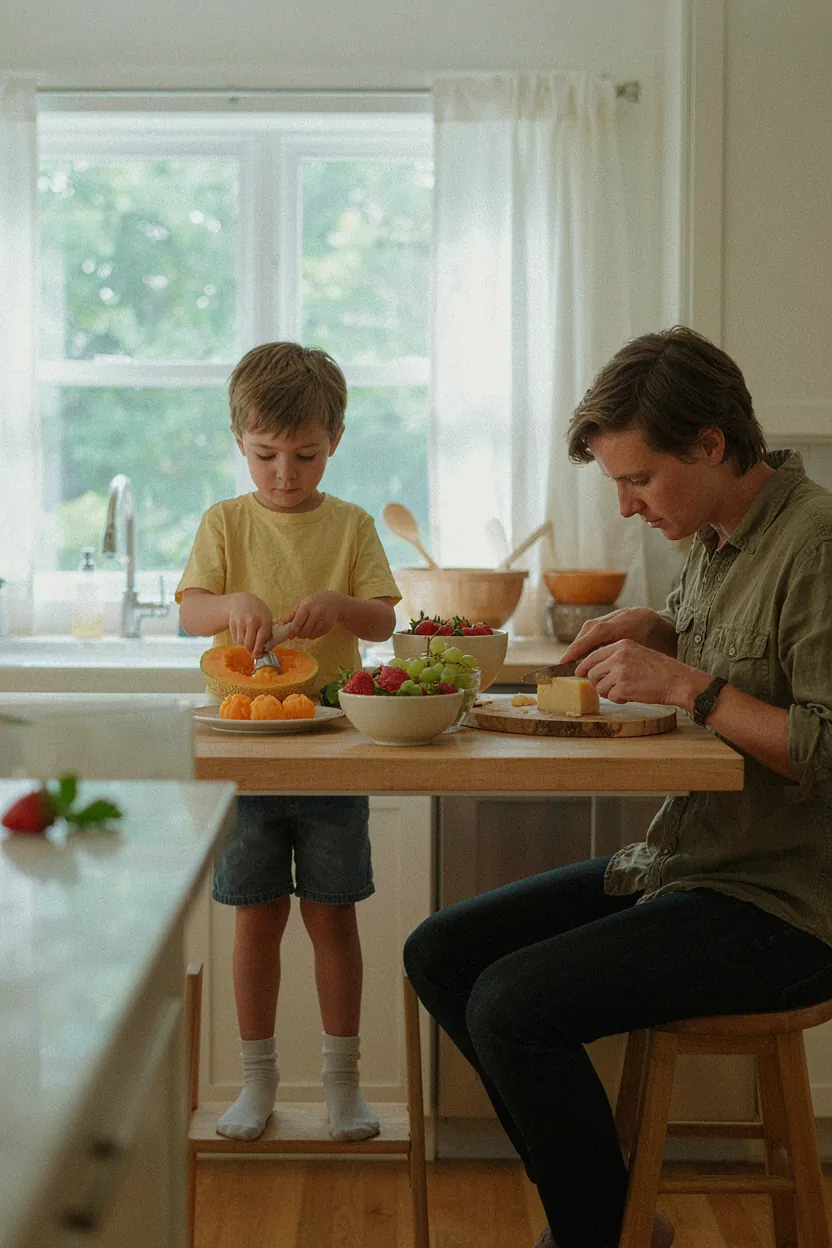
- Cut the shapes (grown-ups do the knife work; kids can use the melon baller).
- Sort them into groups: cubes, spheres, pyramids, cylinders, cones.
- Count: how many flat faces does a cheese cube have? (6.) Corners? (8.) Edges? (12.)
- Roll test: which shapes roll? Which stack? Why?
- Pattern skewers: make a repeating pattern, such as sphere, cube, sphere, cube.
The Math, in Kid Words
Flat shapes like squares and triangles only have length and width. 3-D shapes also have depth, so you can hold them. A cube has 6 square faces. A sphere has no flat faces or corners at all, which is why melon balls roll away. A cylinder rolls in one direction and can stand on its flat ends. A pyramid has a flat base and triangle sides that meet at a point.
For grown-ups
University of Nevada Cooperative Extension’s guide to cooking with young children notes that preparing food teaches counting, measuring, sorting and shapes. This activity puts sorting and shape language front and center, with a healthy snack at the end.
Change One Thing
- Stacking challenge: build the tallest stack using only one shape. Which shape wins?
- Rolling race: roll a sphere and a cylinder down a tray. Which goes straighter?
- Build bigger: try our Marshmallow Christmas Tree Engineering.
Make It a STEAM Day
- Art: draw your skewer pattern first, then build it.
- Math: make a table of faces, edges and corners for each shape.
- Engineering: design a fruit tree that stands up on its own.
Safety Notes
- Grown-ups handle knives.
- Whole grapes, melon balls and cheese cubes can be choking hazards for children under 4; cut them small and skip skewers.
- Use blunt skewers and supervise children.
FAQ
What 3-D shapes can you make with fruit?
Spheres (melon balls), cubes (cheese or melon), cylinders (banana), pyramids (pineapple wedges) and cones (strawberries).
How many faces does a cube have?
Six faces, twelve edges and eight corners.
Is this a healthy Christmas snack?
Yes: it’s fruit and cheese with no added sugar.
What age is this activity for?
From about 3 for sorting and naming shapes; older kids can count faces and edges.
How do I keep the fruit fresh?
Assemble shortly before serving and squeeze a little lemon over apples or bananas.
In Conclusion
Cubes, spheres, pyramids and cylinders make sense the moment kids can hold them and roll them, and they’re even better when the lesson ends on a skewer. Geometry has never been this easy to swallow.