The Great Christmas Popcorn Pop: Why Popcorn Pops (and a Kernel-Counting Challenge)
November 10, 2026 · 4 min read
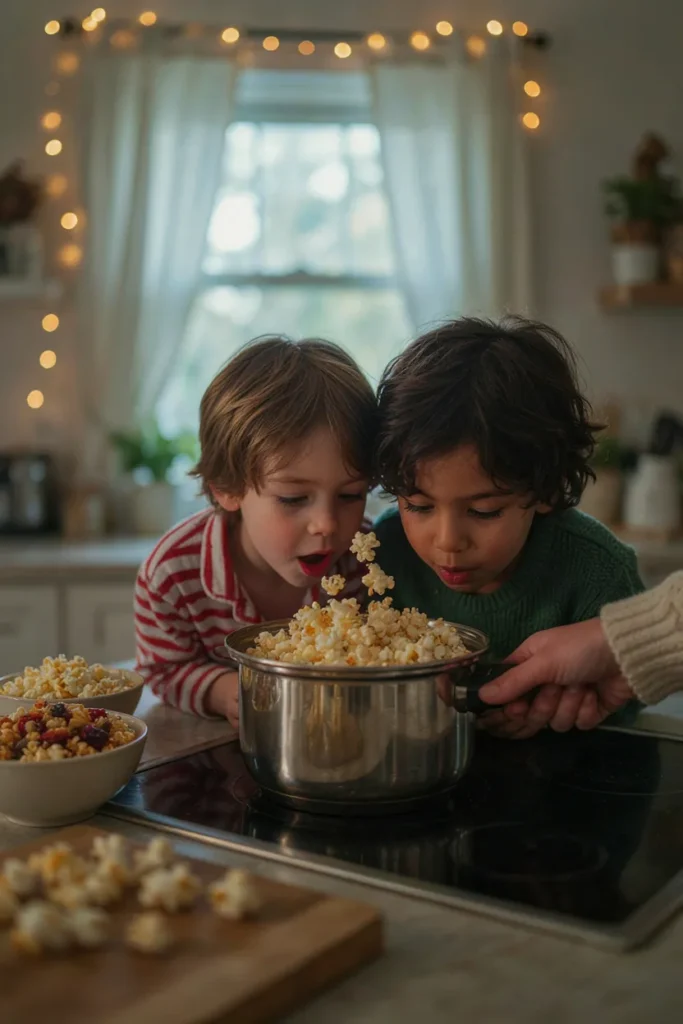
Popcorn is the only snack that explodes on purpose. Every kernel is a tiny pressure cooker, and kids can count, predict and measure what happens when it bursts. Here’s a popcorn experiment for a winter afternoon, finished with a festive mix for Christmas movie night.
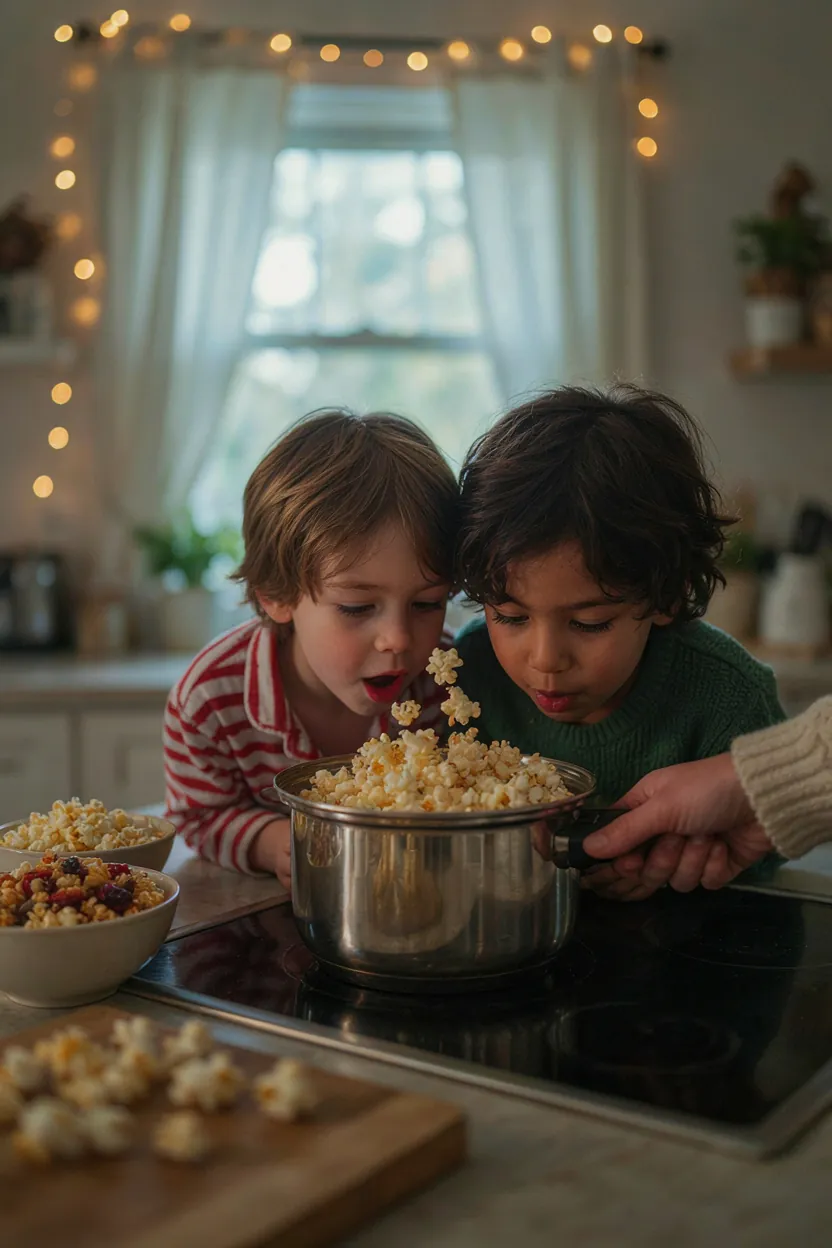
Christmas Cinnamon Popcorn Mix
Ingredients
Equipment
Method
- Heat the oil with 3 kernels in a covered pot over medium-high heat. When they pop, add the rest of the kernels, cover and take off the heat for 30 seconds.
- Return to the heat and shake gently until popping slows to a few seconds between pops. Tip into a big bowl.
- Mix the melted butter, maple syrup, cinnamon and salt, drizzle over the popcorn and toss.
- Add the cranberries and pumpkin seeds and serve.
Notes
What Kids Will Discover
Kids find out that every popcorn kernel has a drop of water sealed inside a hard shell. Heat turns the water into steam, the pressure builds, and pop!
Ages, Time and Mess Level
- Best for: ages 5 to 12
- Time: 20 minutes
- Mess level: low
- Grown-up job: everything at the stove
The Experiment: Kernel Count Challenge
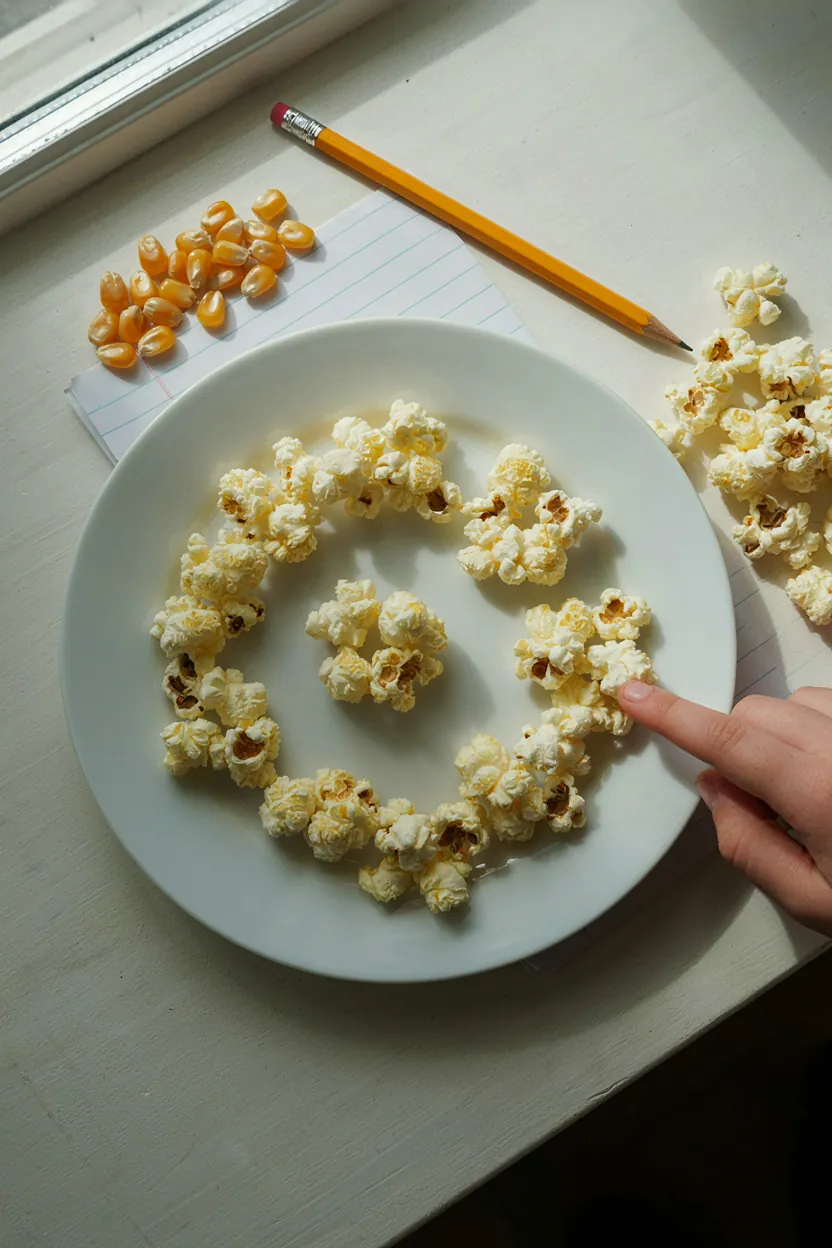
- Count out 100 kernels in groups of ten. Great counting practice for younger kids.
- Predict: how many will pop?
- Pop them (grown-ups at the stove) using the method in the recipe card.
- Count the unpopped kernels left in the pot. 100 minus that number is how many popped!
- Look inside a popped piece: the white fluff is the inside of the kernel, turned inside out.
The Science, in Kid Words
Inside every popcorn kernel there’s a little bit of water and a lot of starch, all sealed inside a tough, shiny shell. When the kernel gets hot, the water turns into steam. Steam takes up much more room than water, but it can’t escape through the shell, so the pressure inside builds and builds, until the shell bursts open. The hot starch puffs out like foam and sets into the white, crunchy popcorn we eat.
Kernels that don’t pop usually have a cracked shell (the steam leaked out) or not enough water inside.
For grown-ups
Science Buddies’ Explore the “Pop” in Popcorn activity explains the role of trapped moisture: kernels rupture at roughly 180°C (about 355°F), when internal steam pressure overcomes the hull, and the gelatinized starch expands into foam. Comparing fresh kernels with old, dried-out ones makes a great follow-up.
Change One Thing
- Old vs fresh kernels: which pops more?
- Pricked kernels: nick a few shells with a pin (grown-ups). Do they pop?
- Volume: measure 1/4 cup of kernels and the popped volume. How many times bigger?
Make It a STEAM Day
- Math: work out the percentage that popped.
- Art: make a popcorn garland for the tree (with a grown-up’s needle).
- Science: another kitchen gas experiment: Christmas Eve Yeast Balloon.
Safety Notes
- Hot oil and steam: grown-ups only at the stove, and keep the lid on.
- Popcorn is a choking hazard for children under 4.
- Unpopped kernels can hurt teeth; remove them before serving.
FAQ
Why does popcorn pop?
Water inside the kernel turns to steam when heated. Pressure builds until the shell bursts and the starch puffs out.
Why don’t all kernels pop?
Some have cracked shells that let the steam escape, or they’ve dried out and don’t have enough water inside.
Is popcorn healthy for kids?
Plain popcorn is a whole grain. Keep butter and sugar light, and don’t give it to children under 4.
How do I reduce unpopped kernels?
Use fresh kernels, preheat the oil, and shake the pot while popping.
What age is this experiment for?
Counting works from about 5; older kids can calculate percentages.
In Conclusion
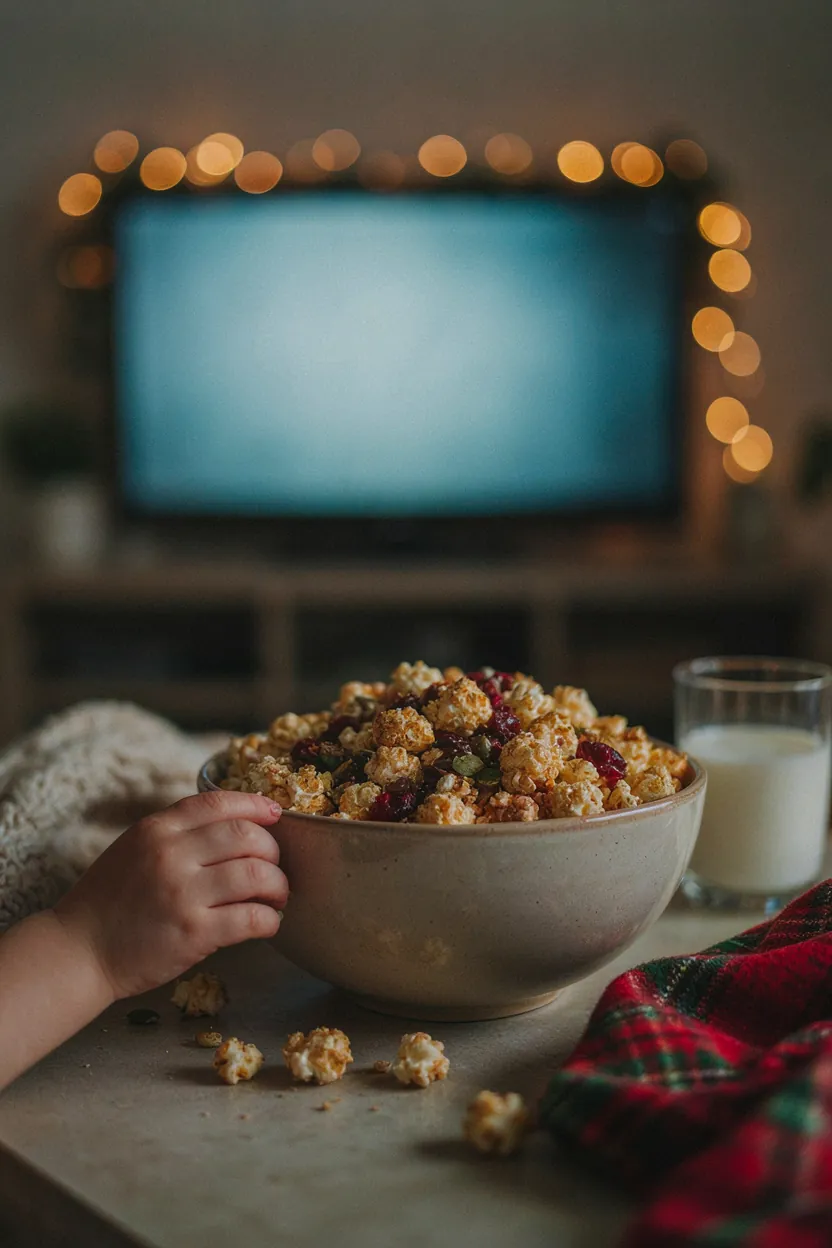
Every bowl of popcorn is a hundred tiny steam explosions. Count, predict, pop, then pour the festive mix and press play on the Christmas movie.