Christmas Light Circuits: Light Up Play Dough Ornaments (Plus a Christmas Lights Veggie Platter)
November 16, 2026 · 4 min read
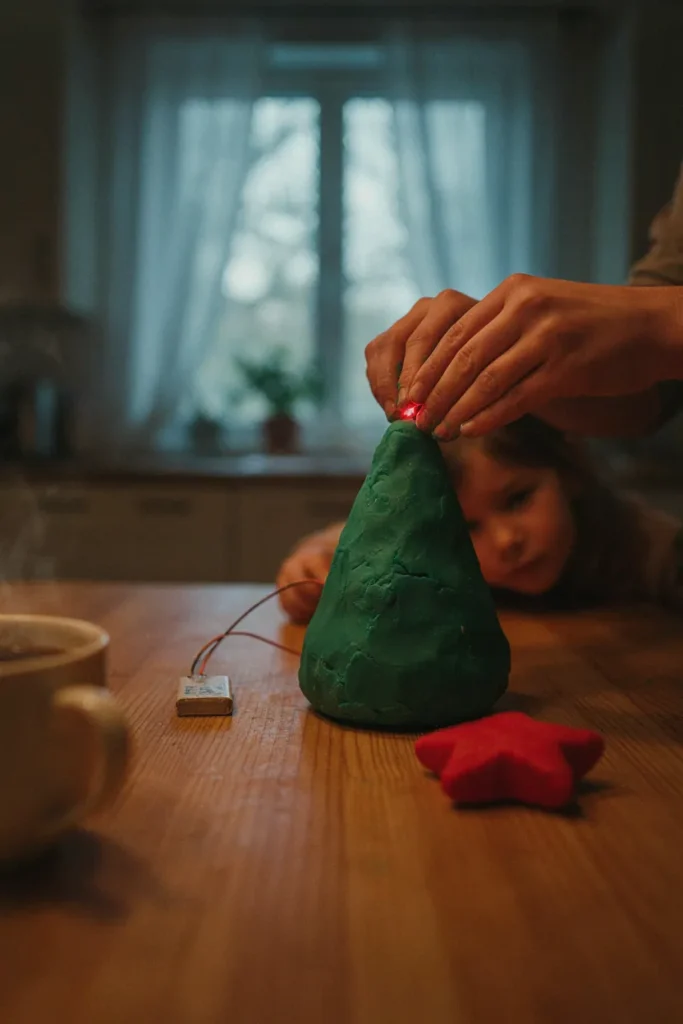
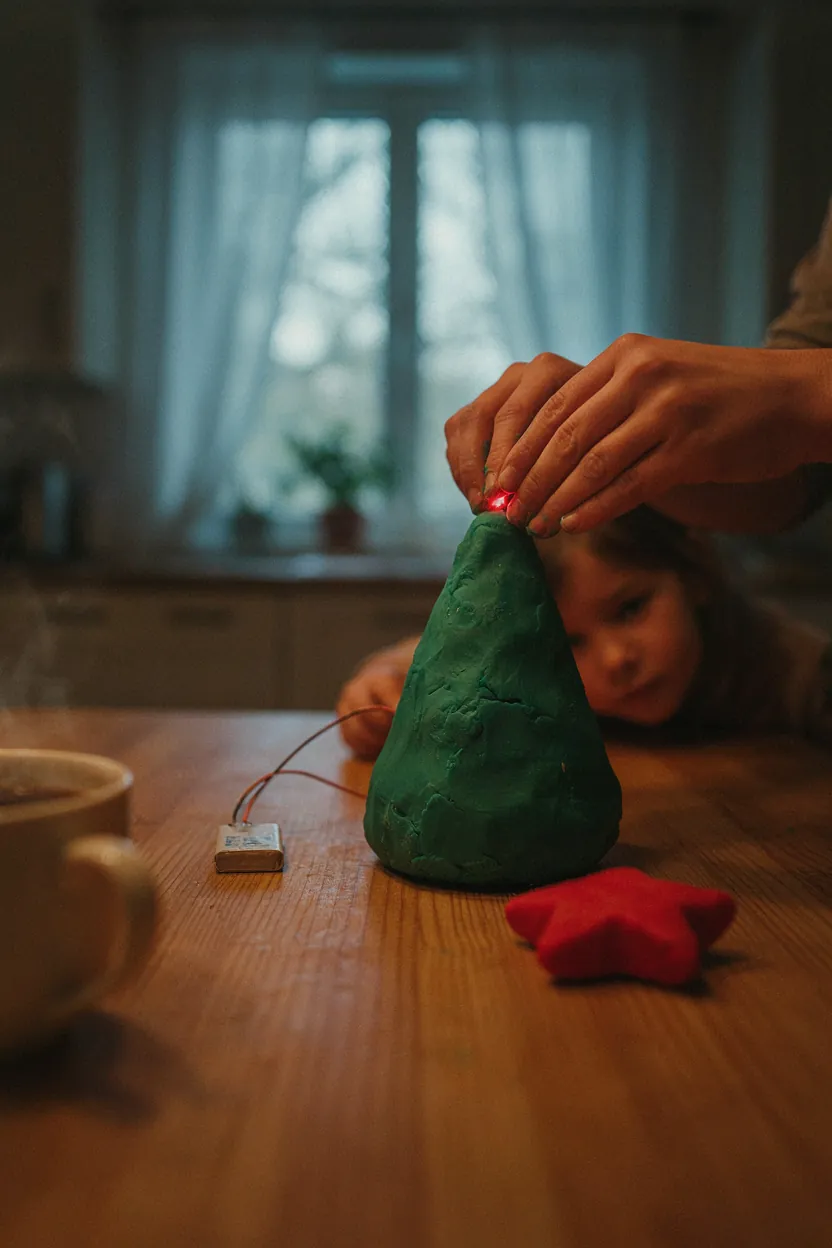
Christmas lights are everywhere in December, but how do they actually light up? With a batch of homemade play dough, a battery pack and a few LEDs, kids can build a working circuit and light up their own ornaments. Then everyone builds an edible string of lights to eat.
Christmas Lights Veggie Platter
Ingredients
Equipment
Method
- Lay the cucumber strips in a long wavy line on a platter as the light "wire".
- Cut the peppers into rounded bulb shapes and place them along the wire.
- Add tomato halves as extra lights and a bowl of hummus at the end.
Notes
What Kids Will Discover
Kids learn that electricity needs a complete loop, a circuit, to flow. They discover that salty play dough conducts electricity, and that LEDs only light up one way round.
Ages, Time and Mess Level
- Best for: ages 5 to 12
- Time: 45 minutes (including making the dough)
- Mess level: medium
- Grown-up job: making the dough on the stove and supervising batteries
What You Need
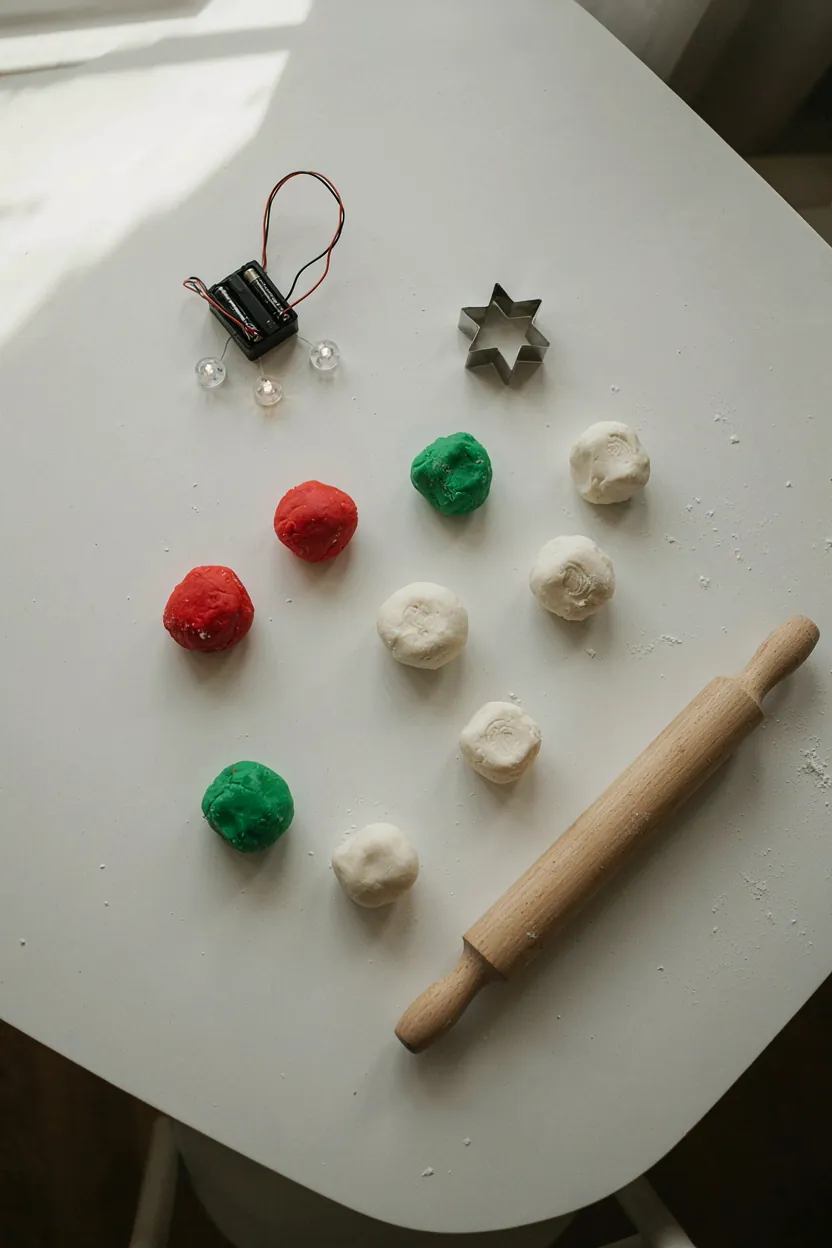
- Homemade conductive dough: 1 cup flour, 1/4 cup salt, 3 tablespoons cream of tartar, 1 tablespoon oil, 1 cup water, food coloring (cooked by a grown-up until it forms a ball). Not for eating.
- A battery pack that holds 4 AA batteries, with wire leads
- A few 5 mm LEDs (any color)
- Cookie cutters for shapes
The Experiment
- Shape two pieces of dough, such as two halves of a Christmas tree, with a small gap between them.
- Push the battery wires into the dough: one wire into each piece.
- Push an LED in so one leg is in each piece of dough.
- Does it light? If not, turn the LED around. LEDs only work one way: the longer leg goes to the side connected to the red (positive) wire.
- Now squish the two pieces together. The light goes out! The electricity takes the easy path through the dough and skips the LED. That’s a short circuit.
The Science, in Kid Words
Electricity flows like water in a loop: out of the battery, through the dough, through the light, through the other piece of dough and back to the battery. If the loop has a gap, nothing flows. Salt dough works because the salt dissolved in it lets electricity travel through. When the two dough pieces touch, the electricity rushes straight through the dough and doesn’t bother going through the LED, so the light goes out.
For grown-ups
Science Buddies’ Squishy Circuits activity uses the same salt-based conductive dough (and a sugar-based insulating dough) to teach circuits, conductors, insulators and short circuits. Use a battery pack of AA batteries (about 6 volts); never connect to mains electricity.

Change One Thing
- More lights: add two LEDs side by side (parallel). Do they both light?
- Distance: make the dough pieces longer. Does the LED get dimmer?
- Insulator: put a piece of paper between the dough halves to stop the short circuit.
Make It a STEAM Day
- Art: design a dough ornament with a light-up star.
- Engineering: build a tree in our Marshmallow Christmas Tree Engineering and add dough lights.
- Math: count how many LEDs one battery pack can light.
Safety Notes
- The play dough is salty and not for eating. Keep it away from toddlers and pets (salt dough is toxic to dogs).
- Use only small battery packs: never mains electricity.
- LEDs and batteries are choking hazards; supervise young children and keep button batteries well away.
- Grown-ups cook the dough on the stove.
FAQ
How does play dough conduct electricity?
Salt dissolved in the dough contains charged particles that let electricity flow through it.
Why won’t my LED light up?
Flip it around (LEDs only work one way), and make sure the two dough pieces aren’t touching.
What is a short circuit?
When electricity finds an easier path, like dough touching dough, and skips the light.
Is this experiment safe for kids?
Yes, with a small AA battery pack and supervision. Never use mains power, and don’t eat the dough.
What age is this for?
About 5 and up with help; older kids can design series and parallel circuits.
In Conclusion
Every string of Christmas lights is a circuit. Squish some dough, light an LED, and your kids will look at the tree differently this year. Then dig into the veggie lights.