Tuna & Avocado Sushi Rolls – Simple, Fresh, and Satisfying
July 30, 2026 · 9 min read
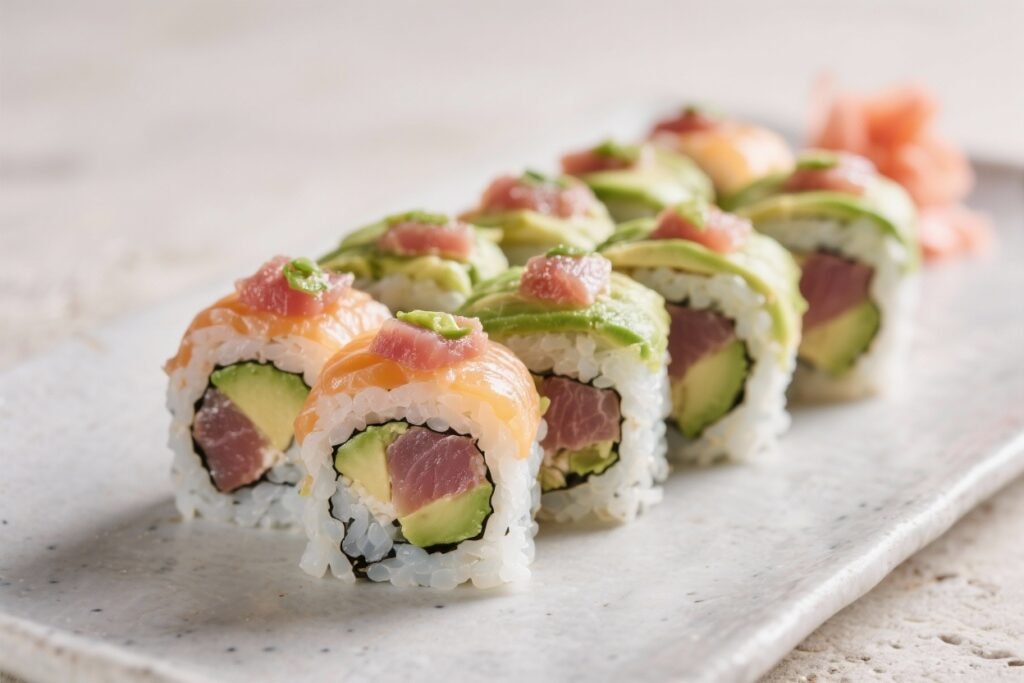
Sushi at home sounds fancy, but this version is straightforward and forgiving. Tuna and avocado are a classic pair: clean, creamy, and full of flavor without a long ingredient list. With a few basic tools and a little patience, you’ll get neat, tasty rolls that look great on a plate.
Even if you’re new to rolling sushi, this guide keeps it simple and stress-free. You’ll learn how to cook perfect rice, assemble clean rolls, and make them your own.
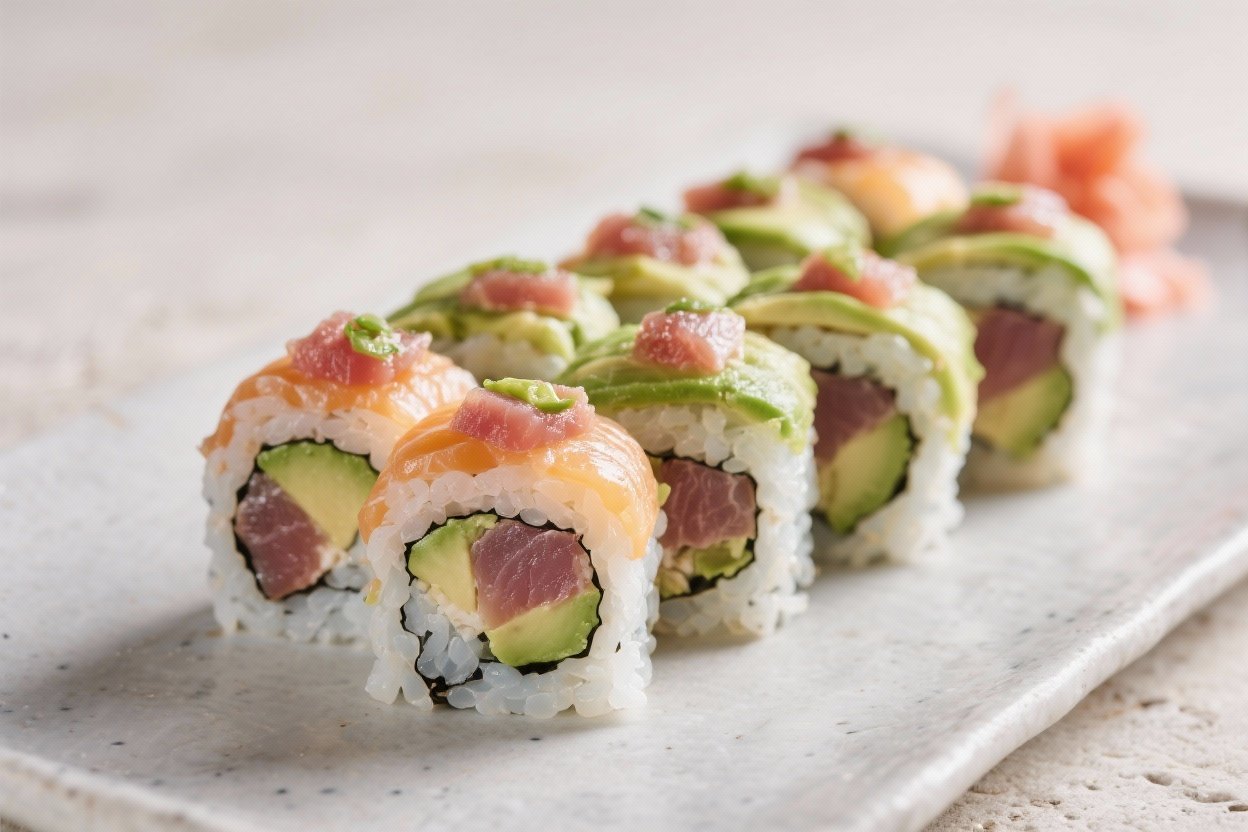
Tuna & Avocado Sushi Rolls - Simple, Fresh, and Satisfying
Ingredients
Method
- Rinse and cook the rice. Place the sushi rice in a bowl and rinse under cold water, swishing with your hand, until the water runs mostly clear.Drain well. Cook according to your rice cooker instructions or on the stove using 1 3/4 cups water per 1 1/2 cups rice. Let it rest 10 minutes after cooking.
- Season the rice. Warm the rice vinegar, sugar, and salt in a small pan or microwave until dissolved.Transfer hot rice to a wide bowl (a wooden bowl is ideal), drizzle the vinegar mixture over, and gently fold with a spatula to coat. Fan to cool to room temperature. The rice should be slightly sticky, not wet.
- Prep the fillings. Slice the tuna into long, even strips about 1/2 inch thick.Slice the avocado lengthwise into thin slices. If you like, toss the tuna with a few drops of lemon or yuzu and a pinch of salt for brightness.
- Set up your station. Lay out a bamboo sushi mat wrapped in plastic wrap, a bowl of cold water for wetting your fingers, a sharp knife, and your nori sheets. Keep everything within arm’s reach.
- Place the nori. Put one sheet of nori shiny side down on the mat with the lines running horizontally.If your nori is large, you can trim an inch off the top edge for tighter rolls.
- Add the rice. Wet your fingertips to prevent sticking. Spread a thin, even layer of rice over about two-thirds of the nori, leaving a 1-inch border at the top. Don’t pack it down—light pressure keeps the roll tender.
- Add fillings. Arrange tuna strips in a line along the center of the rice.Add 2–3 slices of avocado beside or on top of the tuna. Sprinkle with sesame seeds and green onion if using.
- Roll it up. Lift the edge of the mat closest to you and fold it over the filling, tucking the nori under to form a tight cylinder. Pull the mat back slightly, then continue rolling until you reach the top border.Use a little water on the bare edge of nori to seal.
- Shape and set. Use the mat to gently compress the roll, shaping it into a neat cylinder. Let it rest seam-side down for a minute to set the seal.
- Slice cleanly. With a very sharp knife, slice the roll in half, then cut each half into 3–4 pieces. Wipe the blade with a damp towel between cuts for clean edges.
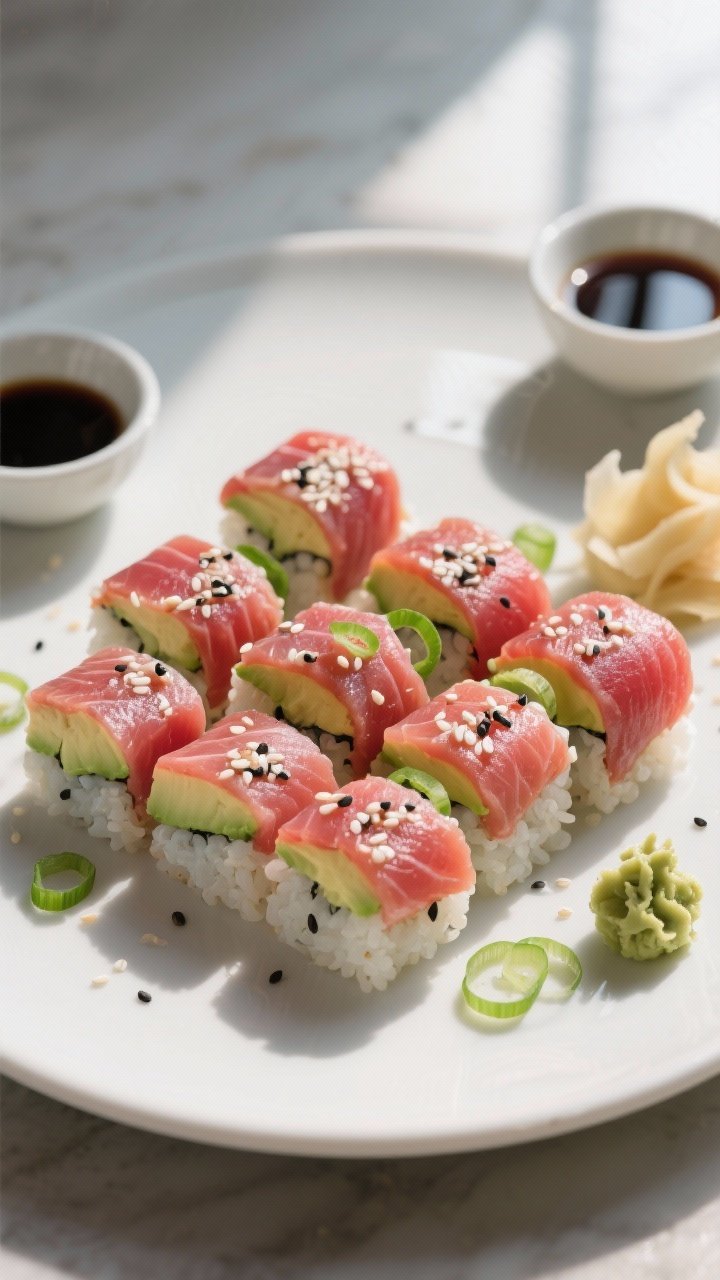
- Serve. Arrange on a plate and serve with soy sauce, wasabi, and pickled ginger.A light sprinkle of sesame seeds adds a finishing touch.
What Makes This Special
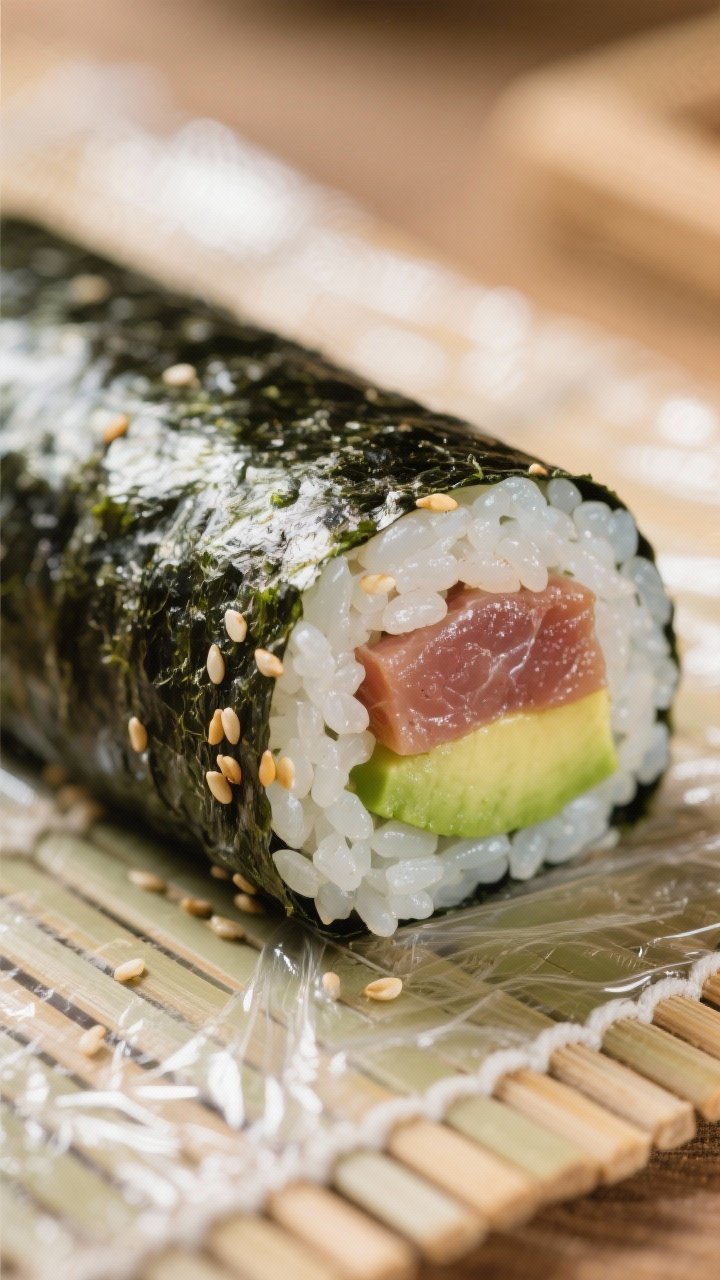
This recipe focuses on clean flavors and simple technique. The tuna brings a fresh, ocean-like taste, while avocado adds natural creaminess you don’t need to hide.
You’ll also learn a small handful of skills—like seasoning rice and rolling tightly—that translate to any sushi roll you try later. The result is a balanced, craveable roll that works for lunch, dinner, or a party platter. It’s fast enough for a weeknight and polished enough for guests.
Shopping List
- Sushi-grade tuna (about 8 ounces), cut into thin strips or small batons
- Ripe avocado (1 large), sliced
- Sushi rice (short-grain Japanese rice), 1 1/2 cups uncooked
- Water for cooking rice
- Rice vinegar, 1/4 cup
- Sugar, 1 1/2 tablespoons
- Salt, 1 teaspoon
- Nori sheets (roasted seaweed), 4 to 6 sheets
- Soy sauce for dipping
- Wasabi (optional)
- Pickled ginger (optional)
- Sesame seeds (optional, white or black)
- Green onion, thinly sliced (optional)
- Lemon or yuzu (optional, for a light squeeze over tuna)
How to Make It
- Rinse and cook the rice. Place the sushi rice in a bowl and rinse under cold water, swishing with your hand, until the water runs mostly clear.
Drain well. Cook according to your rice cooker instructions or on the stove using 1 3/4 cups water per 1 1/2 cups rice. Let it rest 10 minutes after cooking.
- Season the rice. Warm the rice vinegar, sugar, and salt in a small pan or microwave until dissolved.
Transfer hot rice to a wide bowl (a wooden bowl is ideal), drizzle the vinegar mixture over, and gently fold with a spatula to coat. Fan to cool to room temperature. The rice should be slightly sticky, not wet.
- Prep the fillings. Slice the tuna into long, even strips about 1/2 inch thick.
Slice the avocado lengthwise into thin slices. If you like, toss the tuna with a few drops of lemon or yuzu and a pinch of salt for brightness.
- Set up your station. Lay out a bamboo sushi mat wrapped in plastic wrap, a bowl of cold water for wetting your fingers, a sharp knife, and your nori sheets. Keep everything within arm’s reach.
- Place the nori. Put one sheet of nori shiny side down on the mat with the lines running horizontally.
If your nori is large, you can trim an inch off the top edge for tighter rolls.
- Add the rice. Wet your fingertips to prevent sticking. Spread a thin, even layer of rice over about two-thirds of the nori, leaving a 1-inch border at the top. Don’t pack it down—light pressure keeps the roll tender.
- Add fillings. Arrange tuna strips in a line along the center of the rice.
Add 2–3 slices of avocado beside or on top of the tuna. Sprinkle with sesame seeds and green onion if using.
- Roll it up. Lift the edge of the mat closest to you and fold it over the filling, tucking the nori under to form a tight cylinder. Pull the mat back slightly, then continue rolling until you reach the top border.
Use a little water on the bare edge of nori to seal.
- Shape and set. Use the mat to gently compress the roll, shaping it into a neat cylinder. Let it rest seam-side down for a minute to set the seal.
- Slice cleanly. With a very sharp knife, slice the roll in half, then cut each half into 3–4 pieces. Wipe the blade with a damp towel between cuts for clean edges.
- Serve. Arrange on a plate and serve with soy sauce, wasabi, and pickled ginger.
A light sprinkle of sesame seeds adds a finishing touch.
Storage Instructions
Sushi is best enjoyed fresh, ideally within an hour of assembly. If you need to hold it, keep the rolls wrapped tightly in plastic wrap and refrigerate for up to 24 hours. The rice will firm up in the fridge, and the avocado may darken slightly.
To refresh, let the rolls sit at room temperature for 15–20 minutes before serving. Do not freeze sushi rolls; the texture of the rice and avocado will suffer.
Why This is Good for You
- Lean protein: Tuna is a solid source of high-quality protein with minimal saturated fat.
- Healthy fats: Avocado provides monounsaturated fats that support heart health and help you stay satisfied.
- Omega-3s: Sushi-grade tuna typically contains omega-3 fatty acids that support brain and cardiovascular health.
- Portion control: Bite-sized pieces make it easy to eat mindfully and share.
- Low added sugar: Aside from the small amount in the seasoning, there’s not much added sugar here.
Common Mistakes to Avoid
- Using regular long-grain rice: It won’t get the right stickiness. Short-grain sushi rice is key.
- Skipping the rinse: Unrinsed rice can cook up gummy. Rinse until the water is mostly clear.
- Overfilling the roll: Too much filling makes the roll burst open.
Keep it to a neat line.
- Pressing the rice too hard: Packed rice turns dense. Use light, even pressure.
- Dull knife: A dull blade tears the nori and squashes the roll. Sharpen or use a serrated knife gently.
- Warm fish: Keep tuna chilled until just before rolling for the best texture and food safety.
Recipe Variations
- Spicy Tuna & Avocado: Toss the tuna with mayo and sriracha, plus a few drops of sesame oil.
Add avocado as usual.
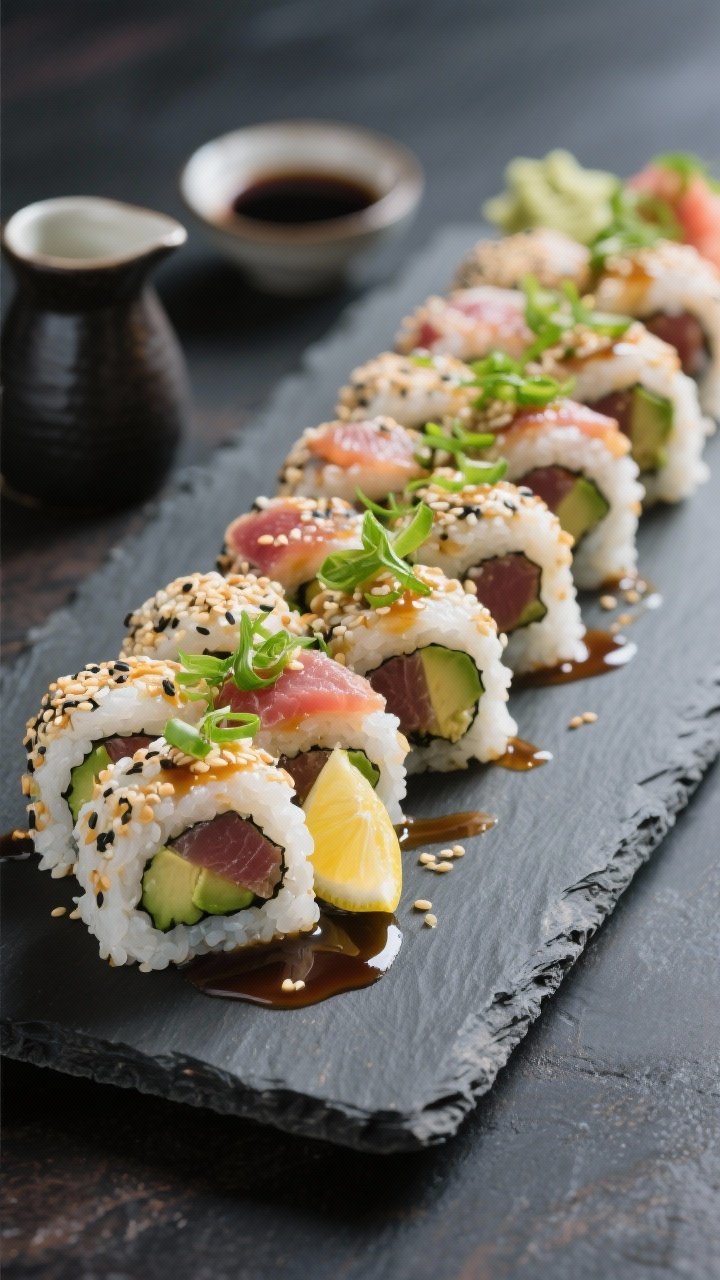
- Inside-Out Roll (Uramaki): Spread rice on the nori, flip it so rice faces down on the mat, add fillings, then roll. Finish with sesame seeds on the outside.
- Cucumber Crunch: Add thin cucumber batons for freshness and texture.
- Ponzu Drizzle: Lightly brush the sliced pieces with ponzu for a citrusy finish.
- Brown Rice: Swap in short-grain brown rice for more fiber. Cook a bit longer and expect a firmer bite.
- No-Roll Hand Rolls (Temaki): Cut nori into quarters, add rice, tuna, and avocado, then roll into a cone.
Fast and fun.
- Seared Tuna: Quick-sear tuna on a hot pan, 10–15 seconds per side, for a slightly smoky edge.
FAQ
How do I know if my tuna is safe for sushi?
Look for “sushi-grade” or “sashimi-grade” tuna from a reputable fishmonger. It should smell clean and ocean-like, not fishy. Keep it cold and use it the day you buy it.
When in doubt, ask the seller how fresh it is and how they handle it.
Can I use canned tuna?
Yes, but the texture and flavor are different. If using canned tuna, drain it well and mix with a little mayo, soy sauce, and a touch of lemon. It makes a tasty roll, though it won’t have the same clean sashimi-style bite.
What if I don’t have a bamboo mat?
You can use a clean kitchen towel wrapped in plastic wrap.
It gives enough flexibility to roll tightly, though a bamboo mat makes it easier to shape.
Why is my rice too sticky or too wet?
Too sticky often means not enough rinsing or too much water during cooking. Measure carefully, rinse thoroughly, and let the rice rest after cooking. When seasoning, fold gently so you don’t mash the grains.
How many rolls does this make?
Using 1 1/2 cups of uncooked rice and 8 ounces of tuna, you’ll make about 4–6 rolls, depending on how much rice and filling you use per roll.
That’s roughly 24–36 pieces.
Can I make the rice ahead?
You can cook the rice a few hours ahead, season it, and keep it covered with a damp towel at room temperature. Don’t refrigerate the rice before rolling; it will harden and won’t spread well.
What’s the best knife for slicing?
A very sharp chef’s knife or a long slicing knife works well. Wet the blade or wipe it with a damp towel between cuts to prevent sticking and tearing.
How can I make it gluten-free?
Use tamari instead of soy sauce and check that your rice vinegar and other condiments are certified gluten-free.
Nori and plain rice are naturally gluten-free.
In Conclusion
Tuna & Avocado Sushi Rolls are simple, fresh, and surprisingly easy to make at home. With a few key steps—well-rinsed rice, light seasoning, and tidy rolling—you’ll get clean, flavorful pieces every time. Serve them with soy sauce, a touch of wasabi, and pickled ginger for a classic finish.
Once you master this, try a spicy version or an inside-out roll. You’ll have a reliable, crowd-pleasing recipe ready whenever the sushi craving hits.
Printable Recipe Card
Want just the essential recipe details without scrolling through the article? Get our printable recipe card with just the ingredients and instructions.