Veggie Sushi Rolls – Fresh, Bright, and Simple at Home
July 25, 2026 · 9 min read
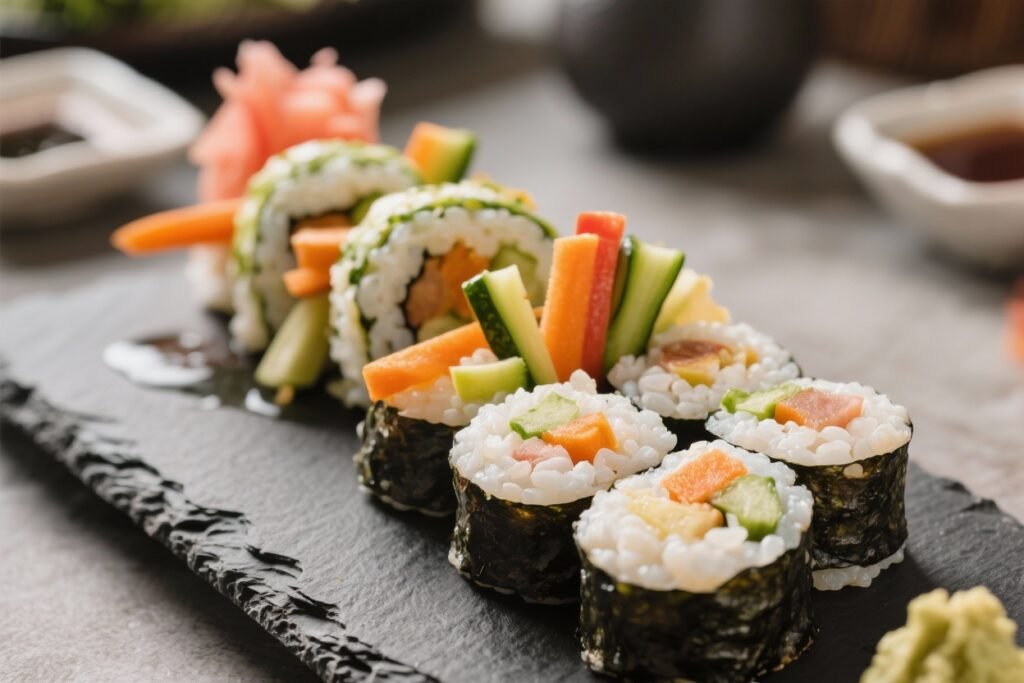
Sushi at home sounds fancy, but veggie rolls are surprisingly approachable. With a few pantry staples and crisp vegetables, you can make fresh, colorful rolls that taste clean and satisfying. No raw fish, no special chef skills—just simple steps and a little patience.
It’s a great way to use what’s in your fridge and build a fun, hands-on meal. Whether you’re cooking solo or making it a group activity, these rolls keep things light, playful, and delicious.
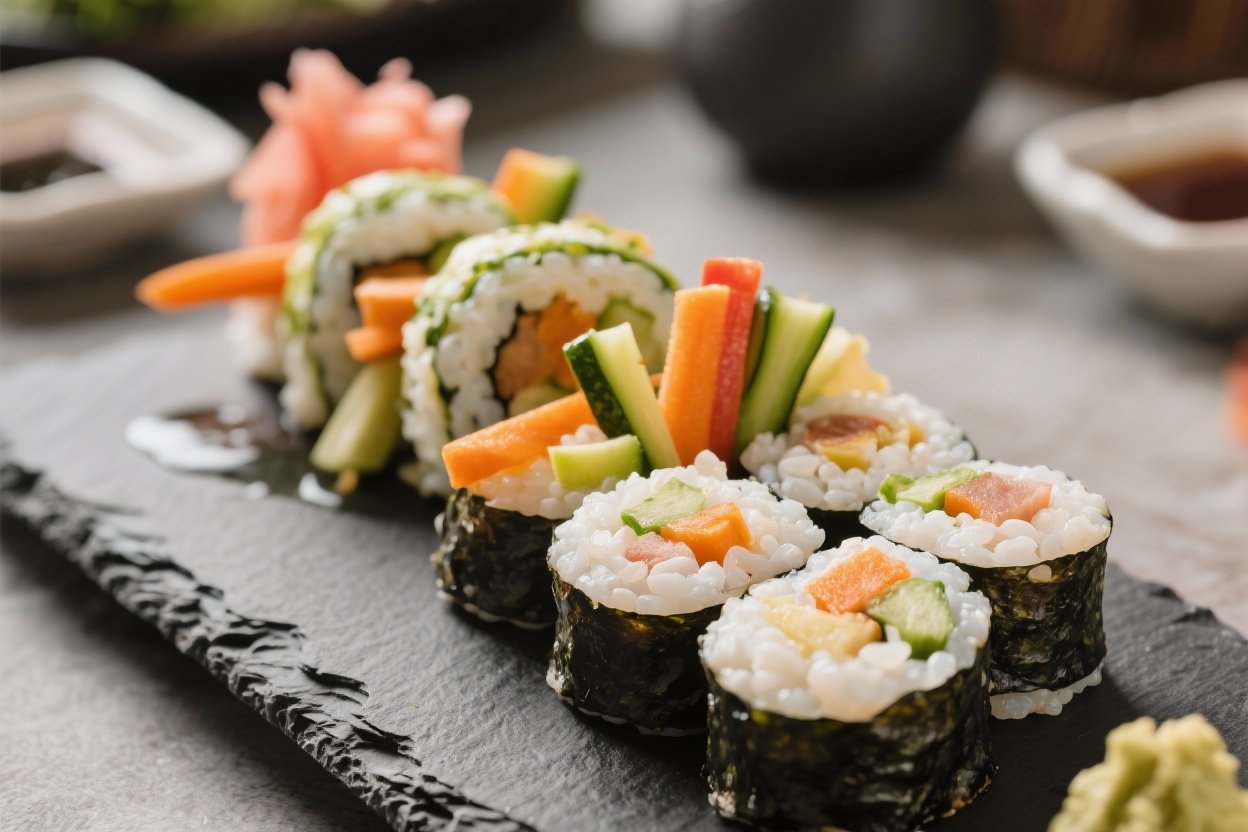
Veggie Sushi Rolls - Fresh, Bright, and Simple at Home
Ingredients
Method
- Cook the rice: Rinse 1.5 cups of sushi rice in cold water until it runs mostly clear.Cook according to package directions with the proper water ratio. Let it stand covered for 10 minutes after cooking to finish steaming.
- Season the rice: In a small saucepan, gently warm 3 tablespoons rice vinegar, 1 tablespoon sugar, and 1 teaspoon salt until dissolved. Do not boil.Transfer the hot rice to a wide bowl and fold in the vinegar mixture with a spatula. Fan the rice or let it cool until just slightly warm. Cool rice is easier to handle and helps prevent soggy nori.
- Prep the vegetables: Slice cucumber, carrot, and bell pepper into thin matchsticks about 3-4 inches long. Slice avocado last to keep it from browning.Keep everything in neat piles so rolling goes quickly.
- Set up your station: Place the bamboo mat on a cutting board. Put a nori sheet, shiny side down, on the mat with the lines running horizontally. Keep a small bowl of water nearby to wet your fingers.
- Spread the rice: Wet your fingertips and spread a thin, even layer of rice over about two-thirds of the nori, leaving the top third uncovered.Don’t mash the rice—light pressure keeps it fluffy. Too much rice makes rolling hard and can split the nori.
- Add fillings: Arrange a narrow line of cucumber, carrot, bell pepper, avocado, and a sprinkle of green onion along the bottom edge of the rice. Keep it tidy and not too thick. Add a light sprinkle of sesame seeds.
- Roll it up: Lift the mat edge closest to you and roll over the fillings, tucking tightly to form a firm cylinder.Pull the mat back as you roll forward so it doesn’t get trapped inside. Wet your fingertip and dab the bare strip of nori at the top to seal the roll.
- Rest and repeat: Let the roll seam-side down while you make the others. This helps it seal fully.You should get about 5–6 rolls from this batch.
- Slice cleanly: Use a very sharp knife. Wipe the blade with a damp cloth or lightly oil it between cuts. Slice each roll in half, then into 6–8 pieces. Sawing crushes the roll; use gentle, confident strokes.
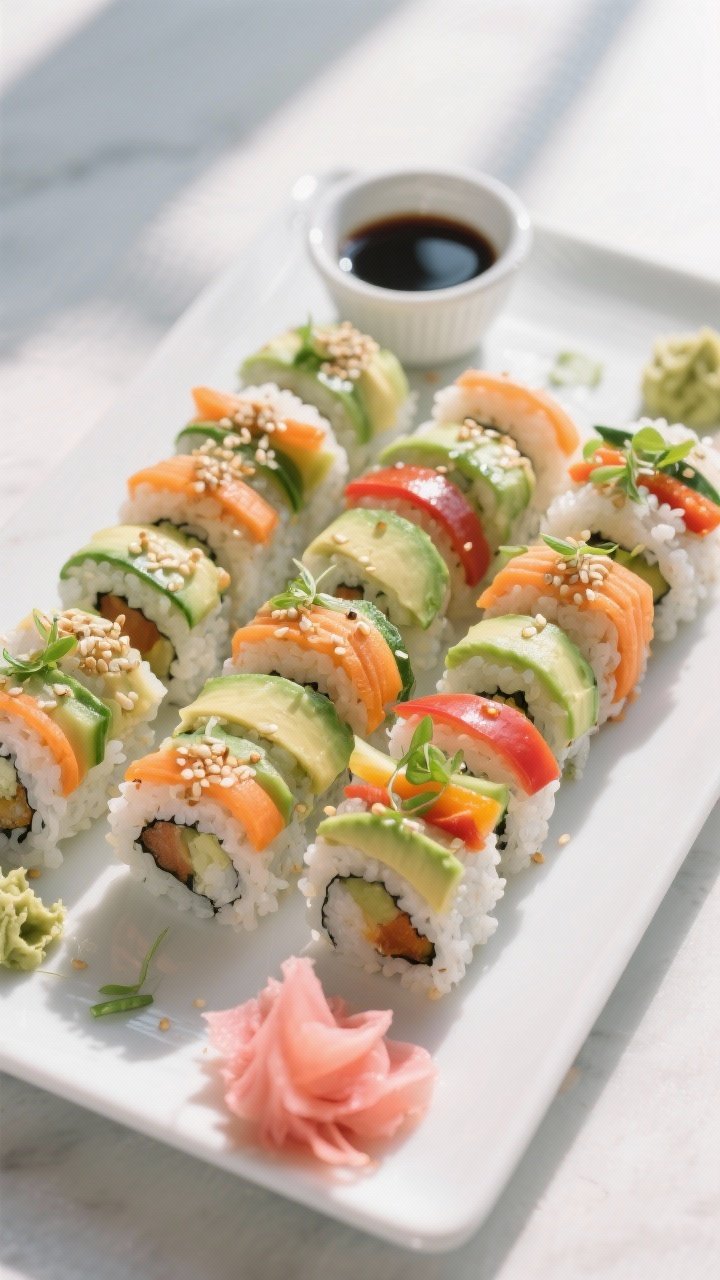
- Serve: Arrange on a plate with soy sauce or tamari for dipping, plus pickled ginger and a dab of wasabi if you like.
What Makes This Special
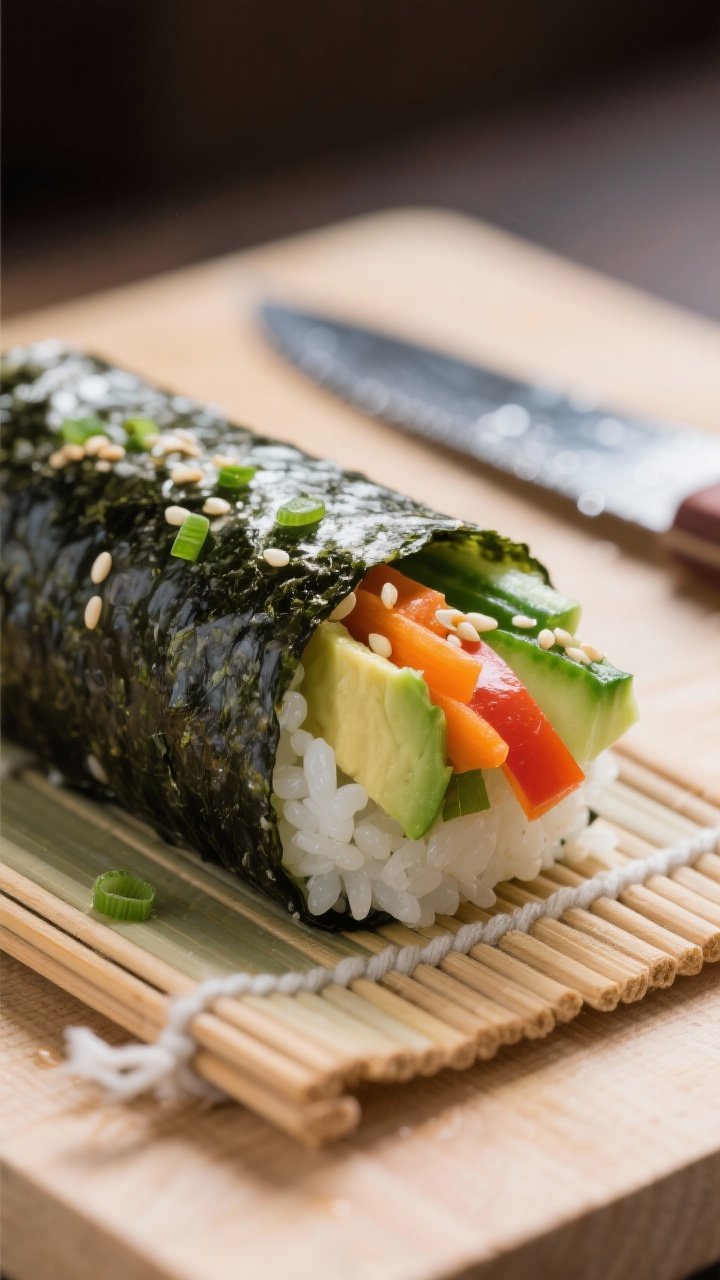
Veggie sushi rolls are all about balance: creamy avocado, crunchy cucumber, bright carrot, and a touch of tang. You control the fillings and the seasoning, so every bite fits your taste.
They’re great as a snack, a light lunch, or part of a bigger spread. Plus, they pack nicely for work or school. You get the sushi bar vibe without the price tag or long ingredient list.
What You’ll Need
- Nori sheets: Full-size sheets of roasted seaweed for rolling.
- Sushi rice: Short-grain rice that turns sticky when cooked.
- Rice vinegar: For seasoning the rice.
- Sugar and salt: To balance the vinegar in the rice.
- Avocado: Ripe but firm, for creamy texture.
- Cucumber: Seedless if possible, cut into thin matchsticks.
- Carrot: Peeled and cut into matchsticks or lightly shredded.
- Bell pepper: Any color, thinly sliced.
- Green onion or chives: Optional, for a mild bite.
- Toasted sesame seeds: For nutty flavor and a bit of crunch.
- Soy sauce or tamari: For dipping.
- Pickled ginger: Optional, for a bright palate cleanser.
- Wasabi: Optional, if you like heat.
- Neutral oil (optional): Just a drop for your knife to prevent sticking.
- Equipment: Bamboo rolling mat (or a clean kitchen towel wrapped in plastic), sharp knife, small bowl of water for dipping fingers, small saucepan for rice seasoning.
Instructions
- Cook the rice: Rinse 1.5 cups of sushi rice in cold water until it runs mostly clear.
Cook according to package directions with the proper water ratio. Let it stand covered for 10 minutes after cooking to finish steaming.
- Season the rice: In a small saucepan, gently warm 3 tablespoons rice vinegar, 1 tablespoon sugar, and 1 teaspoon salt until dissolved. Do not boil.
Transfer the hot rice to a wide bowl and fold in the vinegar mixture with a spatula. Fan the rice or let it cool until just slightly warm. Cool rice is easier to handle and helps prevent soggy nori.
- Prep the vegetables: Slice cucumber, carrot, and bell pepper into thin matchsticks about 3-4 inches long. Slice avocado last to keep it from browning.
Keep everything in neat piles so rolling goes quickly.
- Set up your station: Place the bamboo mat on a cutting board. Put a nori sheet, shiny side down, on the mat with the lines running horizontally. Keep a small bowl of water nearby to wet your fingers.
- Spread the rice: Wet your fingertips and spread a thin, even layer of rice over about two-thirds of the nori, leaving the top third uncovered.
Don’t mash the rice—light pressure keeps it fluffy. Too much rice makes rolling hard and can split the nori.
- Add fillings: Arrange a narrow line of cucumber, carrot, bell pepper, avocado, and a sprinkle of green onion along the bottom edge of the rice. Keep it tidy and not too thick. Add a light sprinkle of sesame seeds.
- Roll it up: Lift the mat edge closest to you and roll over the fillings, tucking tightly to form a firm cylinder.
Pull the mat back as you roll forward so it doesn’t get trapped inside. Wet your fingertip and dab the bare strip of nori at the top to seal the roll.
- Rest and repeat: Let the roll seam-side down while you make the others. This helps it seal fully.
You should get about 5–6 rolls from this batch.
- Slice cleanly: Use a very sharp knife. Wipe the blade with a damp cloth or lightly oil it between cuts. Slice each roll in half, then into 6–8 pieces. Sawing crushes the roll; use gentle, confident strokes.
- Serve: Arrange on a plate with soy sauce or tamari for dipping, plus pickled ginger and a dab of wasabi if you like.
Keeping It Fresh
Veggie rolls are best within a few hours.
If you’re making them ahead, store the uncut rolls wrapped snugly in plastic to keep the rice from drying out. Slice just before serving for cleaner edges and better texture. For lunch boxes, add an ice pack and keep the soy sauce separate.
Avocado will brown a bit over time, but a light brush of lemon juice helps keep the color bright.
Why This is Good for You
These rolls are light but satisfying. Vegetables add fiber, vitamins, and minerals while avocado brings healthy fats for long-lasting fullness. Short-grain rice provides quick energy and, when eaten with veggies, feels balanced and gentle on the stomach. Seaweed adds iodine and trace minerals you might not get elsewhere. If you want less sodium, choose low-sodium soy sauce or tamari.
Pitfalls to Watch Out For
- Overloading fillings: It’s tempting, but too much makes rolling messy and causes tears.
- Hot rice on nori: Heat softens nori, and it can fall apart.
Let rice cool until just warm.
- Dull knife: A blunt blade squeezes fillings and shreds nori. Sharpen or wipe clean between cuts.
- Wet hands, not soaking: Water keeps rice from sticking, but too much water makes it mushy.
- Rough rolling: Tight is good, crushing is not. Firm pressure with steady hands does the trick.
Recipe Variations
- Spicy Avocado: Mix avocado with a little mayo and sriracha for a creamy kick.
- Tofu Crunch: Add baked or pan-seared tofu strips for extra protein and texture.
- Mango Twist: Swap bell pepper for ripe mango to add sweetness alongside the savory soy.
- Pickled Pop: Add quick-pickled radish or red onion for zip.
- Brown Rice: Use short-grain brown rice for more fiber.
Cook it a touch softer to help it stick.
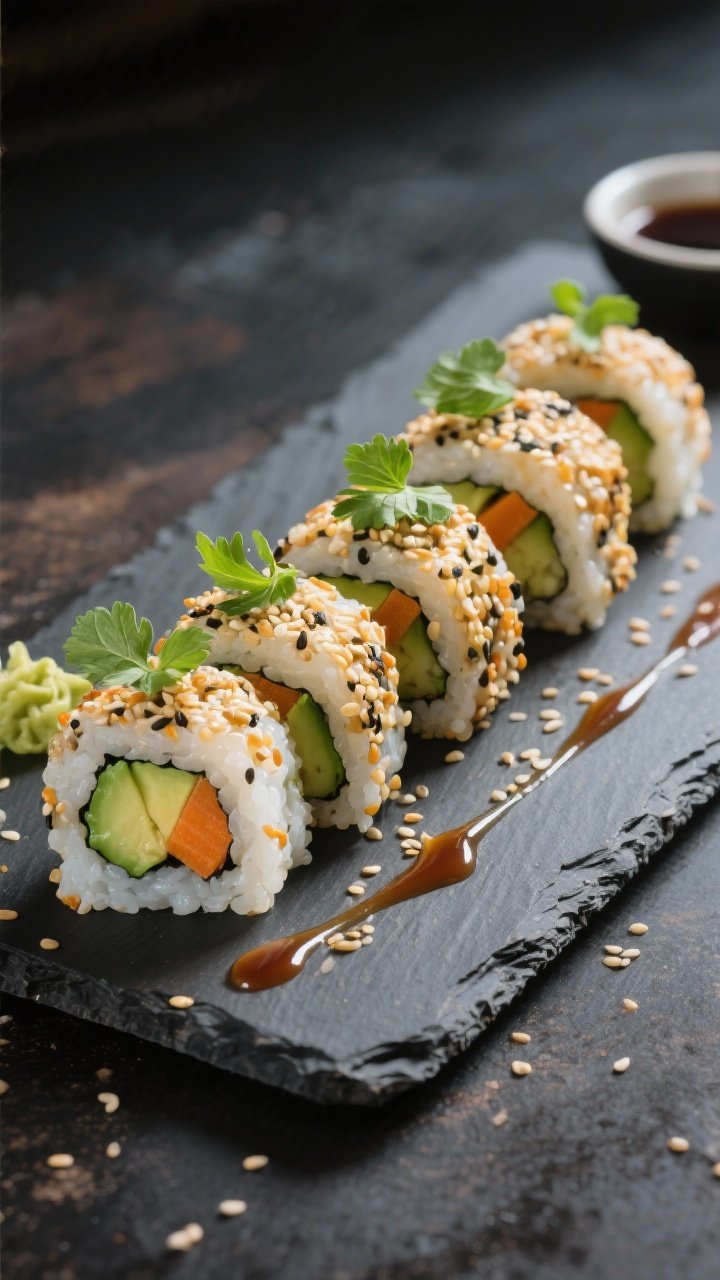
- Inside-Out (Uramaki): Flip the nori so rice is outside, then roll in sesame seeds for a sushi-bar look.
- Herb Lift: Add fresh cilantro, basil, or shiso leaves for bright, aromatic notes.
FAQ
Do I need a bamboo mat to make these?
You can use a clean kitchen towel wrapped in plastic wrap if you don’t have a mat. The key is having a flexible, nonstick surface that helps you roll tightly.
Can I use regular vinegar instead of rice vinegar?
Rice vinegar is best because it’s mild and slightly sweet. If you must substitute, use white wine vinegar and add a pinch more sugar, but go light to avoid harshness.
How do I stop the rice from sticking to my hands?
Keep a small bowl of water nearby and dip your fingertips as you work.
A tiny splash of rice vinegar in the water can also help.
What’s the best rice to use?
Short-grain sushi rice works best because it’s naturally sticky. Medium-grain can work in a pinch; long-grain won’t hold together well.
Can I make these gluten-free?
Yes. Use tamari or a certified gluten-free soy sauce, and make sure your nori and rice vinegar are labeled gluten-free.
How long will leftovers keep?
They’re best the day they’re made, but you can refrigerate for up to 24 hours.
Keep the rolls wrapped tightly to prevent drying, and expect avocado to darken slightly.
Do I need to peel the cucumber?
If the skin is thick or waxy, peel it. For thin-skinned cucumbers, leave the peel on for color and texture.
Can I add cooked vegetables?
Absolutely. Roasted sweet potato, grilled zucchini, or sautéed mushrooms make great additions.
Just cool them completely before rolling.
Final Thoughts
Veggie sushi rolls are easy to learn and endlessly flexible. With a few basic techniques and fresh ingredients, you can build bright, satisfying bites any night of the week. Keep the rice light, the fillings tidy, and the rolls tight, and you’ll get clean slices and great texture.
Make it your own with sauces, herbs, or extra crunch, and enjoy the simple pleasure of fresh, homemade sushi.
Printable Recipe Card
Want just the essential recipe details without scrolling through the article? Get our printable recipe card with just the ingredients and instructions.