Why Does Peppermint Feel Cold? A Taste Test Kids Score Themselves
November 9, 2026 · 4 min read
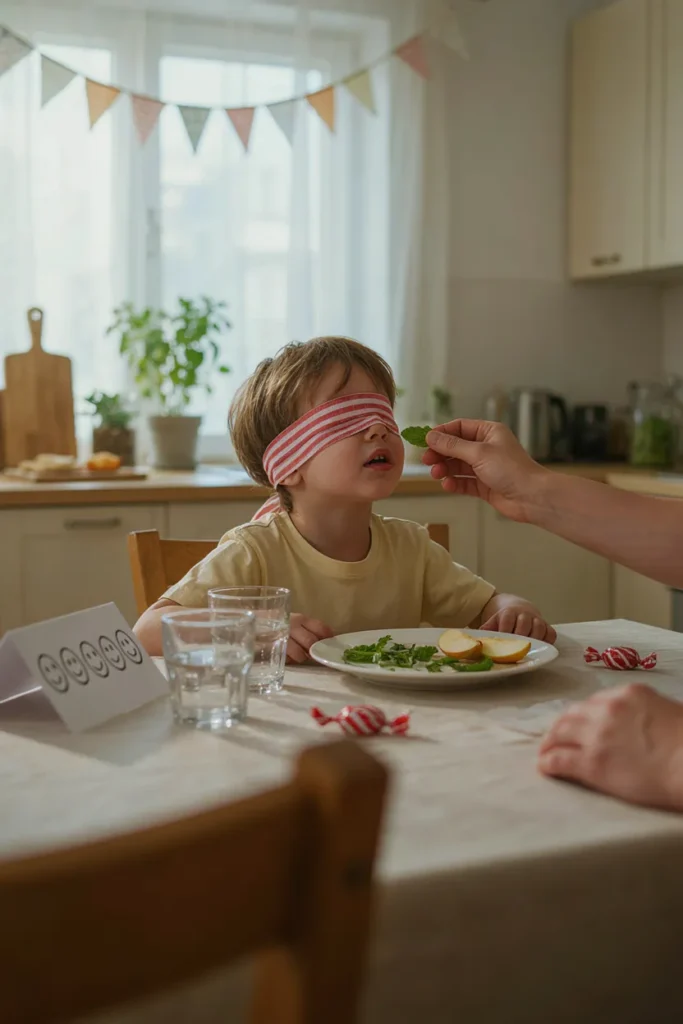
Chew a peppermint, then take a sip of water. Brrr! It feels icy. But if you put a thermometer in your mouth, it hasn’t got any colder. Peppermint tricks your brain into feeling cold. This taste test lets kids feel the trick for themselves, score it, and find out how it works.
Peppermint Chocolate Yogurt Dip
Ingredients
Equipment
Method
- Whisk the yogurt, cocoa, maple syrup and peppermint until smooth.
- Taste and adjust the peppermint.
- Top with crushed candy cane and serve with fruit.
Notes
What Kids Will Discover
Kids learn that our senses can be fooled. A chemical in mint called menthol switches on the same nerve sensors that normally detect cold, so the brain says “cold!” even when nothing has cooled down.
Ages, Time and Mess Level
- Best for: ages 4 to 12
- Time: 15 minutes
- Mess level: low
- Grown-up job: running the blindfold test
The Experiment: The Cold-O-Meter
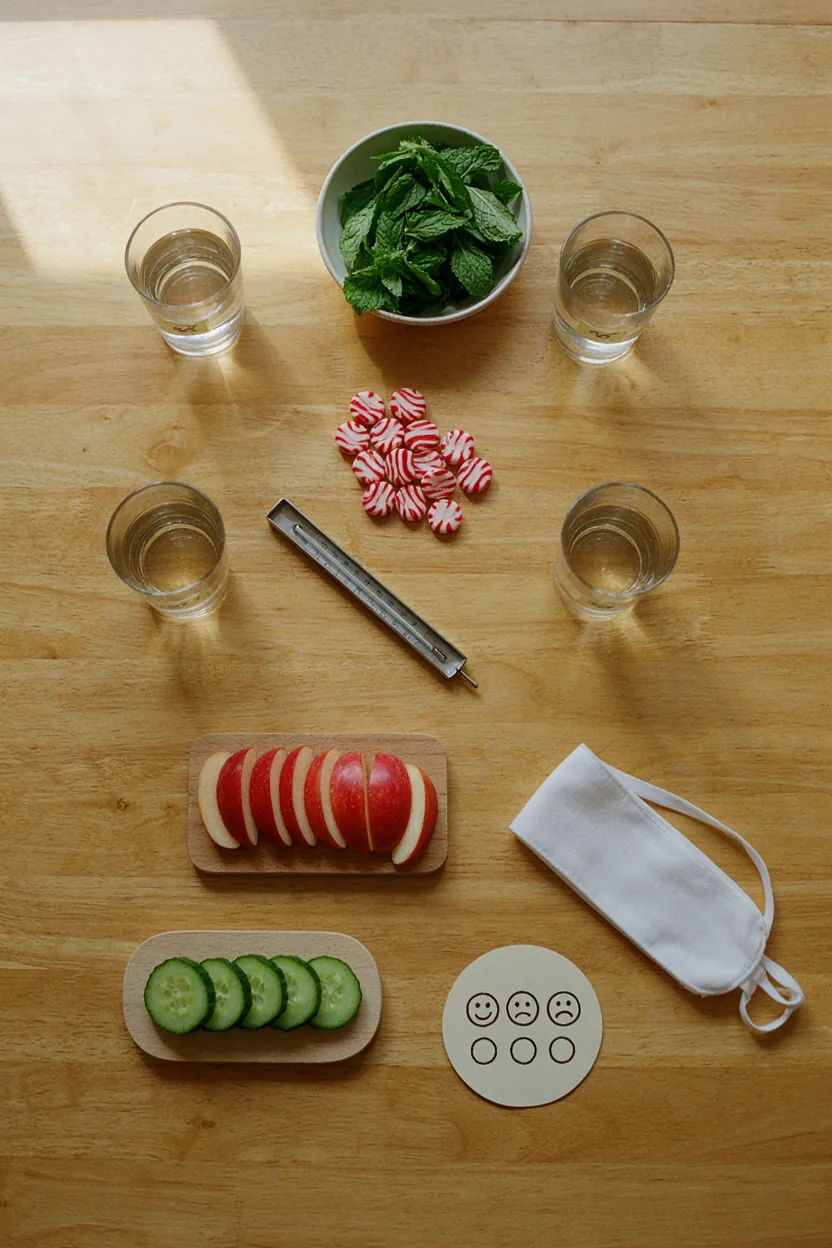
- Make a Cold-O-Meter score sheet: 1 = warm, 5 = icy.
- Round 1: sip room-temperature water. Score it.
- Round 2: chew a cucumber slice, then sip the same water. Score it.
- Round 3: chew a fresh mint leaf (or a peppermint), then sip the same water. Score it.
- Breathe in through your mouth after the mint. How does the air feel?
- Check the facts: measure the water with a kitchen thermometer each time. It hasn’t changed!
What usually happens
The water after mint scores as the coldest by far, even though the thermometer says it’s exactly the same water. Breathing in after mint feels like a winter breeze.
The Science, in Kid Words
Your mouth is full of tiny sensors that tell your brain about temperature. Cold sensors switch on when something cold touches them. Menthol, the chemical that gives mint its flavor, can switch on those very same cold sensors without any actual cold. So your brain gets the message “cold!” and believes it. When you sip water afterwards, the sensors are already switched on, so the water feels even colder.
For grown-ups
As The Conversation explains, menthol activates TRPM8, an ion channel in sensory nerves that normally opens in response to cooling. The nerve fires as if it were cold, so the brain perceives a chill without any change in temperature. Chili does the opposite trick with heat sensors.

Change One Thing
- Peppermint vs spearmint: which feels colder?
- Warm water: does mint make warm water feel cool?
- Toothpaste test: sip orange juice after brushing (a different trick, but kids love comparing).
Make It a STEAM Day
- Math: average everyone’s Cold-O-Meter scores.
- Science: follow up with our The Disappearing Candy Cane Experiment.
- Art: draw what “minty cold” looks like.
Safety Notes
- Hard peppermints are a choking hazard for children under 4; use a fresh mint leaf instead.
- Peppermint oil is very strong: never give undiluted oil to children.
- Honey isn’t suitable for babies under 12 months.
FAQ
Why does mint feel cold?
Menthol in mint switches on the cold sensors in your mouth, so your brain thinks it’s cold even though the temperature hasn’t changed.
Does mint actually lower the temperature in your mouth?
No. A thermometer shows no change; it’s your nerves that are tricked.
Why does water feel extra cold after mint?
The cold sensors are already switched on by menthol, so the cool water triggers an even stronger feeling.
Is there an opposite of menthol?
Yes: capsaicin in chili peppers switches on heat sensors, which is why spicy food feels hot.
What age is this experiment for?
From about 4. Use mint leaves rather than hard candies for younger children.
In Conclusion
Peppermint is a tiny magic trick played on your nerves. Run the Cold-O-Meter test and your kids will learn that the brain doesn’t always tell the truth, which is a pretty big idea for a little mint leaf.