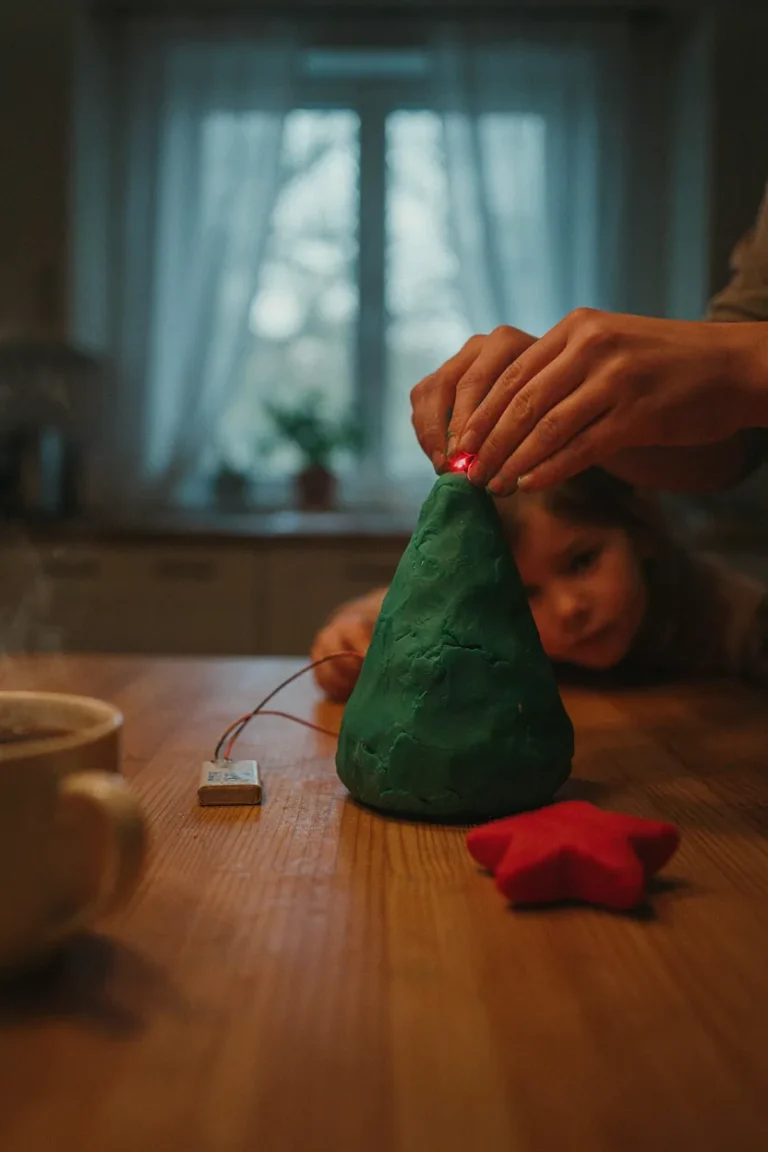
The best kind of science experiment is the one you can eat at the end. These 12 Christmas science experiments use everyday kitchen ingredients, take between five minutes and a week, and each one finishes with a treat or a snack. They’re perfect for a snow day, the school holidays, or a December afternoon when everyone’s climbing the walls.

How to Use This List
- Short on time? Start with the dancing cranberries or the candy cane experiment: both take about 10 minutes.
- Want a project? Start the rock candy early; it needs about a week.
- Toddlers in the house? See our Toddler Christmas Science for taste-safe versions.
The 12 Experiments
1. The Disappearing Candy Cane Experiment
Science idea: Dissolving. Drop candy canes into warm, cold and oily liquids and race them. Then melt one into peppermint hot cocoa.
2. Snow Ice Cream, Explained
Science idea: States of matter. Measure how much of a bowl of snow is really water, then stir up maple snow ice cream.
3. Rock Candy Christmas Ornaments
Science idea: Crystals. Grow sugar crystals on string over a week and hang them on the tree.
4. Christmas Cookie Chemistry
Science idea: Acids and bases. One dough, three leaveners: see what baking soda and baking powder really do.
5. Ice Cream in a Bag
Science idea: Freezing point. Shake milk in ice and salt and find out why the salt is the secret ingredient.
6. Hot Cocoa Science
Science idea: Density. Float, melt and mix: three mini experiments in a mug.
7. Dancing Cranberries
Science idea: Buoyancy. Watch dried cranberries bob up and down in sparkling water.
8. Stained-Glass Window Cookies
Science idea: Melting and glass. Crushed candy goes in, see-through sugar glass comes out.
9. Why Do Cookies Brown?
Science idea: Chemical reactions. A toast timeline that shows why cookies turn golden.
10. Why Peppermint Feels Cold
Science idea: Senses. A blind taste test that proves mint tricks your brain.
11. The Great Christmas Popcorn Pop
Science idea: Pressure. Count, predict and pop: what’s hiding inside each kernel.
12. Christmas Eve Yeast Balloon
Science idea: Living things. Blow up a balloon with yeast, then make overnight cinnamon rolls.
Tips for Kitchen Science With Kids
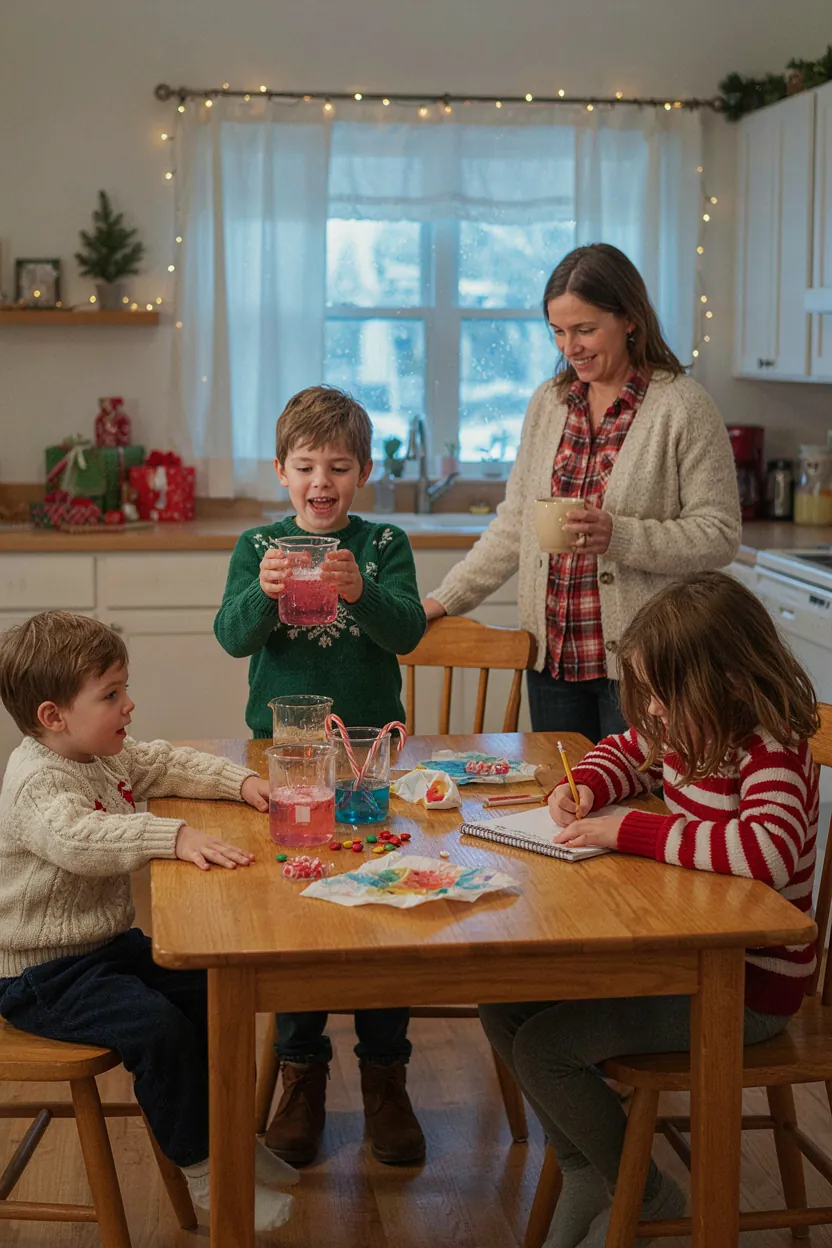
- Predict first. Writing down a guess before you start is what turns an activity into an experiment.
- Change one thing at a time. That keeps the test fair.
- Let them record. Drawings, tally marks or a simple chart all count.
- Keep experiment food separate from snack food: handled experiments go in the bin; the snack is made fresh.
- Grown-ups handle heat, sharp tools and hot sugar.
Want More Building and Engineering?
For bridges, towers, ramps and circuits, see our Christmas STEM Activities With Food. For a ready-made holiday plan, try the Winter Break Kitchen Lab Calendar.
FAQ
What are some easy Christmas science experiments for kids?
The disappearing candy cane, dancing cranberries and ice cream in a bag are quick, easy and use things you probably have.
Are these experiments safe to eat?
The treats at the end are made fresh and are safe to eat. Don’t eat handled experiment materials, and watch for choking hazards with children under 4.
What age are these Christmas experiments for?
Most work from about 4 to 12, with grown-ups handling the stove and oven.
Which experiment takes the longest?
Rock candy, which grows over about a week.
Do I need special equipment?
No: glasses, jars, a saucepan, zip-top bags and a timer cover almost everything.
In Conclusion
Twelve experiments, twelve treats, and a whole lot of “why does it do that?” Pick one for this weekend and let your kids discover that science tastes even better than it looks.